
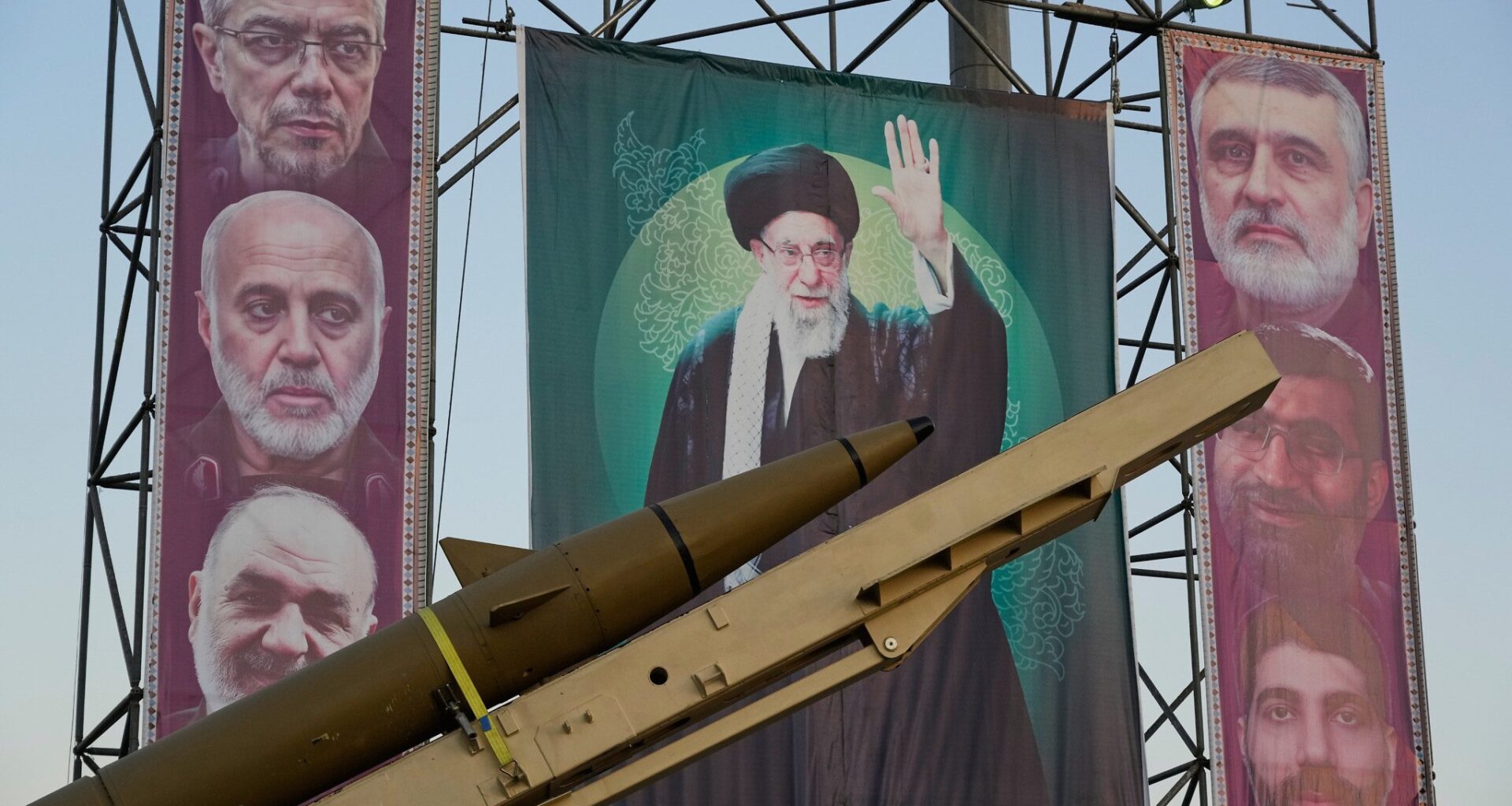
The range of Iran’s missiles will be increased to any point deemed necessary, a senior Revolutionary Guards commander told the semi-official Fars news agency on Wednesday, in response to what he said were Western demands to curb Tehran’s missiles.
Demands by the US and some European countries to impose restrictions on Iran’s missile capabilities have been one of the issues blocking the path to a nuclear deal, according to Iranian officials.
Western countries fear Iran’s uranium enrichment program could yield material for an atomic warhead and that it seeks to develop a ballistic missile to carry one.
Iranian missiles have a self-imposed range of 2,000 kilometers (1,200 miles), which officials in the past said was enough to protect the country as this range can cover the distance to Israel.
However, as launchers based in Iran’s western provinces were targeted by Israeli fighter jets in June, Tehran gradually launched missiles from further east in its territory — which require longer range.
Get The Times of Israel’s Daily Edition
by email and never miss our top stories
By signing up, you agree to the terms
“Our missiles will reach the range that they need to,” deputy inspector of the Khatam al-Anbiya central military headquarters Mohammadjafar Asadi told Fars news agency.
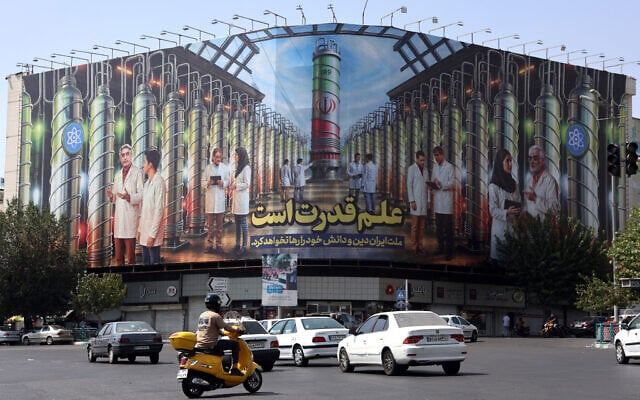
Iranians drive next to a billboard displaying pictures of nuclear scientists, centrifuges and a sentence reading in Farsi: ‘Science is the power’ at the Enqelab square in Tehran, on August 29, 2025 (AFP)
He added the power and range of Iranian missiles had limited the war in June to just 12 days, hinting that a wider missile range would improve the countries capabilities should another war with Israel erupt in the near future.
Israel sparked the war with a sweeping assault on Iran’s top military leaders, nuclear scientists, uranium enrichment sites, and ballistic missile program, arguing that it was necessary to prevent the Islamic Republic from realizing its avowed plan to destroy the Jewish state.
Iran has consistently denied seeking to acquire nuclear weapons. However, it enriched uranium to levels that have no peaceful application, obstructed international inspectors from checking its nuclear facilities, and expanded its ballistic missile capabilities. Israel said Iran had recently taken steps toward weaponization.
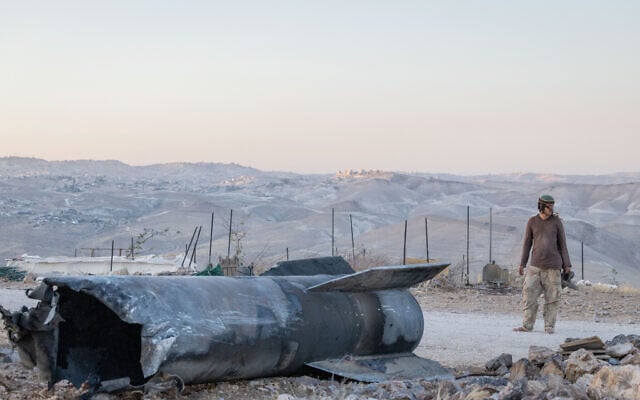
Part of a ballistic missile fired from Iran, seen in the West Bank, June 29, 2025. (Chaim Goldberg/Flash90)
Iran retaliated to Israel’s strikes by launching over 500 ballistic missiles and around 1,100 drones at Israel. The attacks killed 31 people and wounded over 3,000 in Israel, according to health officials and hospitals.
In all, there were 36 missile impacts and one drone strike in populated areas, causing damage to 2,305 homes in 240 buildings, along with two universities and a hospital, and leaving over 13,000 Israelis displaced.
Is The Times of Israel important to you?
If so, we have a request.
Every day, even during war, our journalists keep you abreast of the most important developments that merit your attention. Millions of people rely on ToI for fast, fair and free coverage of Israel and the Jewish world.
We care about Israel – and we know you do too. So today, we have an ask: show your appreciation for our work by joining The Times of Israel Community, an exclusive group for readers like you who appreciate and financially support our work.
Already a member? Sign in to stop seeing this
You appreciate our journalism

You clearly find our careful reporting valuable, in a time when facts are often distorted and news coverage often lacks context.
Your support is essential to continue our work. We want to continue delivering the professional journalism you value, even as the demands on our newsroom have grown dramatically since October 7.
So today, please consider joining our reader support group, The Times of Israel Community. For as little as $6 a month you’ll become our partners while enjoying The Times of Israel AD-FREE, as well as accessing exclusive content available only to Times of Israel Community members.
Thank you,
David Horovitz, Founding Editor of The Times of Israel