
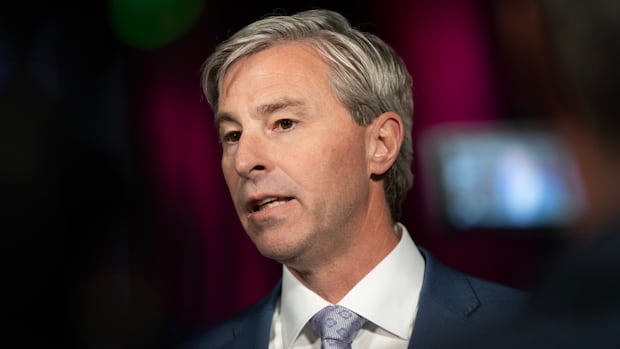
Premier Tim Houston is out of the province while his government faces scrutiny over a controversial bill that critics say criminalizes peaceful assembly and ignores the rights of the Mi’kmaq.
“It seems like a really weak excuse to try to avoid accountability,” said Tuma Wilson, a politics professor at Acadia University.
Wilson is part of a group that has been maintaining a checkpoint on a commercial logging road on Hunters Mountain in Cape Breton since mid-September. He called it an “educational mawiomi” about preserving moose habitat. Mawiomi is the Mi’kmaw word for “gathering.”
Such a gathering could earn its participants a $50,000 fine and/or six months in jail, if Bill 127 passes. The proposed legislation would make it illegal to block forest access roads on Crown land.
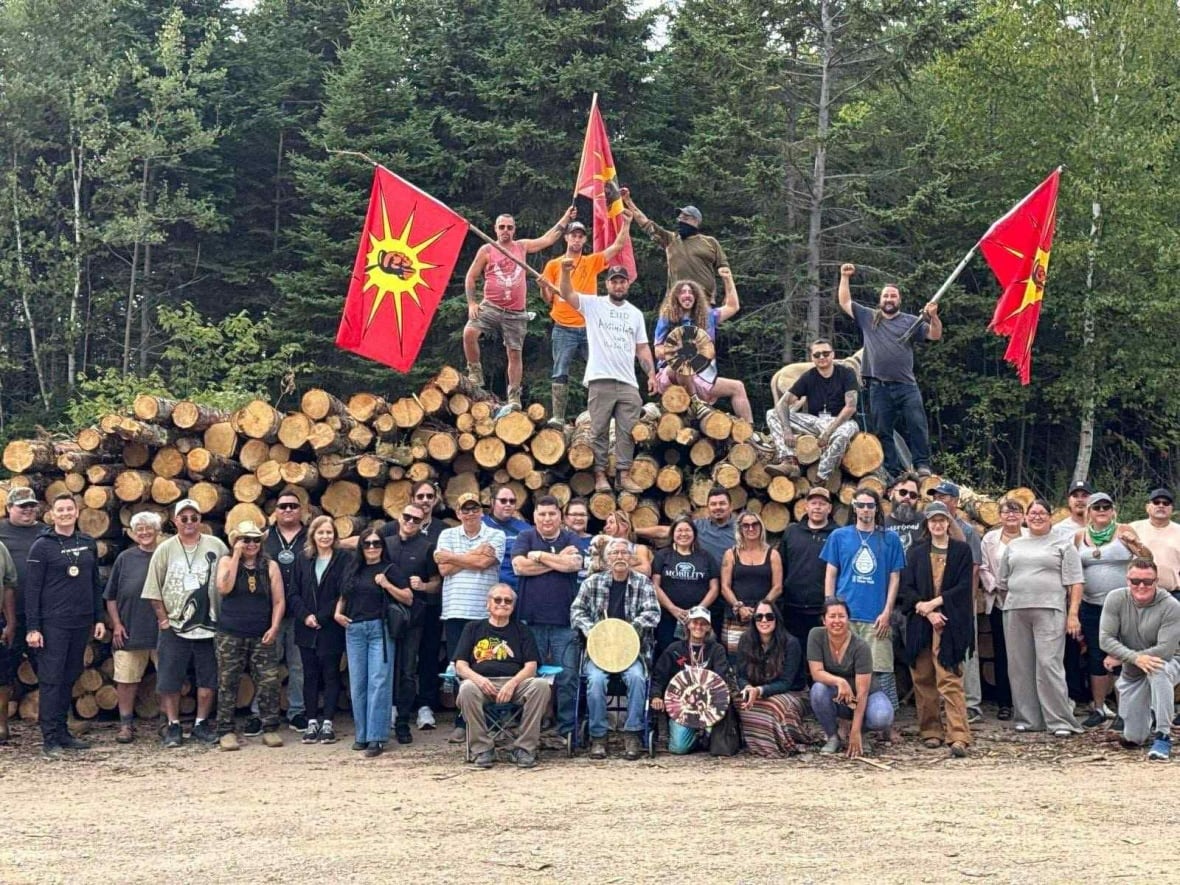 The Assembly of Nova Scotia Mi’kmaw Chiefs says proposed amendments to provincial legislation are raising tensions at a protest on Hunters Mountain in Cape Breton, seen in this file photo. (Submitted by Micmac Rights Association)
The bill faced pushback at the legislature’s public bills committee Monday and was debated again at Province House Wednesday evening.
Wilson called the proposed changes a “ripe violation” of Mi’kmaw rights, and he said it demonstrates ignorance of the Peace and Friendship treaties.
The first of those treaties was signed by the Crown and the Mi’kmaq 300 years ago and they’re commemorated each year on Oct. 1, Treaty Day.
This year Houston spent Treaty Day travelling to Ottawa to meet federal Energy Minister Tim Hodgson about his offshore energy project, Wind West. He’s scheduled to meet with Prime Minister Mark Carney on the same topic Thursday.
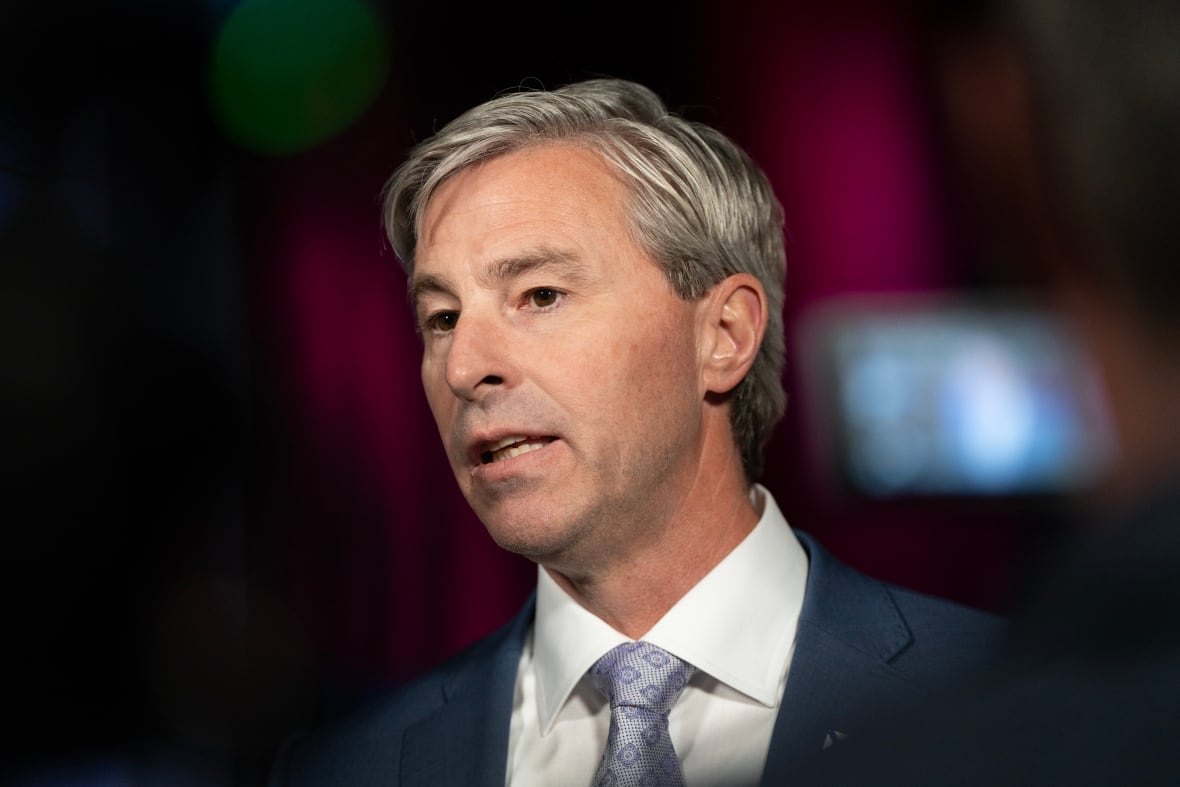 Premier Tim Houston has meetings scheduled in Ottawa to discuss his offshore energy project, Wind West. (Darren Calabrese/The Canadian Press)
Wilson said it was “cowardly” of Houston to be away from the legislature while his government’s relationship with the treaties comes under a microscope.
Opposition leaders said the amendments to the Crown Lands Act can wait until after Treaty Day and until the premier is back.
“The premier should be in the House when his legislation is moving through, particularly if we’re only going to sit for two or three weeks,” said NDP Leader Claudia Chender.
The fall sitting began on Sept. 23 and already appears to be winding down.
Interim Liberal Leader Derek Mombourquette said it’s not unheard of for a premier to travel during sittings, but the significance of this bill warrants Houston’s presence.
“You have a piece of legislation right now that is very significant, you’re seeing significant resistance from people, major concerns, and the premier is the premier, and the premier should be here to vote on it.”
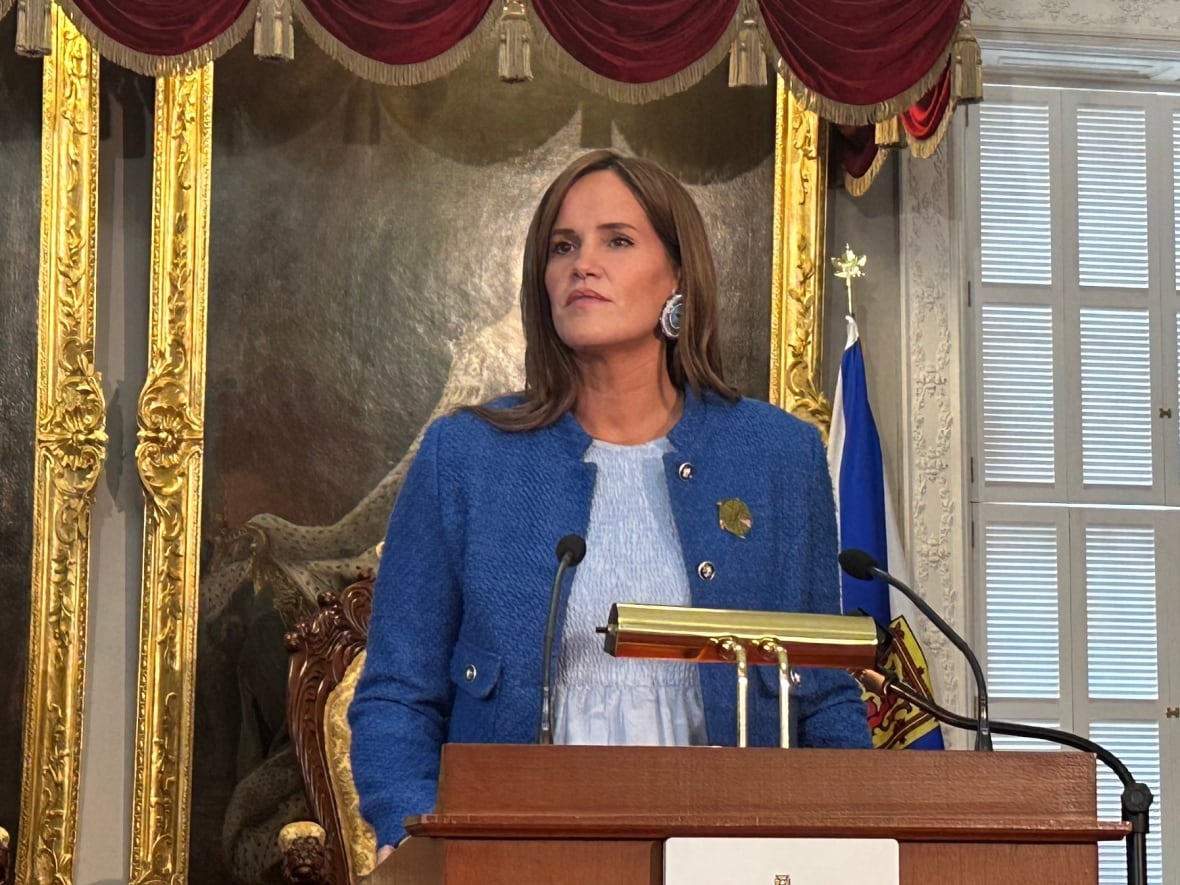 L’nu Affairs Minister Leah Martin told reporters she’s comfortable with the premier not being around as Bill 127 is debated because he’s away likely doing ‘massive things’ for Nova Scotia. (Taryn Grant/CBC)
Leah Martin, minister of L’nu affairs, defended the premier’s absence Wednesday.
“I am comfortable with him not being here. I know that when he’s not here, it’s quite likely he’s doing massive things for Nova Scotia,” she told reporters.
Martin said she believes Bill 127 aligns with the province’s treaty responsibilities. She said the duty to consult has not been triggered, but when it is, it will be upheld.
Wilson said he was initially optimistic about Houston after he came into power in 2021. He said the PC government seemed progressive on some environmental and social issues.
But Wilson said his mind has changed. He said he felt sold out when the premier earlier this year lifted prohibitions on uranium exploration and mining. Houston did not consult with Indigenous groups before making that change.