
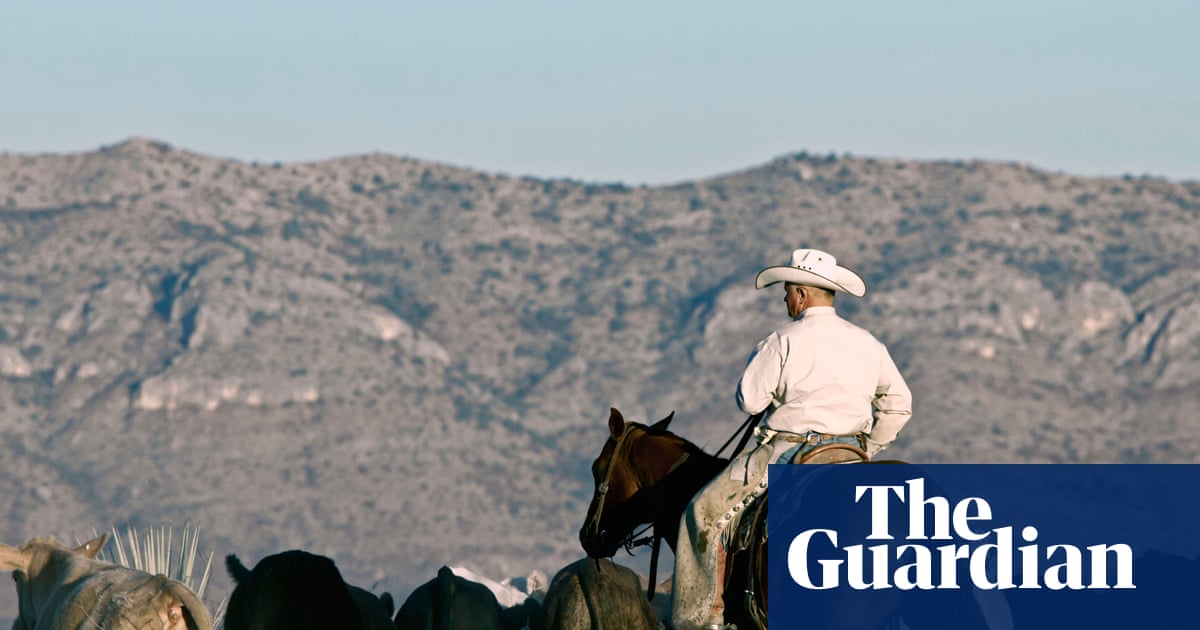
Labor will lift restrictions on imports of US beef, easing tensions with the Trump administration as the federal government seeks relief from punishing US tariffs on steel and aluminium.
The government confirmed on Thursday morning that the Department of Agriculture would allow the imports into Australia, saying the US now “effectively” manages biosecurity risks in beef production.
A ban on beef from cows raised and slaughtered in the US was lifted in 2019 but restrictions remained on beef from cattle raised in Canada and Mexico but slaughtered in the US.
Changes to make protections more robust introduced in late 2024 and early 2025 allow for meat from those countries to be traced through supply chains to their source farm.
The concession is expected to help pave the way for the prime minister, Anthony Albanese, to argue the case to Donald Trump that Australia should be given exemptions from the US’s 50% tariff on steel and aluminium, and a looming 200% tariff planned for pharmaceuticals.
Sign up: AU Breaking News email
The US president specifically cited Australia’s restrictions on beef imports when he announced his “Liberation Day” tariff regime. Australia faces a 10% baseline tariff on all products exported to the US.
During the federal election campaign, Albanese said Australia would not change or compromise any biosecurity rules, “full stop, exclamation mark”. Despite the comments, a concession on beef had been expected from Australia.
The agriculture, fisheries and forestry minister, Julie Collins, said the government wanted fair and open trade, which significantly benefited the cattle industry.
“The US beef imports review has undergone a rigorous science and risk-based assessment over the past decade,” she said.
“The Department of Agriculture, Fisheries and Forestry is satisfied the strengthened control measures put in place by the US effectively manage biosecurity risks.
Asked if the move would help with trade negotiations with the Trump White House, Collins said:
“That will be determined but this decision is based on science, and is the culmination of a five-year period.”
The new arrangements are due to come into place from 28 July, with Australian importers able to apply for permits to handle fresh beef products from the US, the largest buyer of Australian beef, ahead of China, in a $14bn market.
Will Evans, chief executive of Cattle Australia, told ABC RN on Thursday morning that there would be “a lot of people today who feel blindsided by this,” however it was important to recognise that the decision was backed by science and the trade terms were still in Australia’s favour.
skip past newsletter promotion
Sign up to Breaking News Australia
Get the most important news as it breaks
Privacy Notice: Newsletters may contain info about charities, online ads, and content funded by outside parties. For more information see our Privacy Policy. We use Google reCaptcha to protect our website and the Google Privacy Policy and Terms of Service apply.
after newsletter promotion
“There’s going to be a lot of people today who are going to feel really frustrated and threatened by this. What we need to do is talk to them about these technical steps that have been taken, these are the assessments that’s been taken, and this is why the decision’s been made,” Evans said.
Australia was a “global advocate for rules of science-based trading”, but it was unfortunate that in this circumstance the government has had to “open a door that we probably, as a producer, you probably wouldn’t want to open,” Evans said. “But we have to recognise that the science has been used to make this decision”.
“This is a big and very valuable market to Australian cattle producers,” Evans said.
“Australia exports more than $4bn of beef a year into the US. It’s one of our largest and most important partners. In the last six months, we’ve been breaking records in terms of the amount of volume that we’re putting into the market, given that the US herd is currently at record lows.”
Nationals leader David Littleproud said he was “suspicious” about the speed of the decision, months after Trump’s comments.
“I want to see the science and it should be predicated on science,” he told ABC radio.
“I’m suspicious by the speed in which this has been done. It looks as though it’s been traded away to appease Donald Trump, and that’s what we don’t want.”