
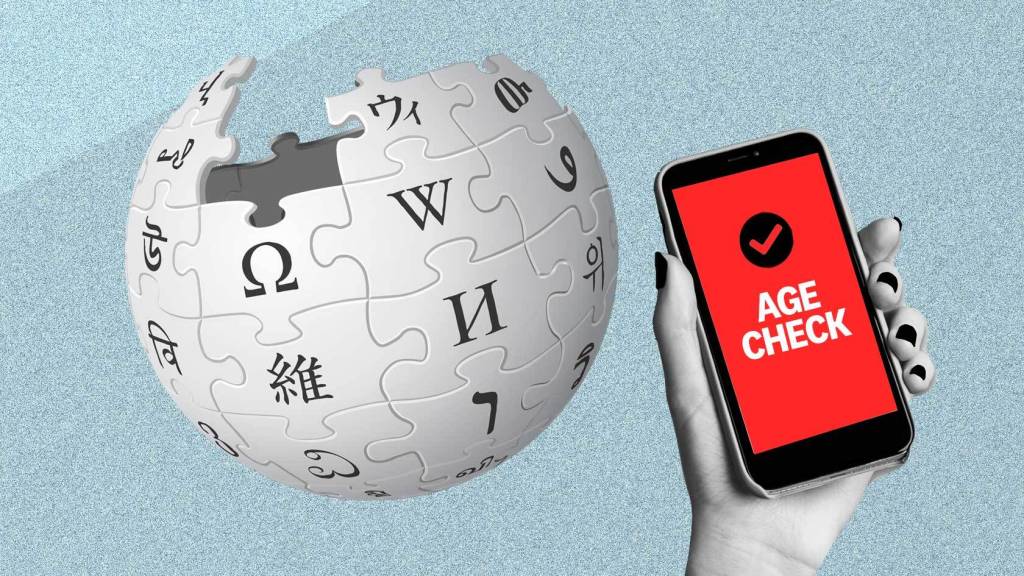
The Australian arm of the non-profit group behind Wikipedia is concerned that it might come under the teen social media ban, having been unable to confirm with the government that it is not “in scope”.
Wikimedia Australia representatives have sought official assurances from the federal government that Wikipedia, Wiktionary, Wikimedia and its other platforms would not be legally required to implement age checking systems.
Its concerns include fears that such systems would be a significant hurdle to its volunteers’ contributions and require both data and money that Wikimedia can’t spare.
Related Article Block Placeholder
Article ID: 1223236
With Australia’s teen social media ban set to come into effect on December 10, the eSafety commissioner’s office has indicated it will announce a set of further platforms that it considers will take “reasonable steps” to stop children under the age of 16 from having accounts on their platforms.
The government has already announced a number of major platforms that it considers in scope, including TikTok, Snapchat and YouTube, but the legislation underpinning the ban lays out a definition that would seem to include other platforms.
Independent. Irreverent. In your inbox
Get the headlines they don’t want you to read. Sign up to Crikey’s free newsletters for fearless reporting, sharp analysis, and a touch of chaos
By continuing, you agree to our Terms & Conditions and Privacy Policy.
Under the government’s legislation, an age-restricted social media platform is defined as one that has the sole or significant purpose of enabling social interaction between its users, allowing them to interact and post on the platform.
Elliot Bledsoe is the president of Wikimedia Australia, the charity local chapter of the Wikimedia Foundation that’s responsible for supporting the Australian community of contributors to platforms like Wikipedia. The organisation itself doesn’t run the Wiki platforms — that is the responsibility of the international group — but it works closely with the foundation on regulation and represents its local users.
Bledsoe said he’s concerned that the teen social media ban legislation is written in a way that would include Wikipedia and its other platforms as “age-restricted social media”.
“While it is hard to envisage the intent was to restrict young Australians from contributing to Wikipedia, with such a broad definition of age restricted social media platforms it is not a far stretch to see the wiki platforms as ‘in scope’,” he told Crikey in an email.
Given the content and design of Wikimedia’s platforms, Bledsoe does not consider places like Wikipedia to be a significant risk of harm to children, but also pointed to child safety efforts taken by the foundation.
While much of the focus of the teen social media ban has been on children, the policy requires platforms to take steps to check the ages of all users so that they can restrict those under the age of 16.
Bledsoe said that Wikimedia platforms would struggle with implementing age checking technologies if it was required. Unlike most other platforms, users can sign up for Wikimedia accounts with very little information — even without providing an email address.
He doesn’t believe that the law was intentionally written to include Wikimedia platforms, but believes they still might technically qualify.
“That’s the problem. It seems obvious which platforms the scheme is meant to catch, but the government has thrown out a wide net,” he said.
Wikimedia Australia representatives have attempted to seek official confirmation from the government that its platforms are not considered age-restricted social media platforms, but have been unable to receive it.
While the definition is set in legislation, and the communications minister has the power to create rules that explicitly include or exempt platforms, the enforcement of this law is left to the eSafety commissioner.
In practice, the commissioner can seek a court-ordered penalty of up to $49.5 million for a company failing to comply with the law. The court will consider and rule on whether the platform fulfils the definition of an age-restricted platform.
The offices for the communications minister and the eSafety commissioner did not respond to questions about whether they consider Wikimedia’s platforms within the bans, or how they will inform platforms of their requirements before the December 10 deadline.
The eSafety commissioner Julie Inman Grant has previously indicated that she will prioritise enforcement actions on the biggest platforms that she considers to be doing the most harm.
But for an organisation dedicated to supporting the development and sharing of knowledge, Bledsoe said that the irony isn’t lost on him that Wikimedia is completely in the dark about this law and whether it could end up on the receiving end of a ruinous fine.
The Wikipedia Foundation did not respond to a request for comment.