
Global powers reaffirm pressure on Tehran amid mounting concerns over enriched uranium stockpiles and IAEA restrictions.
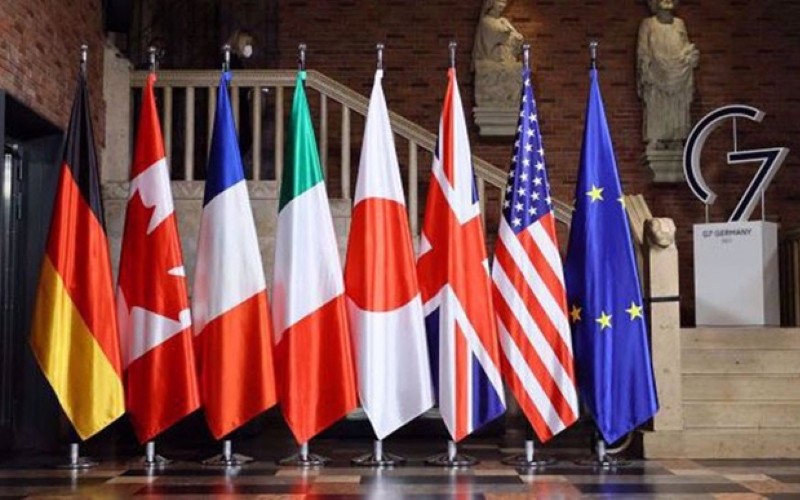
The G7 foreign ministers have issued a joint statement supporting the activation of the snapback mechanism that reimposes United Nations Security Council (UNSC) sanctions on the Iranian regime. The declaration, released on October 1, underscores the unified stance of Canada, France, Germany, Italy, Japan, the United Kingdom, the United States, and the High Representative of the European Union in holding Tehran accountable for its nuclear violations.
According to the statement, the sanctions were reinstated at midnight GMT on September 27, following the E3’s (France, Germany, and the UK) decision to trigger the mechanism due to Iran’s continued failure to comply with its obligations under the Joint Comprehensive Plan of Action (JCPOA). The snapback reactivates six key UN resolutions—1696, 1737, 1747, 1803, 1835, and 1929—which had been suspended under the 2015 nuclear deal. These measures include restrictions on Iran’s nuclear and missile programs, its arms transfers, and financial networks connected to proliferation activities.
The G7 emphasized that all UN member states must fully implement these restrictions, calling the step essential to international peace and security. The statement reiterated that diplomacy remains open, urging Iran to refrain from escalation and immediately engage in direct talks with the United States to resolve the crisis.
The ministers also highlighted Iran’s refusal to cooperate with the International Atomic Energy Agency (IAEA). They noted that Tehran must allow inspectors unfettered access to all nuclear facilities and provide a full accounting of its nuclear materials, especially its stockpile of highly enriched uranium, which the G7 declared has “no credible civilian justification.”
The Latest Situation on Iran’s Nuclear Case
The reimposition of sanctions comes amid a worsening standoff between Tehran and the international community. According to the IAEA’s most recent assessments, Iran has accumulated several times more enriched uranium than permitted under the JCPOA, with portions enriched up to 60 percent purity—dangerously close to weapons-grade levels. Analysts warn that Iran now possesses sufficient stockpiles to produce multiple nuclear warheads if it chooses to take the final steps.
At the same time, the regime has restricted IAEA inspections, blocking access to key facilities and refusing to reinstall monitoring cameras that were removed in 2022. This has left the international community with limited visibility into Tehran’s nuclear activities.
Inside Iran, regime officials have responded to the snapback sanctions with defiance, repeating threats to expand enrichment further. Yet the reality is stark: the sanctions’ reinstatement deepens Tehran’s economic and diplomatic isolation, compounding an already severe domestic crisis marked by inflation, currency collapse, and widespread unrest.
The G7’s message is clear—pressure on Iran will continue until it fully complies with its non-proliferation obligations and demonstrates verifiable restraint. The snapback marks a decisive moment in the regime’s nuclear confrontation with the world, one that exposes its weakness and leaves it with dwindling options.
For the Iranian people, however, the regime’s nuclear adventurism offers no benefit. Instead, it has brought crippling sanctions, international condemnation, and an ever-deepening isolation that underscores the growing fragility of the clerical establishment.