
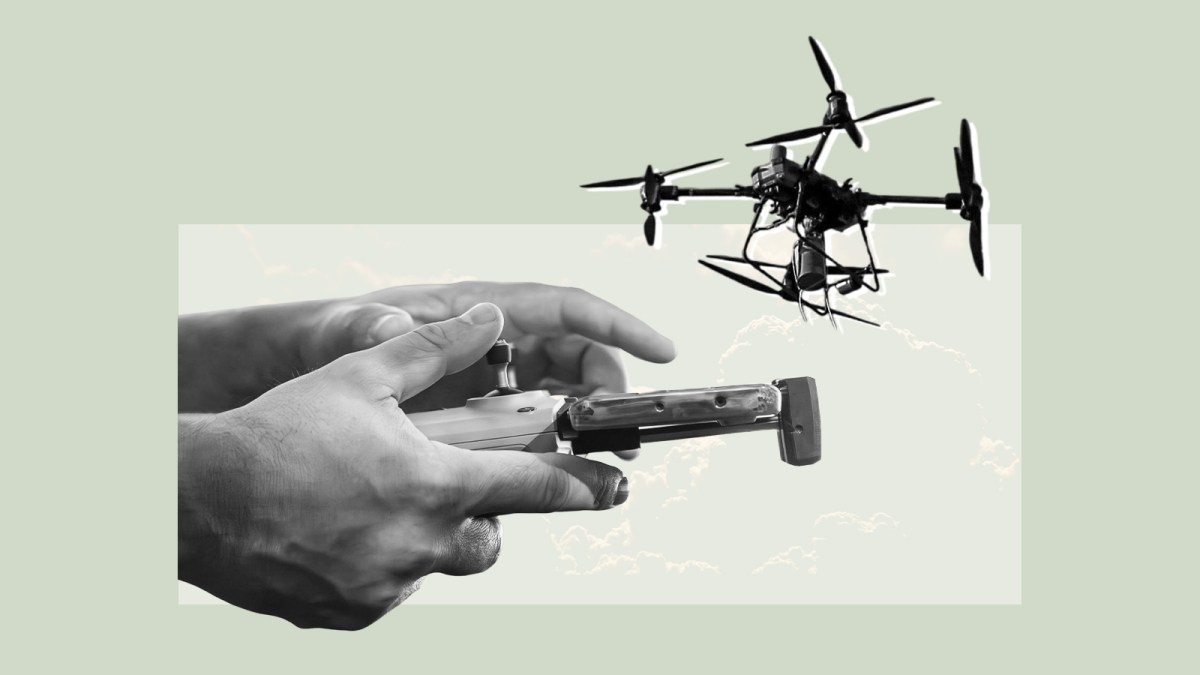
Last week airports in Germany and Denmark closed because of drone sightings — including Munich, twice in 24 hours. Drones were also reported over power stations to military bases. While some of these are likely to have been phantom sightings and others innocent flights, the assumption is that many are Russian drones intended to cause mischief and gather intelligence. The question for Europe is how best to respond.
This latest escalation is part of the Kremlin’s “coercive signalling”. While European leaders try to thrash out the precise security guarantees they are willing to offer Kyiv, Putin is trying to unnerve them by highlighting potential vulnerabilities. As one Ukrainian security expert noted with exasperation: “For years, western politicians have been commiserating with our lives under a constant drone threat, but only now are they realising what came for us could come for them.”
The weaponisation of inconvenience
To a degree, the Russian approach seems to be working. Some European leaders are responding with anger and bravado, yet if anything this simply highlights the difficulty in actually retaliating. An RAF interceptor pilot told me: “It’s so much easier to say ‘shoot them down’ than to do it, especially if you want to avoid debris or ordnance raining down on the heads of civilians below.”
Russia’s tactic is to combine the weaponisation of inconvenience — closing airports and hacking computer systems — with operations that challenge states’ capacities to defend themselves, by mapping critical national infrastructure and, in the process, demonstrating how easily it could be attacked.
A shipyard and power station in the German city of Kiel, a military base at Sanitz, 150km to the east, airbases in Norway and Denmark and the Karlskrona naval base in Sweden have all reportedly been buzzed by drones. Meanwhile, the company providing air traffic control in German airspace said there had been 144 drone sightings near airports so far this year, compared with 113 in all of 2024.
Europe’s response
To this, there has been a series of immediate responses. The French authorities have seized the Boracay, a Benin-flagged tanker carrying Russian oil, suspected also of being a launch platform for the drones that have haunted the Baltic coastline. Denmark banned all civilian drone flights for a week as Copenhagen prepared back-to-back summits of European leaders.
• Edward Lucas: Denmark’s drone humiliation weakens us all
Nonetheless, these are essentially piecemeal reactions. They cannot prevent further disruptive or provocative incursions, and highlight just how unsuited most western militaries are to combating the kind of massed waves of drones and decoys which Ukraine has endured for years.
Russia can produce 2,700 of its standard Geran-2 strike drones every month. Some would be jammed by electronic warfare, but the primary means of intercepting them now would be a ground or air-launched missile. It is not just that these missiles will cost many times as much, it is also that stocks and platforms for launching them are limited.
Will a ‘drone wall’ work?
As a result, the UK and its European allies have begun talking about building a “drone wall” — a multi-layered defensive belt incorporating radar, acoustic and other sensors to detect incoming targets and an array of weapons to bring them down, from long-range missiles to interceptor drones and even machineguns as a last resort close to the most sensitive potential objectives.

Denmark’s airspace was temporarily closed to civil drones after reports of suspicious activity
MADS CLAUS RASMUSSEN/REUTERS
Calling it a “wall” is a misleading bit of rhetoric akin to Donald Trump’s promise to build a “golden dome” missile shield around the United States. Although much more can and will be done, it will not only take a long time and a lot of money, it will never be able to cover everywhere or be an impenetrable shield. A Ministry of Defence official described it to me as “more than just a political gimmick”, but certainly an idea in part meant to head off any defeatist talk that we cannot protect ourselves against Putin’s drones lest he get what he wants: “a mood of defeatism and panic that creates a political groundswell to abandon Ukraine”.
Agreeing any multinational project is hardly easy, and already there are disagreements on timing and cost. Evika Silina, the Latvian prime minister, believes a drone wall along Nato’s eastern flank could be “doable” within “a year, year and a half”. Conversely, Boris Pistorius, the German defence minister, said it couldn’t be “realised in the next three to four years”. Meanwhile, many European countries are committing themselves to other military priorities, from tanks to warships.
• The Sunday Times View: Russian aggression demands sacrifices from every one of us
All the same, several new ventures are under way. Countries are buying their own antidrone systems and looking for better ways to share their radar information. Britain has already announced Project Octopus, a deal with Ukraine to co-develop and produce interceptor drones, and the private sector is jumping in with both feet, offering all kinds of solutions, many originating in Ukraine.
Deterring drones
A strong defence is the most credible deterrent to escalation. Classic deterrence theory envisages two forms. Deterrence by punishment relies on the threat of retaliation, but despite calls from some quarters for a more robust western response, the professionals tend to be more cautious. As that MoD official noted: “For one thing, unlike Putin we are meant to respect international law, and we haven’t declared war on Russia –— thank God — but also we can’t compete on Russia’s terms.” There may be some scope to strike back with more than just economic sanctions, an increasingly tapped-out instrument, but instead the West will probably have to rely on deterrence by denial, making the attacks pointless.
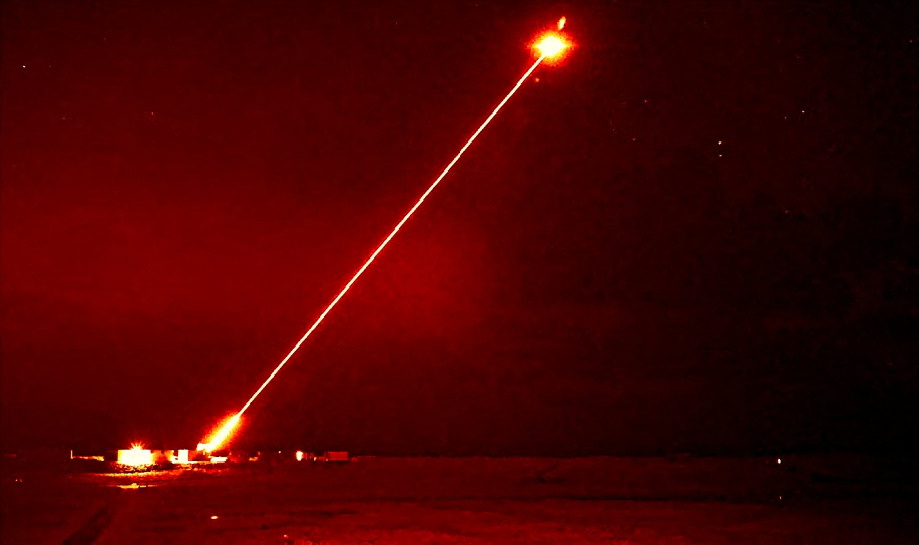
Britain’s new DragonFire laser is due for deployment from 2027
MOD/REUTERS
Eventually, this may mean the drone wall, especially as high-tech weapons such as the new British DragonFire laser (scheduled for deployment from 2027) come into service. Meanwhile, this also means accepting the inconvenience caused by presumed Russian activities. Keeping calm and carrying on may sound like a dated response, but it is most likely to persuade the Kremlin that the weaponisation of inconvenience is not working.
Putin’s gift
Yet the closing irony is that in a perverse way, Putin may be doing us a favour. While the disruption his campaign causes costs people, companies and governments money and time, the West does not face the murderous aerial attacks Ukraine has experienced, and which would probably herald or accompany any future war with Nato. However, it is helping to highlight the importance of European rearmament at a time when politicians are often floundering in their attempts to convince electorates that scarce resources should be spent on weapons rather than social care or tax cuts.
President Putin at an international conference in Sochi on Thursday
THE ASAHI SHIMBUN/GETTY
Russia poses no plausible direct military threat to the West for now. Last week, the Danish Defence Intelligence Service issued its latest assessment, in which it considered the threat of sabotage or Russian military provocations to be high, but also said there was no current threat of direct military attack.
The West must adapt to this era of cyberattacks, drone incursions, disinformation and sabotage. Yet in the process, it is getting an opportunity to adapt before there is any meaningful risk of any larger war with Russia, a taste of what to expect and the time to do something about it before it is too late.