
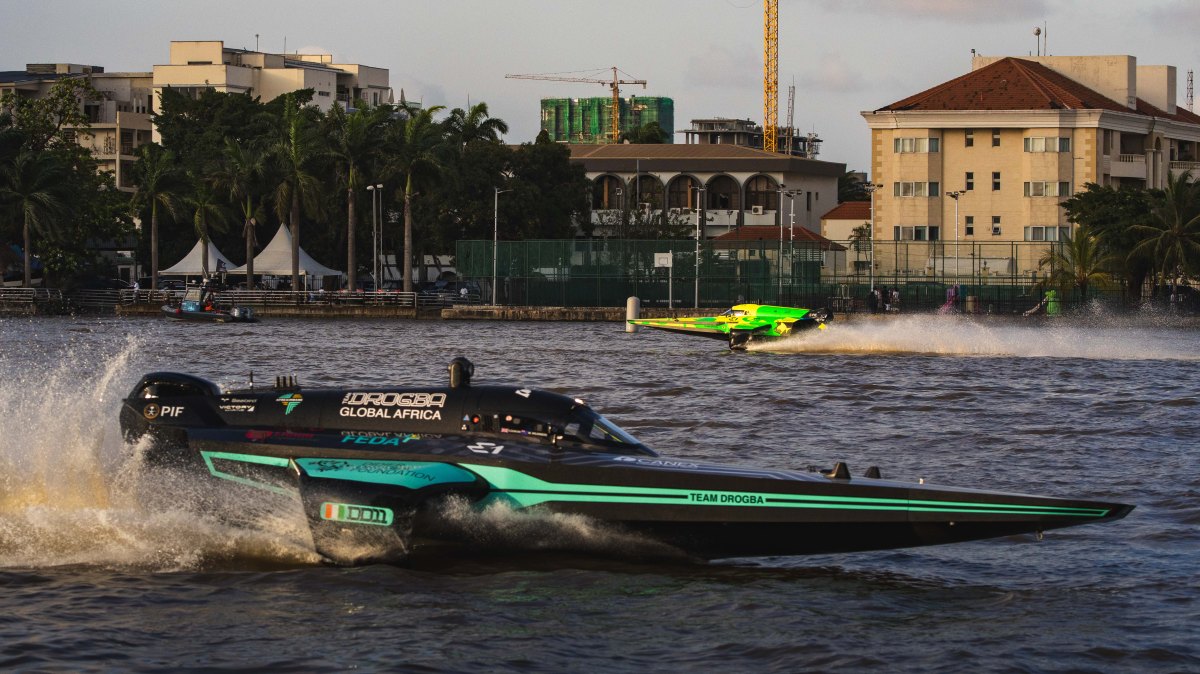
As lightning crackles around Lagos Lagoon, teams Will Smith, Rafael Nadal, Tom Brady and Didier Drogba line up for battle.
They are part of the world’s first all-electric powerboat racing series, which has attracted an impressive list of famous owners. Others from the nine teams taking part include the Indian cricketing superstar Virat Kohli, the American basketball star LeBron James and the DJ Steve Aoki.
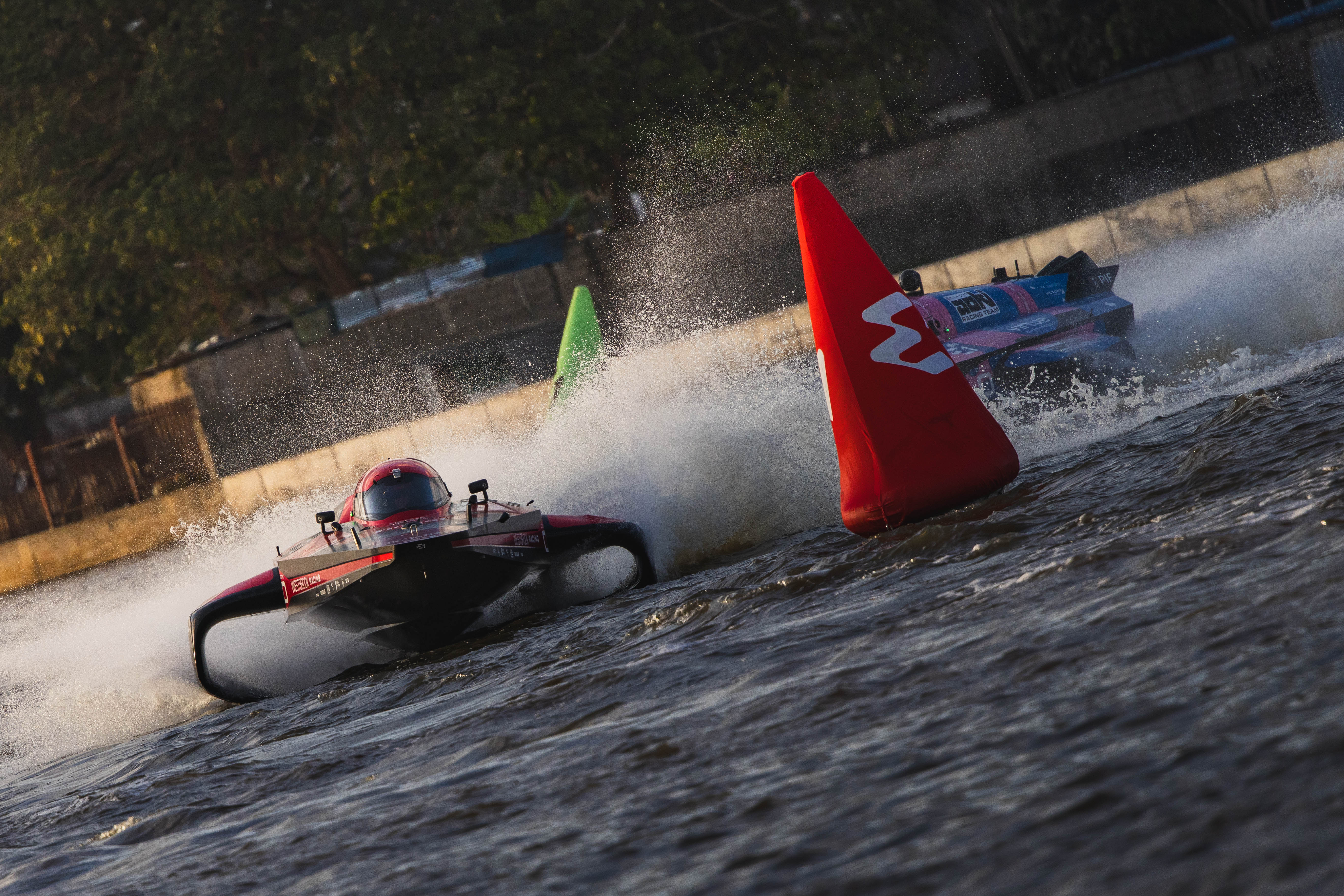
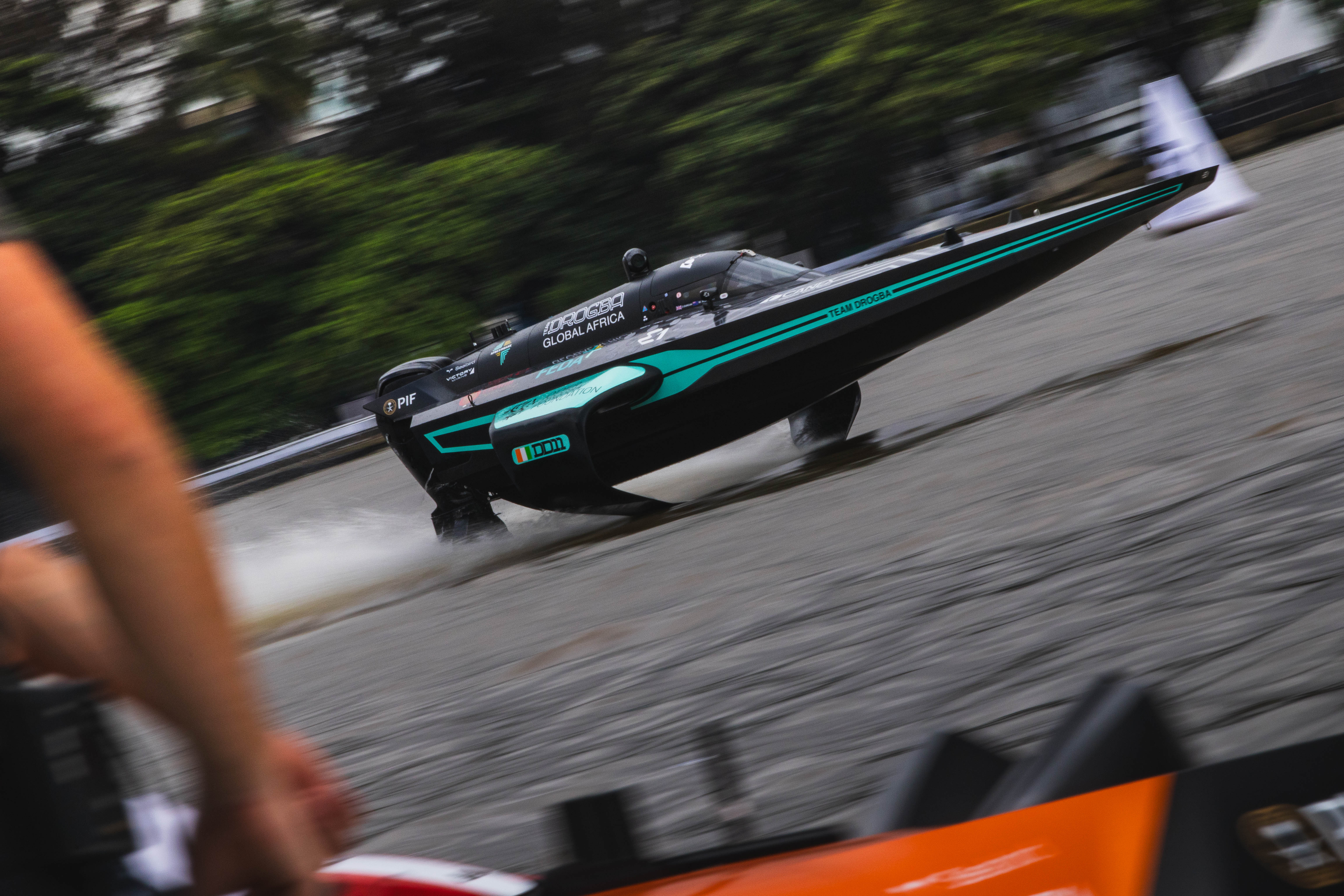
The brainchild of Formula 1 and Formula E veterans, E1’s “RaceBirds” are boats that rise above the water’s surface on wing-like foils, reaching speeds of up to 50 knots (57 mph). This weekend’s race in Nigeria was the first to take place in Africa, as the sports’ organisers seek to expand the event globally.
Lagos, which has a population of about 21 million and is Africa’s second largest city after Cairo, was chosen for its “energy, drive for change”, said Rodi Basso, the E1 chief executive.
The pilots are strapped into a cockpit more fitting for a jet fighter than a leisure craft. One driver, Oban Duncan, from Loch Lomond, is just 19 years old but already a British powerboat champion and speed record holder.
“Maybe a gap year would have been nice,” said the Scot, whose parents made her choose between powerboats and horse riding at a young age.
She traded Cheltenham dreams for an E1 career, which she pursues alongside work as a health and safety consultant. E1 has also taken her to places such as Venice, Jeddah and Monaco.
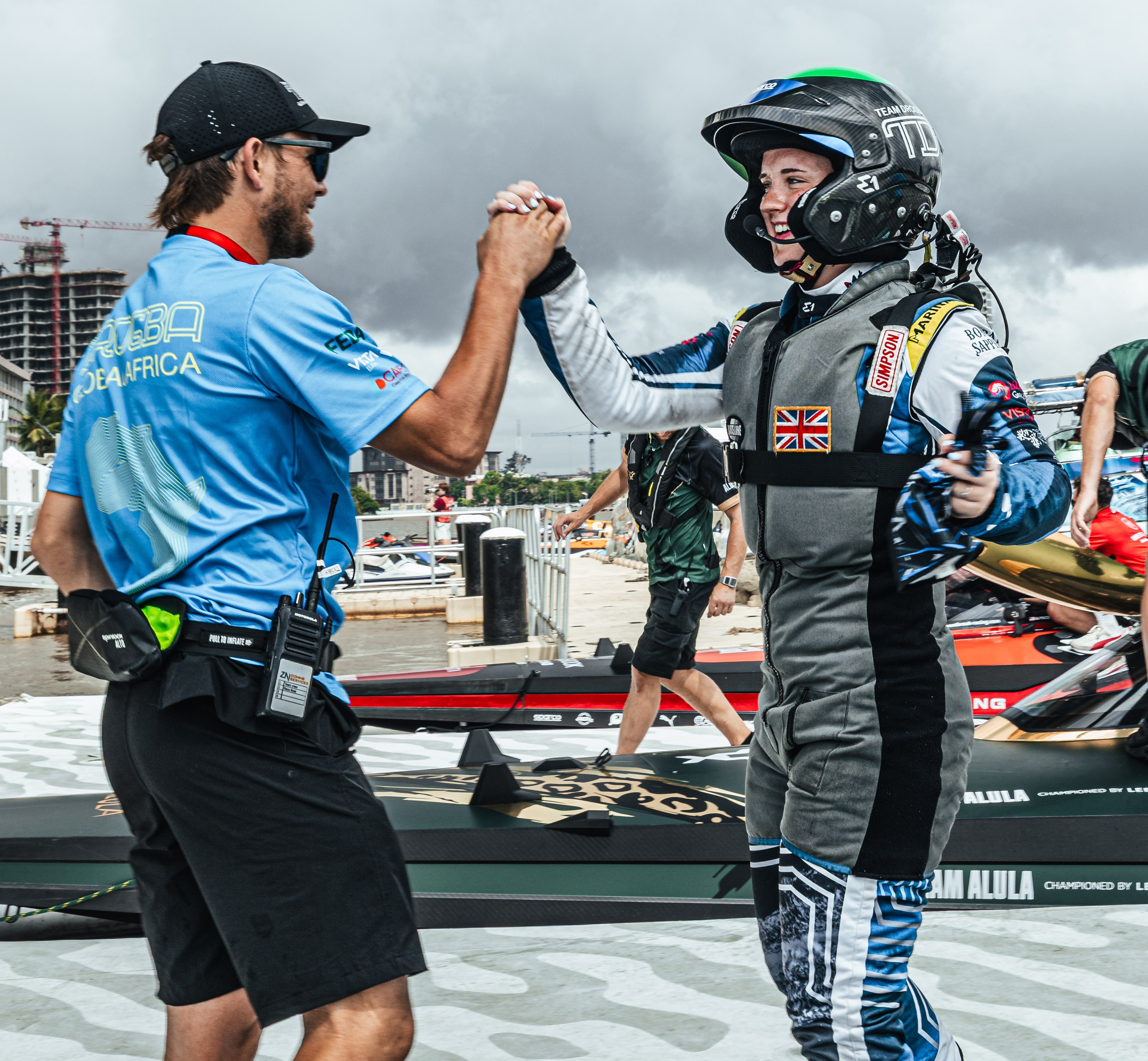
Oban Duncan, right, is racing for Team Drogba
JACK MORRISON PHOTOGRAPHY
“There’s never been a boat like this before,” said Duncan, whose path to the second season of E1 began at age eight with time trials in inflatable boats.
Professional water sports are a niche sector, the best known being events such as the America’s Cup in sailing. But E1’s backers are betting on growth and targeting a €500 million (£435 million) valuation by 2030. “We’re not in a rush,” said Basso.
E1 is willing itself to fame with an improbably eclectic supporting cast.
Duncan’s fellow pilots, there are 18 in total, include an Olympic sailor, a rally driver, an e-sports champion, and a stuntwoman.
Each famous owner had to put in €2 million as a startup investment, with team running costs about another €2 million a year. Collectively the owners have more than a billion followers on social media.
The vibes were characteristically cosmopolitan in Lagos, emblematic of Nigeria’s breakneck growth. Economic inequality, however, plagues the country on its upward trajectory.
The race course sat off buzzy Victoria Island, where the city’s beautiful people packed luxury hotels and waterside restaurants to watch. The quiet hum of E1 allowed Afrobeats music, the ubiquitous soundtrack in Lagos, to travel across the water
E1 is still relatively early in bringing global professional sports events to sub-Saharan Africa, long a source of athletes and fans but not so many widely-watched competitions.
Formula 1 is likely to return to the continent in South Africa or Rwanda, which hosted cycling world championships last month, and the NBA’s launch of Basketball Africa League has been a resounding success.
Days before the E1 event, the former champion British boxer Amir Khan promoted a fight night in Lagos, billed as the biggest boxing event in Africa since 1974 and the Rumble in the Jungle between Muhammad Ali and George Foreman, in what was then Zaire.
The driving force behind E1’s decision to come to Nigeria was Drogba, the former Chelsea striker who hails from the Ivory Coast and was in Lagos for the races.
“[Drogba] is the reason why we’re here,” said Basso. “We will go to different places in Africa, but we need to start from Lagos.”
Spotlighting African cities on the world sports stage is one reason to bring high-profile events to the continent. As is economic development, with hopes that events like E1 can inspire and boost local economies.
The challenge is making the effects felt beyond up-market neighbourhoods like Victoria Island, where there were roadblocks on the streets, separating it from much of the rest of the city and guarded by security personnel with battered AK-47s.
High unemployment and escalating gang activity make violent crime a serious threat in Lagos, where the state government also estimates the majority of the city lives in slum housing.
Outside luxury venues, the dedicated E1 fan zone also seemed packed with more of the city’s politically connected and Instagram set rather than the average Lagosian.
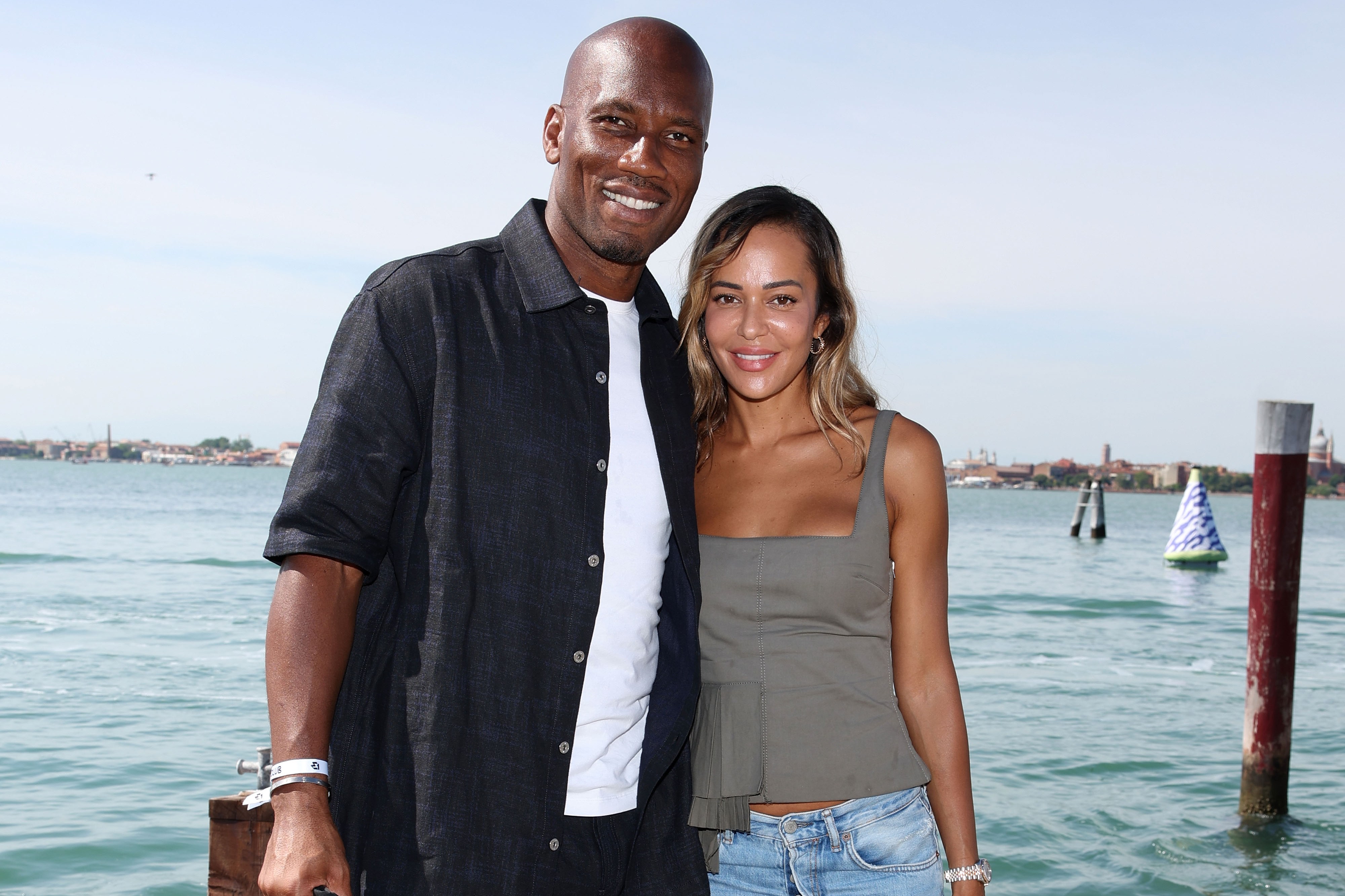
Didier Drogba and Gabrielle Lemaire at the E1
DANIELE VENTURELLI/DANIELE VENTURELLI/GETTY IMAGES
“This is the place to be,” said Waled Adeleke, 34, an automotive businessman, from the spectators’ area.
The E1 racecourse shared the same debris-strewn water, a new obstacle for racers, as the rest of the city.
That included nearby Makoko, the world’s largest floating slum, where some estimates put the population as high as 300,000. There, where canoes are a way of life, the RaceBirds were only a few miles away, but a world apart.