
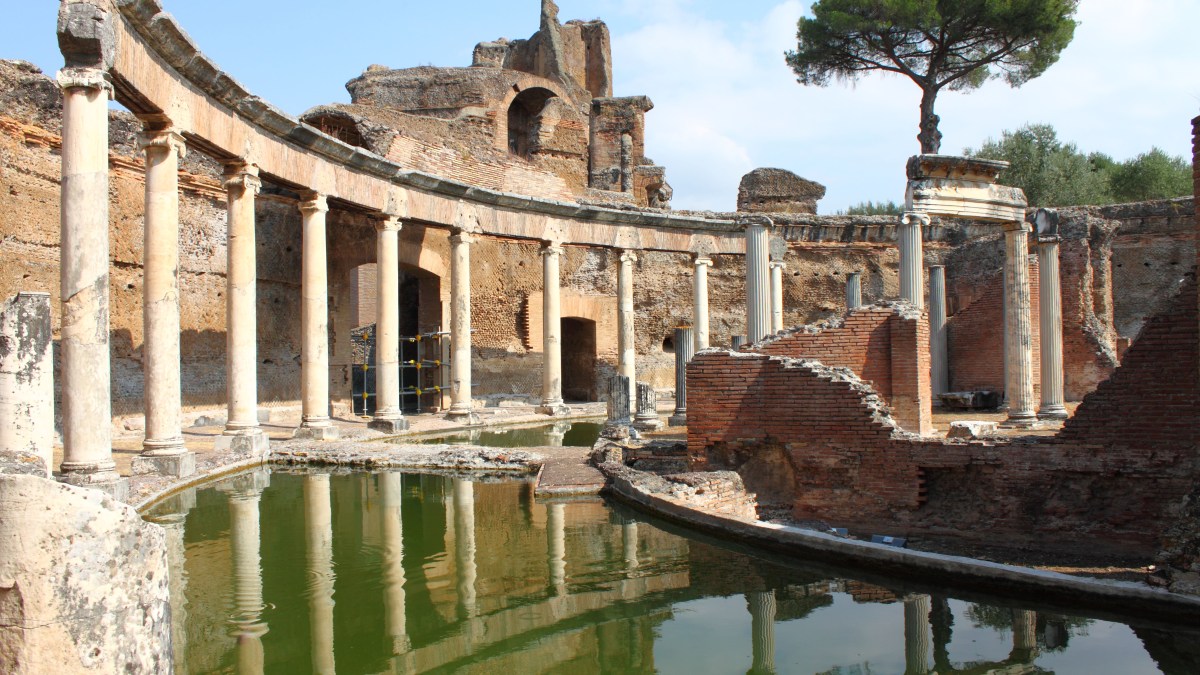
The lanes, fields and meadows that surround Hadrian’s Villa near Rome act as a rural buffer zone protecting the sprawling ruins that were once home to the Roman emperor.
Today the area is also a discreet dumping ground for old fridges, tyres, broken car bumpers and black plastic sacks stuffed with tin cans.
As he poked around in the blackberry bushes this week, Carlo Boldrighini, a heritage activist, stumbled on discarded building materials, an old, abandoned hot tub and a set of kitchen cupboards. “The locals can be less than civil when no one is looking,” said Boldrighini, the local representative of the heritage group Italia Nostra.
Gianni Innocenti, a member of environmental group Legambiente, who was with Boldrighini, added: “Particularly when it comes to dumping chemicals and paint which need a permit to dispose of.”
The rubbish is the latest example of dumping, development and illegal construction encroaching on Italy’s vast array of ancient sites of which 61 are recognised by Unesco, the most of any country. With so many temples, burial sites and excavated palaces, the question is how feasible and important it is for Italy to fight to preserve these sites as cities slowly spread around them.
Hadrian’s Villa, a 2nd century AD citadel of 30 buildings near Tivoli that sums up Roman imperial excess, is right on the front line in the battle.
Originally spread across at least 300 acres and boasting palaces, thermal baths, a theatre and libraries, the villa was Hadrian’s idea of a country retreat, away from the hubbub of Rome. In a bid to maintain his privacy, Hadrian surrounded his private quarters with a moat and added a bridge for access.
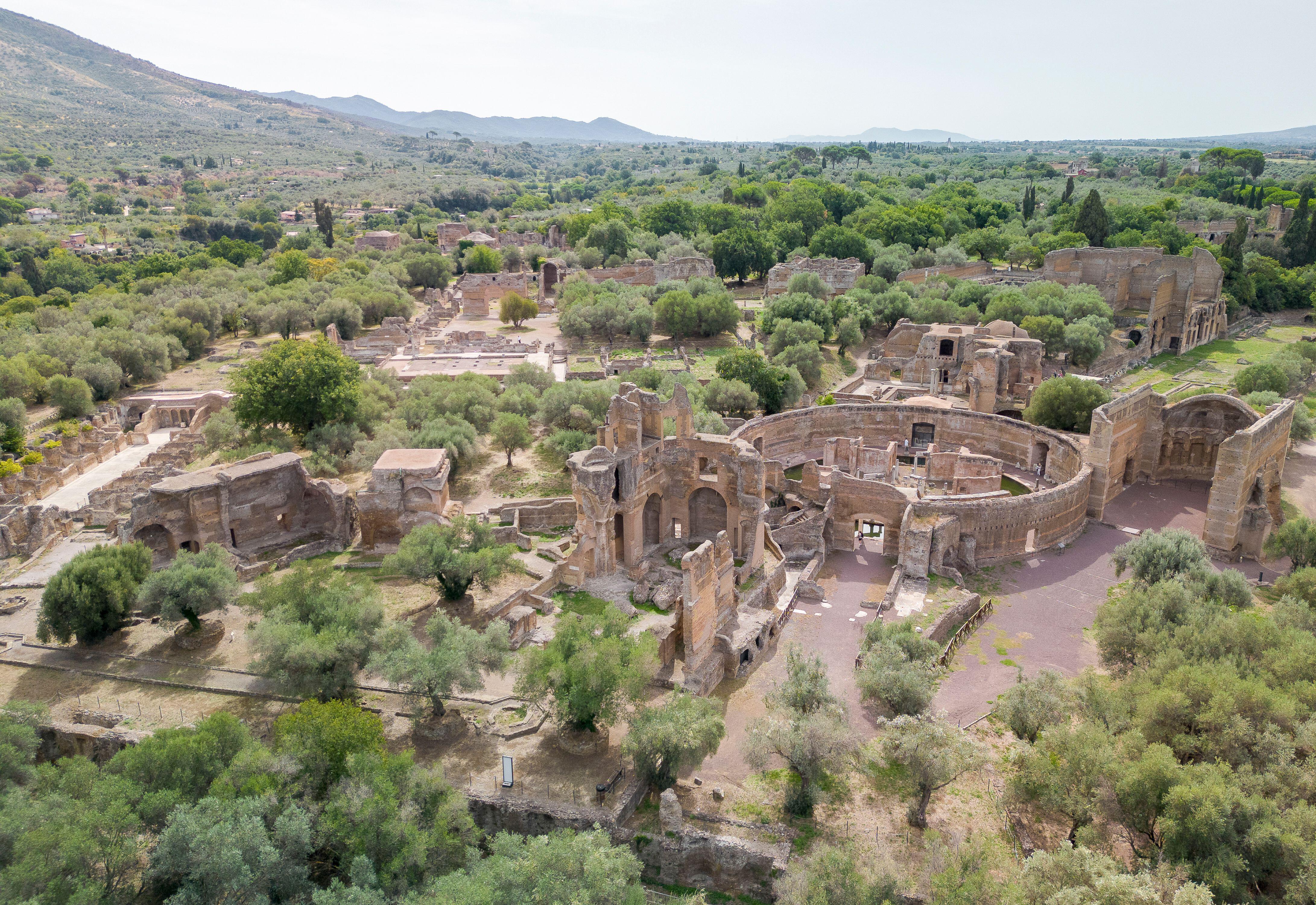
Hadrian’s Villa originally covered 300 acres
ALAMY
The emperor may have gone down in history for the wall he built across northern Britain to keep out invaders, but the villa was his big achievement, requiring miles of underground road tunnels built beneath the buildings to transport food and slaves around the complex without being seen.
When Unesco granted the site world heritage status in 1999, it made sure to state that the rolling countryside around it needed to be left untouched. The 1,200-acre buffer zone, it claimed, “is an important and sensitive site that ensures the enhancement, presentation and protection of the outstanding universal value of the property, and as such requires sensitive management and protection”.
Since then, preservation officials have fought non-stop battles to stop the zone from being destroyed. A years-long legal campaign was needed to halt plans to turn an old quarry, a few yards from the zone, into a huge rubbish tip for the city of Rome.
This year, fans of the villa claimed victory when courts halted another project to build apartment buildings on agricultural land in the zone. “It has been a decades-long fight against development here,” Innocenti said.

Fly tippers have been driving up lanes at night to dump refuse in the buffer zone
TOM KINGTON FOR THE TIMES
Just when the threats of development appeared to retreat, fly tippers got in on the act, driving up lanes at night to dump refuse.
Boldrighini said managers of the villa were planning to crack down on dumping, but Italia Nostra warned in a letter last month to Italy’s culture minister that “the buffer zone is heading for a state of
abandonment, with farmland transformed into illegal tips”.
Innocenti said that the nearby Villa d’Este, a 16th century villa known for its garden and fountains, had previously been a victim of local misbehaviour. “In the 1980s someone routed a sewage pipe into the water supply of the villa by mistake and sewage started coming out of the fountains,” he said.

Villa d’Este
MARCO FLAMINI/GETTY IMAGES
Leaving the buffer zone, Innocenti and Boldrighini took The Times to visit a Roman mausoleum overlooking a busy road which is the last resting place of Aulus Plautius, the Roman general who led the Roman conquest of Britain in AD43 and governed the province until AD46.
Pointing to the marble inscription on the side of the mausoleum, Boldrighini said: “I believe that is one of the few, if not the only inscriptions commemorating the conquest.”
Behind him, men from the council in white overalls removed dumped kitchen appliances from an abandoned, ruined building used by fly tippers for years.
As the fate of the buffer zone around Hadrian’s Villa is fought over, Italy is moving towards better management of ancient sites, notably in Rome, where villas and artefacts dug up during the construction of a metro line have been put on display in new stations, turning them into museums.
It is a far cry from Agrigento in Sicily where modern, often unregulated blocks of flats crowd up against the town’s ancient Greek temples.
• Florence skyline darkened by luxury flats dubbed the ‘black cube’
Prince Urbano Barberini, a noble descendant of popes and a farm owner near Hadrian’s Villa, said locals had yet to wake up to the advantages of conservation.
“I have the remains of a huge Roman aqueduct on my land, but I spend my days clearing up rubbish dumped amid the trees and on the lanes around it,” he said. “We once found the entire contents of a hairdresser’s salon abandoned on a road near the farm.
“The countryside around Rome is full of illegal dumps and the buffer zone around Hadrian’s Villa is under constant threat. People don’t realise the context of the site is as important as the site.”