
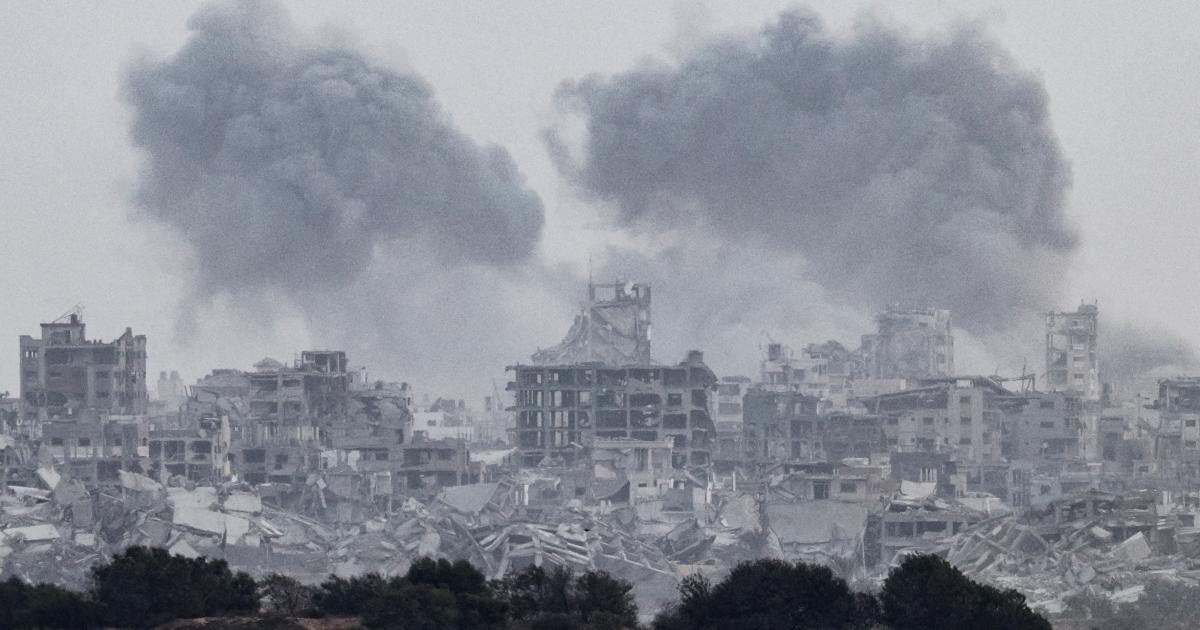
On Monday, October 6—almost two years to the day since Hamas’s October 7, 2023, assault on Israel prompted it to launch its devastating war on Gaza—Israeli and Hamas negotiators will head to Cairo for talks to end the war. U.S. President Donald Trump’s 20-point peace plan, unveiled on September 29, provides the blueprint. Hamas has expressed its willingness to liberate all the remaining Israeli hostages in its control in exchange for the release of over 2,000 Palestinian prisoners. Israeli Prime Minister Benjamin Netanyahu has also purportedly agreed to partially withdraw the Israel Defense Forces from Gaza; the IDF has already halted some airstrikes. The plan, backed by eight Arab and Muslim countries in the region, also calls for Hamas’s disarmament, a surge of aid to Gaza, the strip’s economic reconstruction, and eventual governance by a reformed Palestinian Authority.
As recently as a few weeks ago, such a cease-fire deal appeared completely out of reach. Netanyahu stressed that he believed the hostages could be freed only with military force, the IDF launched an occupation of Gaza City that was expected to take months, and Israeli officials asserted that they would defy international pressure to change their war policy. To understand what changed for key players in the Middle East and why, Foreign Affairs turned to Ami Ayalon, a former head of the Shin Bet, Israel’s security service, and a former commander of the Israeli navy. Ayalon has also had a lengthy career in politics, serving both in parliament and Israel’s cabinet under Prime Minister Ehud Olmert; he has long worked with Palestinian civil-society leaders to find a durable solution to the Israeli-Palestinian conflict. Ayalon spoke with Senior Editor Eve Fairbanks on Sunday morning. Their conversation has been edited for length and clarity.
Most observers outside the region feel a bit lost on how to judge this plan’s chance of becoming a reality.
 Ami Ayalon
If it’s of any comfort, we Israelis feel lost, too, trying to understand the implications and promise of this plan. But ending the war and bringing back all the hostages is so important that we are ready to believe—to hang on to any bit of hope. That’s the mood here in Israel.
I do think this plan is a very important first step. But there is a really huge gap between Israeli expectations and Palestinian expectations. What Israelis care about is ending the war and bringing back the hostages. And so many Israelis are saying this is fantastic, a great move in the right direction. The problem is that the plan does not reflect what Palestinians want. Yes, they want to end the war and achieve the release of their prisoners. But they are ultimately looking for the end of the Israeli occupation of their territory—in the West Bank, too. And this plan, still, doesn’t really speak about that.
I talked with a Palestinian friend two days ago. He’s a leading scholar. He said the mood among Palestinians is this: they will see an administration led by Trump and Tony Blair, with only one Palestinian representative in a “peace board,” as humiliating. All of what we have sought to vanquish in Gaza will flourish in the West Bank. It will not go by the name “Hamas.” But just as Israeli society persists in a state of confusion, humiliation, hatred, revenge, and above all fear after October 7, so does Palestinian society. Israelis do not understand that, and the danger is a peace that does more to address those feelings on the Israeli side.
What chance is there that hard-right elements of Netanyahu’s coalition will abandon him because he signed on to the plan, collapsing the government?
The hard-liners in Netanyahu’s coalition have a lot to lose, but the West Bank is more important to them than what is happening in Gaza. This plan does not include explicit restrictions on settlements in the West Bank. Trump has said that he will not let Netanyahu annex the West Bank, but that’s nonsense. Every day Israel is annexing more of the West Bank!
The fact that hostages have remained in Gaza has shaped the war for two years. It has also shaped the Israeli opposition, which has coalesced around Netanyahu’s failure to bring home the hostages. If they do come home, what will it mean for the opposition?
The opposition has no policy. In the near term, it does agree on one thing: replace Netanyahu. It thinks that will be enough. But what Israel has been fighting in Gaza is not really a war. It is a battle. We can end this military campaign, but the greater war won’t be over. For Palestinians, the war will continue. Even if Hamas is disarmed, the humiliation and confusion in the West Bank will not have been dealt with. Most Israelis do not understand that.
The conflict is between two peoples, seven million each, living between the Jordan River and the sea. And unless we achieve a political agreement that ends Israel’s occupation and creates two states side by side, the war will not end. The Israeli opposition will continue to do everything it can in order not to discuss that, because 80 percent of Israelis staunchly oppose the creation of any Palestinian state.
Can Hamas trust Israel’s intentions in negotiating?
Of course not. I don’t trust my prime minister. Why should they?
Then why has Hamas potentially accepted this deal?
If you measure things in military terms, Hamas is defeated. But if you measure support on the street in the Muslim world or in Europe, it is still winning. Even in the United States, support for Israel is declining.
So you think Hamas sees signing on to this proposal as a reflection of its victory?
Yes, of course. Hamas does not represent the Palestinians. It didn’t represent them even before October 7. Today, Gazans hate Hamas almost as much as they hate us. But both Israel and the group backing this peace plan are making a huge mistake by not engaging a wider range of Palestinian leaders.
I was very close to Ariel Sharon [who served as Israel’s prime minister from 2001 to 2006]. When he decided to withdraw from Gaza in 2005, I went to his farm—he had a sheep farm—and I told him, “You’re making a huge mistake.” He said, “So what should I do?” I said, “You should invite Mahmoud Abbas”—the longtime Palestinian leader—“to your farm and to give him a ceremonial key to the gate of Gaza, a big key. Give it to him as a present.” A few months earlier, Abbas had won a Palestinian presidential election to succeed Yasser Arafat. With over 67 percent of the vote, Palestinians had chosen a leader who, during the second intifada, was brave enough to say to his people: we must stop this violence; it will only bring us more humiliation.
Instead, Sharon did a unilateral withdrawal, allowing Hamas to depict Israeli disengagement as a reward for violence. Today, Israel refuses to release jailed leaders such as Marwan Barghouti, who would win an election if Palestinians voted tomorrow. We refuse to negotiate with leaders who want to create a two-state reality. We are negotiating only with our enemies; we are destroying our friends. And by failing to talk about two states, we are strengthening the perception that Palestinians can achieve their aims only by force.
Trump has publicly depicted Netanyahu’s acceptance of the deal as something of a capitulation, bragging that Netanyahu has “got to be fine with it” and that “he has no choice.” Isn’t this embarrassing for Netanyahu?
It is. It took Trump too many months to understand the only language Netanyahu speaks, which is pressure and power, not dealmaking. But now Trump understands it. Netanyahu’s failed attack on Qatar played a very important role. [Editor’s note: On September 9, Israel attempted to strike Hamas officials in Doha but did not kill its intended targets, and the attack took Trump by surprise. In crafting his deal, Trump demanded that Netanyahu apologize to Qatar.] By attacking Qatar without telling Trump, Netanyahu embarrassed him in the face of his friends. I think that this was the event that got Trump to understand that Netanyahu was manipulating him. Trump had really wanted to believe him. But with that attack in Qatar, it became personal.
International pressure, as represented by the recent recognitions, also made a very important contribution. When Trump presented his deal, he emphasized that this is what the whole world wants. He was able to say, “I’m doing what all the world wants me to do.”
The question is now, Can Trump sustain this effort? To achieve his goal of an enduring peace, he will have to put pressure on every Israeli, not just Netanyahu. Because peace will also involve the West Bank. It will involve bringing back settlers.
At numerous points in recent history, different parties in the Israeli-Palestinian conflict have appeared to be on the same page—Oslo, for instance—and then an agreement falls apart. Is there any reason to think this will be different? Any reason not to be cynical?
I do think one group of people in Israel who truly understand the great advantage of this proposal is the generals. They will not sacrifice this deal. They are the only Israelis who understand the limits of military power.
But my optimism comes not because I know something special, but because I believe that the world has come to see a resolution in the Middle East as in its interest. The Israeli-Palestinian conflict is no longer small or local. It clearly shapes the security and the stability of the Middle East. And if the Middle East is not stable, leaders in Europe, North America, and elsewhere feel the impact. They will feel it when their people go to vote and in their economies. The international community has a clear economic interest in the stability of the Middle East. If I have hope, that is what it is based on.
Loading…