
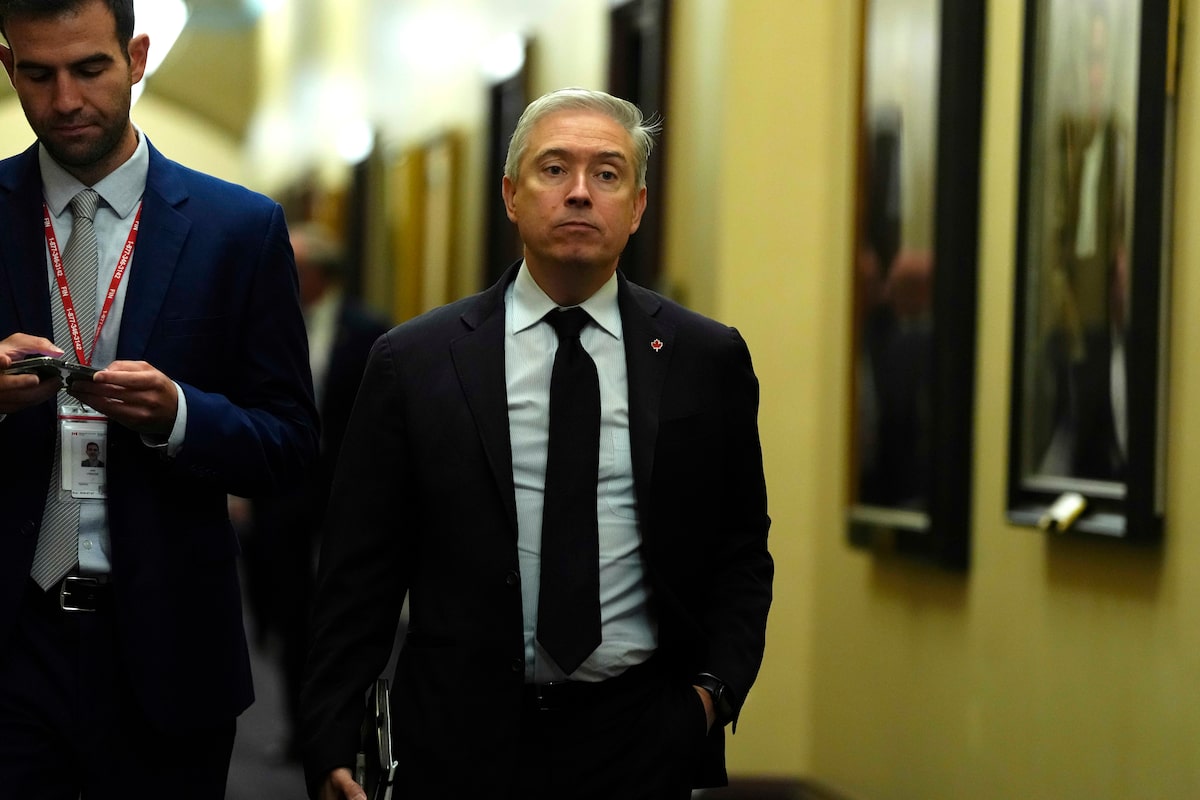
Minister of Finance and National Revenue Francois-Philippe Champagne makes his way to a caucus meeting on Oct. 1. Champagne released an outline Monday of the government’s plans to change the way budgets are presented.Justin Tang/The Canadian Press
Ottawa is making a permanent shift to tabling budgets in the fall instead of spring, saying it will improve reporting to Parliament and help provinces and municipalities plan for construction season.
The tradition of releasing a smaller fall economic statement each year will be swapped with a spring economic statement instead.
Finance Minister François-Philippe Champagne released an outline Monday of the government’s plans to change the way budgets are presented, including by highlighting how much of federal spending is allocated to operational versus capital spending.
The Liberal Party campaigned earlier this year on a plan to balance the operating budget within three years, but the concept of an operating budget was not clearly defined and is not currently part of the way federal spending is presented to Parliament.
Carney has large and risky job ahead of him on Washington visit, former officials say
Mr. Champagne told reporters Monday that the government will balance the operating budget by the 2028-29 fiscal year. However he declined to provide details as to how that category of spending will be defined. He said those details will be revealed in the budget.
He described the change as an effort to provide MPs with additional information that will show how the government is delivering on its pledge to spend less on day-to-day spending in order to invest more on capital projects.
The minister is scheduled to appear Monday before the House of Commons finance committee.
The government says the Nov. 4 budget and future budgets will continue to present the budget balance in the traditional format.
“The framework will be applied to the federal budget, while preserving comparability across different fiscal publications. It is designed to augment – not replace – existing financial reporting,” the government said.
There have long been calls by the Parliamentary Budget Officer and MPs on the government operations committee to move toward an earlier date in the Parliamentary cycle.
Ottawa to table budget on Nov. 4, Finance Minister says
While much of the public attention on the House of Commons focuses on debates over legislation, MPs also have a formal role in approving government spending through a process called the estimates.
The main estimates must be presented to Parliament on or before April 16 each year. They lay out base funding plans for federal departments. Those budgets can be topped up throughout the year with supplementary estimates.
All estimates must be approved by the House of Commons.
The criticism has been that the typical timing of releasing federal budgets in February or March didn’t provide departments with enough time to include that information in the main estimates, meaning MPs were forced to study spending reports that are incomplete.
Government documents show that one of the main goals of the updated presentation of the budget is to illustrate how much federal spending is used by other levels of government through transfers.
The announcement said capital investment will be defined broadly as any government expense or tax expenditure that contributes to public or private sector capital formation, “held directly on the government’s balance sheet or on that of a private sector entity, Indigenous community or another level of government.”
The federal government has not tabled a federal budget since April 15, 2024. The government’s December, 2024, fall economic statement was overshadowed by the surprise resignation that morning of then-finance minister Chrystia Freeland.
Monday’s announcement did not include any new details related to deficit projections. That information will be released in the Nov. 4 budget.