
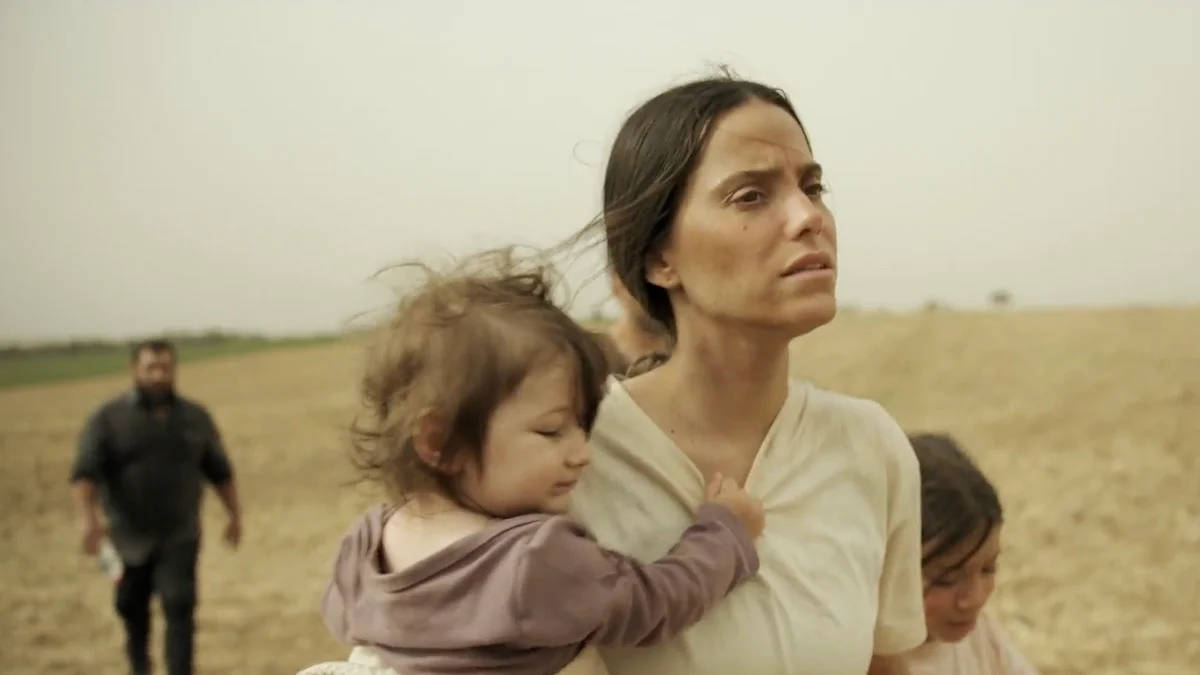
On the second anniversary of the deadly Hamas invasion of October 7, 2023, with wounds still fresh and 48 hostages still held in Gaza, the Israeli drama series “Red Alert” provides a heartrending reenactment of the horrors experienced by the terror group’s victims that day.
Each of the four 45-minute episodes is a stark, riveting, and painful reminder of the terrifying hours experienced by those attacked, including Supernova festival revelers, police officers, and residents of the south.
Produced by Israel’s Keshet Media, the first episode of the series aired on Keshet (Channel 12) on Sunday and will premiere globally on Paramount+ on Tuesday.
The series’s start is eerily serene, with the first episode featuring scenes from the lives of victims and security personnel on October 6. Ohad Yahalomi and his daughter brew ginger tea in the fields near their home, special security officer Kobi plays with his kids, and Supernova revelers enjoy the first hours of the music festival.
Most of the four episodes, however, focus on heart-stopping, horrifying moments of October 7.
Get The Times of Israel’s Daily Edition
by email and never miss our top stories
By signing up, you agree to the terms
Viewers see the Yahalomi family in their safe room, trying to keep the kids quiet as the terrorists close in on their home and as Ohad, the father, makes the life-altering decision to sit outside their broken safe room door with a handgun, trying to keep his family safe.
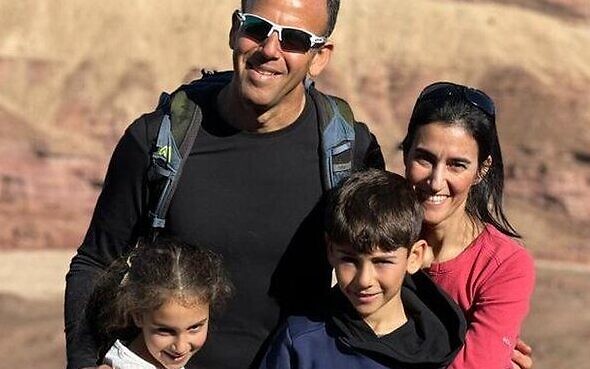
The Yahalomi family from Kibbutz Nir Oz. Father Ohad, daughter Yael, son Eitan and mother Batsheva. Ohad and Eitan were taken captive separately to Gaza on October 7, 2023, by Hamas terrorists. Eitan was freed on November 27, 2023. (Courtesy)
Other scenes focus on Kobi, a pseudonym for one of the members of the security forces, who first busts drug dealers at the Supernova festival and then finds himself fighting terrorists in the streets of Ofakim. At the same time, Kobi’s wife, a police officer, tries to help partygoers as the attack unfolds around the fields of Re’im.
Middle-aged mother Tali Hadad watches as her son, Itamar, an off-duty soldier, grabs his gun to go fight terrorists in their Ofakim neighborhood and then springs into action herself, driving wounded residents to the town’s Magen David Adom unit.
Each episode offers fine attention to detail that underlines how the show’s creators worked closely with survivors to learn and convey their stories.
The Yahalomi family plays the Israeli card game Taki (like Uno) to keep the kids quiet in the safe room, and viewers can see real photos of the family hung on the walls of their Kibbutz Nir Oz home.
As the attack unfolds on the streets of Ofakim, viewers watch Kobi fight terrorists, chasing one through white sukkah dwellings constructed outside apartment buildings.
Meanwhile, his wife and another officer hide from terrorists in the now familiar trees and brush that dotted the landscape near the Supernova festival, and promise each other that if they survive, they’ll get their nails done together in Beersheba.
Many of the actors in the drama series may be familiar — Rotem Sela plays Batsheva Yahalomi; Israel Atias of “Shababnikim” fame portrays Kobi the security officer; comic actor Rotem Abuhab plays police officer Liat; and “Fauda” star Hisham Suleiman plays Ayub, the Palestinian resident of the Negev whose wife is killed by terrorists.
It’s impossible to watch without imagining what the Israeli actors were thinking and feeling as they enacted these stories. Perhaps, one might wonder, they saw it as a public service — a way to spread awareness and help share the victims’ stories.
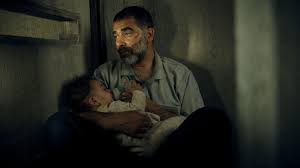
Hisham Suliman as a father who protects his baby after Hamas terrorists kill his wife, in ‘Red Alert.’ (Green Productions, Bender Brown Productions, Keshet 12, The IEF and Paramount+ )
The actors embody those who had to make impossible choices on that day.
These include Batsheva Yahalomi — who managed to escape an abduction attempt with her baby and young daughter, barefoot and in pajamas, as her wounded husband lay bleeding in their home and her 12-year-old son was being taken to Gaza on the back of a terrorist’s motorcycle — and Tali Hadad, who drove her car through the terrorist-ridden streets of Ofakim, ferrying the injured to urgent care.
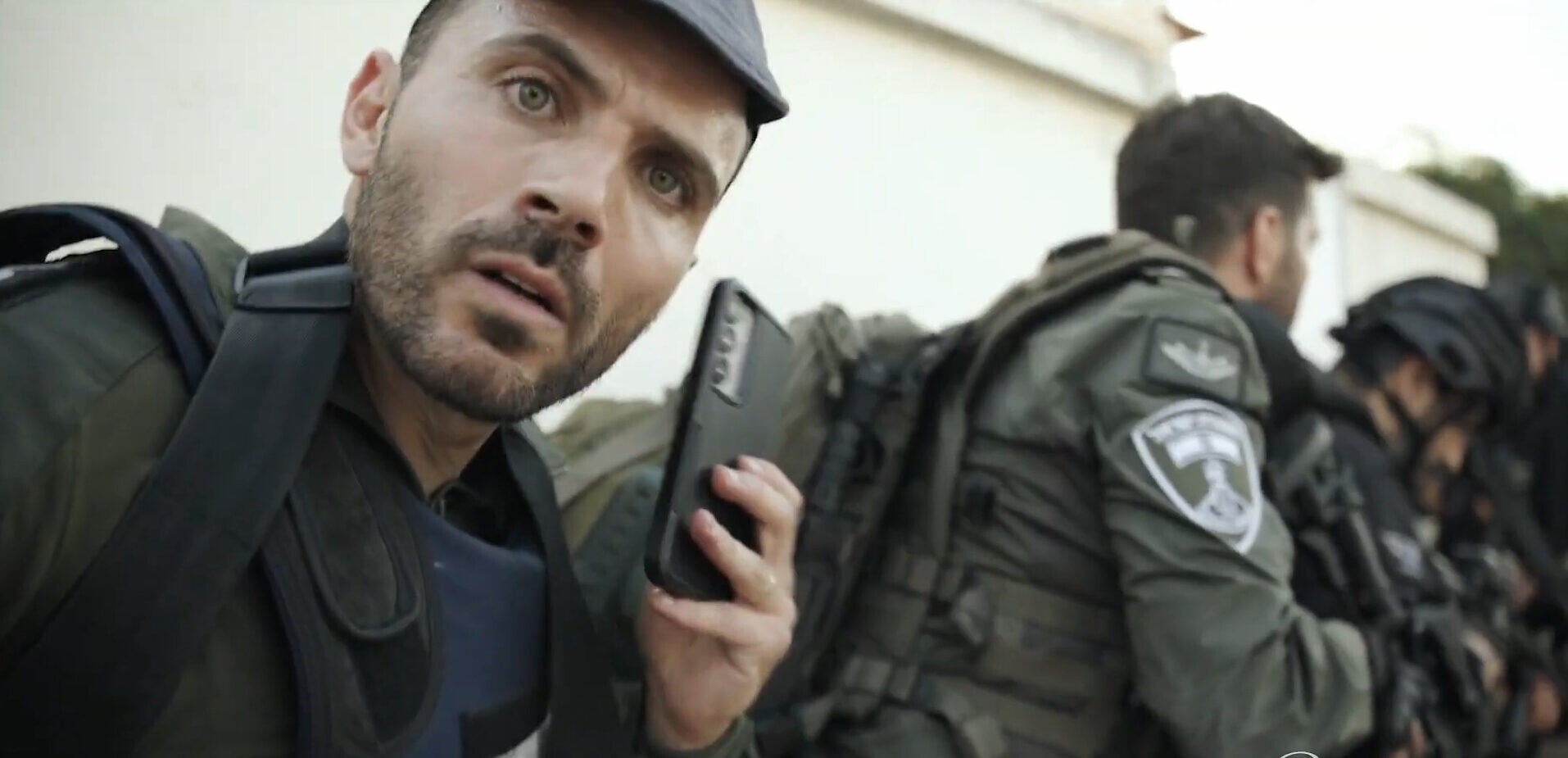
Israel Atias as Kobi, the pseudonym for a special operations police officer whose story is told in ‘Red Alert,’ released by Keshet on October 5, 2025 (Courtesy)
It is all supported by carefully chosen video footage from the actual day, showing the real Yahalomi searching for safety on the kibbutz, scenes from the Supernova festival, and highway footage of terrorists attacking random cars.
Ruth Efroni, who conceived of and wrote the series, posted on Facebook ahead of the October 5 launch that as they began to work on the storyline, she and her colleagues had naively believed that by the time they finished, all the hostages would be home, the war would be over, and the world would be moving toward healing and repair.
“I believe the episodes will show with what reverence, truthfulness, and sensitivity we treated the real stories entrusted to us,” wrote Efroni.
“Red Alert” achieves what its creators intended: to tell just a few of the stories from the October 7 massacre as a window into that day and to remind the world what happened.
The project, created by Lior Chefetz, is produced by Green Productions together with the Jewish National Fund USA Israel Entertainment Fund (IEF). It was led by Oscar-nominated Hollywood producer Lawrence Bender (“Pulp Fiction,” “Inglourious Basterds”) and sold by Keshet.
Bender, who was a guest at the Jerusalem Film Festival in July, called “Red Alert” a “deeply personal” project that “tells the story of our people and of a single day that changed everything. What makes it so powerful is that it isn’t just a drama — it’s real.”
The second episode of “Red Alert” will air on Israel’s Channel 12 on Wednesday, October 8, at 9:30 p.m., the third episode on Sunday, October 12, and the final episode on Wednesday, October 15.
You appreciate our journalism

You clearly find our careful reporting valuable, in a time when facts are often distorted and news coverage often lacks context.
Your support is essential to continue our work. We want to continue delivering the professional journalism you value, even as the demands on our newsroom have grown dramatically since October 7.
So today, please consider joining our reader support group, The Times of Israel Community. For as little as $6 a month you’ll become our partners while enjoying The Times of Israel AD-FREE, as well as accessing exclusive content available only to Times of Israel Community members.
Thank you,
David Horovitz, Founding Editor of The Times of Israel