
Facing its darkest days on October 7, 1941, Australia turned to an unlikely figure to lead the country when John Curtin became prime minister.
A former left-wing firebrand, inexperienced in war and often in poor health, Curtin became the nation’s 14th prime minister at the lowest point in World War II for Australia and the Allies.
Only a few months after the Labor MP assumed the highest office, Imperial Japan launched its devastating attack on the US Pacific Fleet at Pearl Harbor in Hawaii.
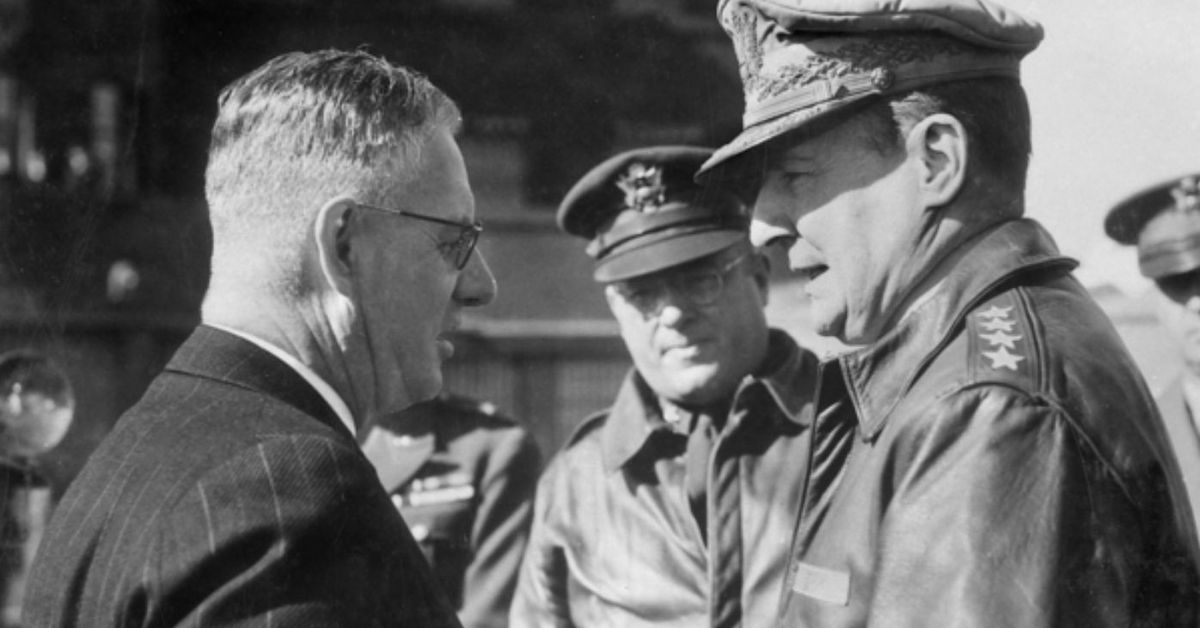
 Australian Prime Minister John Curtin, left, and US General Douglas MacArthur. (Supplied)
Simultaneously, its troops launched a lightning invasion of south-east Asia, overwhelming the often touted “impregnable” British naval base at Singapore.
Despite Australian troops bravely fighting and dying, the advances of Japan seemed unstoppable, with the threat of invasion looming greater every day.
Curtin, leading a minority government, appeared to many in his party and his political opponents appeared not up to the tough job of war leader.
But he surprised them by a gritty determination during his prime ministership of three years and nine months.
Perhaps his biggest achievement was building an effective military alliance with the US, the “sleeping giant” of global power looking to hit back at Japan.
 British troops captured by Japanese forces during the fall of Singapore, on February 15, 1942. (Getty)
In a famous radio broadcast, Curtin said Australia would look west to the US for military support instead of Britain, long regarded by many Australians as the “mother country”.
Curtin also forged an unlikely friendship and critical alliance with the flamboyant and conservative US General Douglas MacArthur, persuading him to become supreme allied commander with Australian soldiers under his direction.
Curtin was also determined to put Australian interests first in his war leadership, rather than defer to the wishes of London and Washington.
He famously defied British Prime Minister Winston Churchill by refusing to deploy a division of Australian troops to Burma against hopeless odds, and instead brought them home to defend Australia.
 Australian Prime Minister John Curtin, seated, far right, with UK Prime Minister Winston Churchill, seated centre, and other national leaders. (Sydney Morning Herald)
Curtin’s high point came in August 1943 when he led Labor to a decisive victory.
But the strain of war leadership, together with punishing overseas visits to London and Washington, were soon taking their toll on the PM’s health.
Following a long bout of illness, Curtin died on July 5, 1945, only six weeks before the end of World War II in the Pacific.