
Hamas has sent its latest ceasefire proposal to Israel in a sign that momentum is building for a temporary truce in the war in Gaza as starvation spreads across the territory.
The group said on Thursday that it had sent its version of a ceasefire deal, which an Israeli official deemed workable. The US envoy, Steve Witkoff, was scheduled to meet the top Israeli adviser, Ron Dermer, and the Qatari prime minister, Sheikh Mohammed bin Abdulrahman al-Thani in Sardinia, an Italian government source confirmed.
The deal under consideration is expected to involve a 60-day ceasefire during which Hamas would release 10 living hostages and the bodies of 18 others in exchange for Palestinian prisoners. Talk would be held during the ceasefire period to reach a lasting truce and aid supplies to the besieged strip would be increased.
It has only been since the end of the war between Iran and Israel war last month that the serious prospect of a ceasefire in Gaza has emerged. The outcome of the 12-day conflict has given the Israeli prime minister, Benjamin Netanyahu, domestic breathing room to push for a deal.
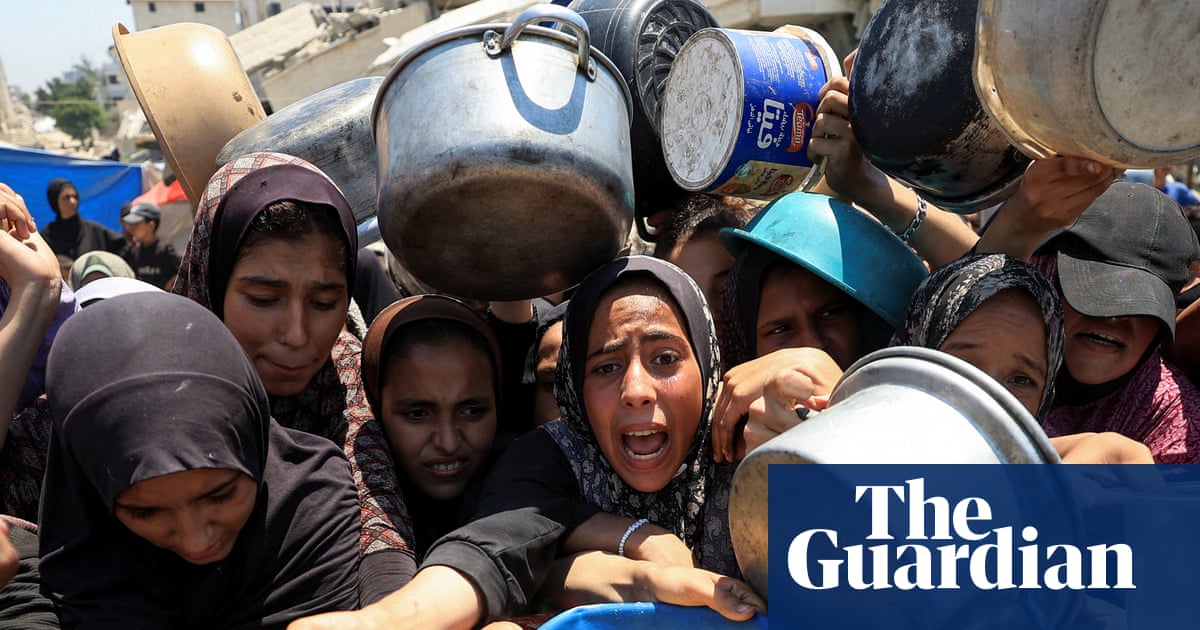
Palestinians in Gaza are suffering a severe and growing starvation crisis, a result of an Israeli blockade on most aid into the territory. At least 113 people have diedof hunger, 42 of them in the last three days.
Reports of people fainting and dropping dead of hunger have emerged in recent days. Civil defence workers have released pictures of gaunt bodies with little more than skin covering their bones.
Israeli attacks have increased as the negotiations continue. Airstrikes killed 17 people on Thursday and two more died of hunger, according to the Palestinian news agency.
Humanitarian groups say Gaza is in the grip of famine and that an immediate and significant increase in aid is needed. The Canadian government called on Wednesday for the immediate resumption of UN-led aid distribution in Gaza and condemned Israeli military operations against civilians and aid workers in the territory.
“Israeli military operations against World Health Organization staff and facilities, World Food Programme aid convoys and the ongoing killing of Palestinians seeking urgently needed food and water are unacceptable,” the foreign ministry said.
Israel says the global media is exaggerating the scale of the crisis, even though aid groups and pictures coming out from Gaza show clear evidence of starvation and doctors who treat malnourished children say they are unable get enough to eat themselves.
Israel only lets in a trickle of aid into Gaza, the vast majority of which is distributed by the Gaza Humanitarian Foundation (GHF), a private US firm. GHF operates four food distribution points staffed by US mercenaries, a system which has been described as a death trap.
More than 1,000 people seeking aid have been killed trying to access supplies in the nearly two months since GHF began operating in Gaza.
Aid used to be distributed via more than 400 distribution points under a UN-led system, but Israel has all but stopped UN aid into the territory since March. Israel accuses Hamas of stealing UN aid, a claim for which humanitarians say there is little evidence.
Aid groups say GHF, which was meant to replace the UN, lacks the capacity to do so and that its militarised model violates key humanitarian principles.
Restoring the UN aid system as a part of a ceasefire deal is a key Hamas demand. Israeli negotiators have softened their stance on the issue as pressure grows even within Israel stop the starvation crisis, which the WHO chief, Tedros Adhanom Ghebreyesus, described on Wednesday as man-made.
Thousands of Israeli demonstrators carrying bags of flour and pictures of Palestinian children who died of starvation protested in Tel Aviv on Wednesday, calling for an end to the Gaza blockade.
The war in Gaza started after Hamas led militants killed about 1,200 people in Israel on 7 October 2023 and took 250 hostage. More than 59,000 Palestinians have since been killed in Gaza by Israel’s military response.