
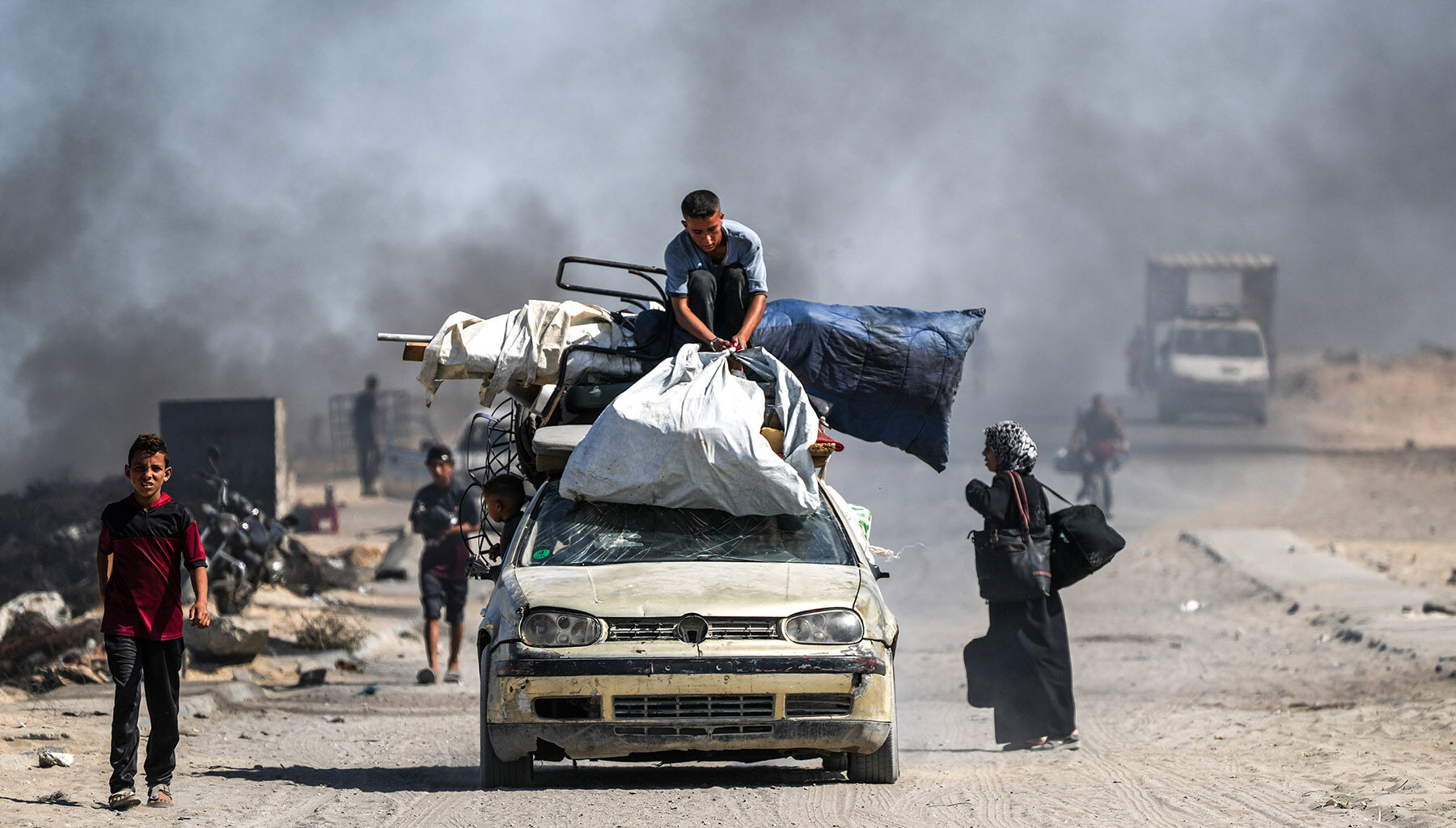
Among them are thousands who died simply trying to reach food aid: over 2,500 people killed and 18,500 wounded since May 2025. Hunger itself has become deadly, with 455 malnutrition-related deaths, including nearly 151 children, documented since the war began—mostly in recent months.
Yet Gaza is more than its destruction. It is a city rich in history, rivaling Jericho in antiquity. Historians trace its origins across five thousand years. Every corner and alley in Gaza City reflects the civilizations that once thrived there, with remnants from the Canaanite, Pharaonic, Greek, Byzantine, Christian and Islamic eras.
Gaza has always been a home for different religions and ethnicities. A Jewish quarter, inhabited by several Gazan families of Jewish faith, once stood in the Zaytoun neighborhood of eastern Gaza. Its name stems from a group of Palestinian Jewish merchants who lived there before the Israeli occupation of Palestine, engaging in trade and agriculture. Though its residents eventually left, the name remained.
And yet, in recent bombardments, even this neighborhood has not been spared.
To the east of Gaza also lies the Shuja’iyya quarter—the first foothold for Kurds in the city. It was named after Shuja al-Din al-Kurdi, a commander from Mosul in northern Iraq who joined the army of Sultan Salah al-Din al-Ayyubi. This is Gaza: a city of civilization and history, of harmony and integration among different peoples, religions and communities.
Yet, beneath these personal and historical experiences lie hard realities. Gaza has long been trapped in one of the world’s most severe economic crises. By the end of 2024, the collapse became unprecedented. The Gaza Strip’s economy contracted by more than 80% of its GDP, accompanied by an 80% unemployment rate—the highest in its history.
Basic infrastructure is also fragile. After Oct. 7, Israel cut all electricity to Gaza and systematically targeted hospitals, schools, mosques, homes and vital infrastructure. Clean water is increasingly scarce, and healthcare systems are collapsing under the strain of constant emergencies. Israel’s blockade—imposed since 2007—had already left Gaza isolated from the world.
However, these restrictions have only worsened since Oct. 7, further strangling trade, investment and hope for long-term development. These pressures—collapsing healthcare, recurrent displacement and extreme joblessness—have shaped daily life for years.
Yet even here, contradictions persist. According to the World Bank, Gaza has one of the highest literacy rates in the region, reaching 98% in 2022 across the Strip and the similarly occupied West Bank. Young people continue to pursue education as a form of resistance. Artists and entrepreneurs create spaces of hope amid destruction and scarcity.
It is a place where survival and creativity exist side by side—where despair meets defiance.
Gaza’s geopolitics often dominate headlines, overshadowing its people. The political situation is complicated, as international leaders argue over policies and initiatives at summits aimed at reaching an agreement between Hamas and Israel to stop the war and achieve a ceasefire. Yet after two years of non-stop bombardment and stalled talks, civilians continue to bear the consequences and endure devastating conditions amid little improvement.
The humanitarian situation is equally catastrophic. Famine and starvation are widespread, while humanitarian access remains severely restricted, with aid convoys frequently obstructed or looted. “This nightmare must end,” U.N. Secretary-General António Guterres declared on July 29, rightly calling for an immediate and permanent humanitarian ceasefire, the unconditional release of all hostages held in Gaza and full humanitarian access across the enclave.
Gaza is often reduced to headlines: ceasefires, negotiations and body counts. But those who live and die there know Gaza differently. It is a place of families, of dignity, of humor and humanity—even amid the rubble. It is also a city deliberately starved, bombed and cut off from the world.
My family’s story mirrors Gaza’s contradictions. My grandmother’s displacement informed a life of storytelling of her lost home. My father died during the last war—his heart could not bear the pain of displacement. My mother, grieving both her husband and her home, developed dementia.
My siblings and I carry these wounds, alongside the memories of growing up in a city always on the edge of war.
The exile of Palestinians from their homeland echoes in our present: a second erasure after Oct. 7—different in form but similar in feeling—with home becoming exile across generations. These are both personal tragedies and a collective experience. Nearly every family in Gaza can tell a similar story of loss, of resilience, of homes destroyed and rebuilt, of loved ones buried too soon.
The question is not whether Gaza will survive—it always has. The question is whether the world will continue to look away while an ancient city is transformed into a graveyard. To destroy Gaza is to destroy civilization itself. And yet, Gaza still breathes, still resists and still insists on being more than exile in the wake of October 2023.
It insists on being home.