
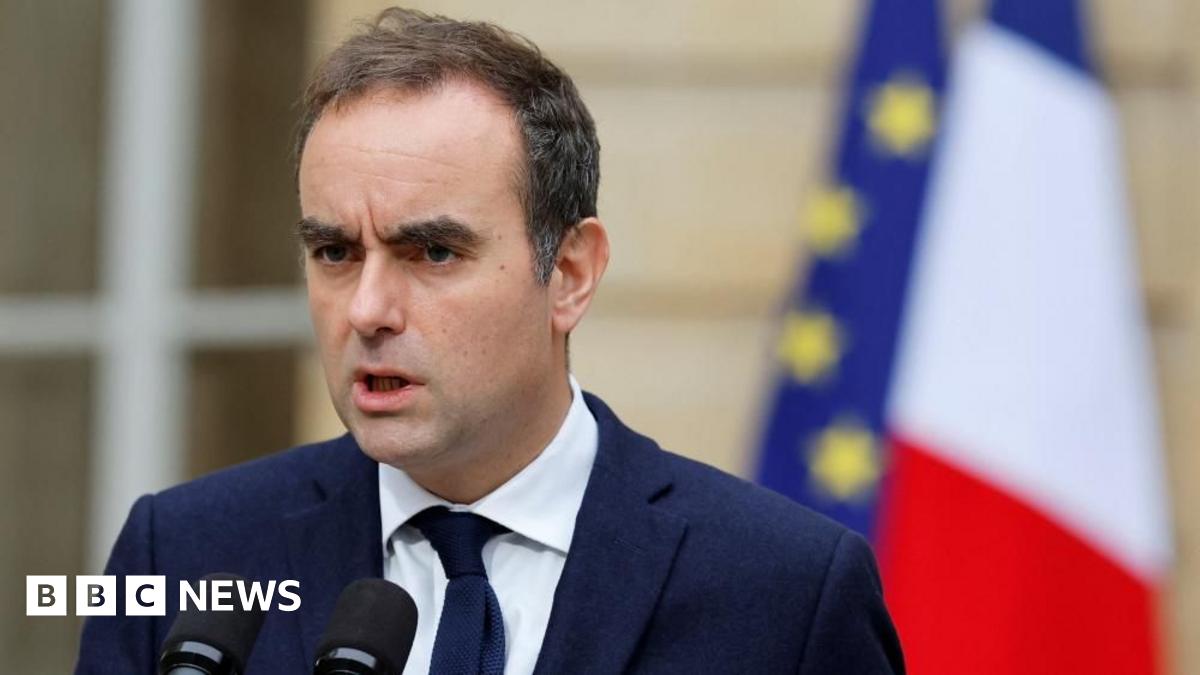
Overnight there were suggestions that Lecornu could secure centre-left support if the government suspended highly contested pension reforms that raised the retirement age from 62 to 64. However, outgoing Finance Minister Roland Lescure warned that would cost France hundreds of millions of euros this year, and billions more in 2026, when the country is trying to cut its budget deficit.
France’s public debt earlier this year was almost 114% of economic output (GDP), and this year’s budget deficit is projected to hit 5.4% of GDP.
Without Socialist involvement in the next government, Lecornu’s best hope is to cobble together a revitalised centrist cabinet with the Republicans – known as the socle commun – or common platform.
The Republicans have so far made clear they will not join a left-led government, but their return to government with the Macronists is not definite either.
National Assembly President Yaël Braun-Pivet, who met Macron on Tuesday, told French radio they had not discussed dissolving parliament and she did not see it as a good idea: “Above all it wouldn’t resolve a great deal.”
Braun-Privet later warned that if a budget deal was not agreed in the coming days, France would face “very serious consequences”.