
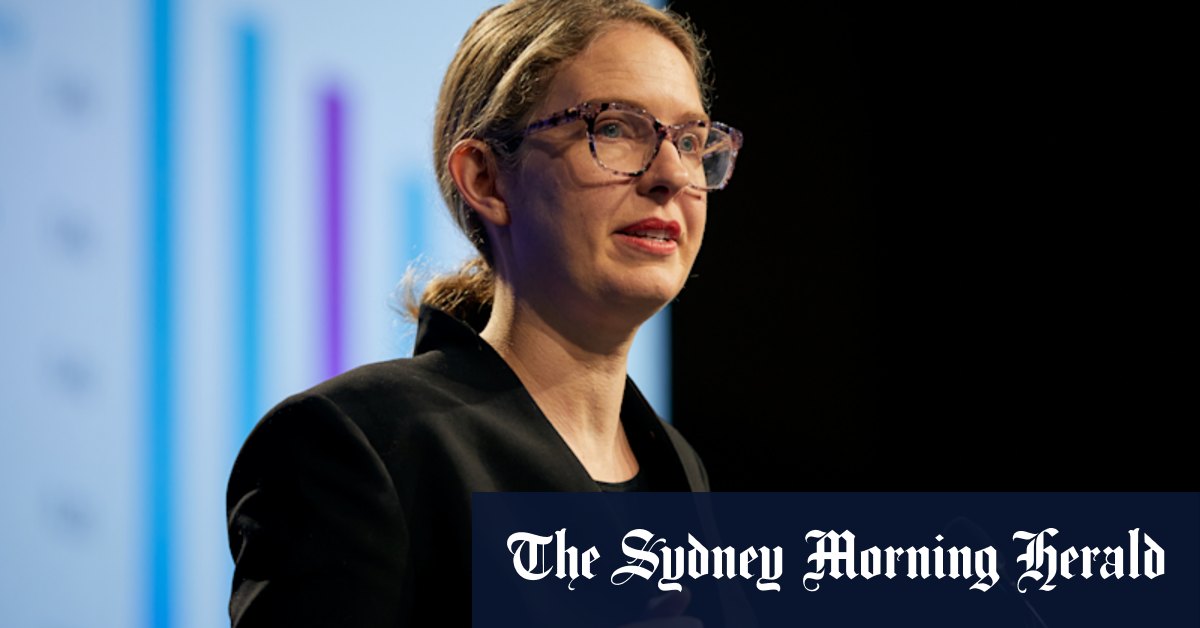
“Almost everything government does – taxing, regulating, delivering services – affects the pace and direction of economic growth,” she said.
“Bringing a growth mindset to policy decisions means elevating economic growth and its benefits. That doesn’t mean policymakers should ignore other objectives, but it does mean being clear-eyed about the trade-offs.
“No single policy change will guarantee our prosperity – we need to make smart reforms across a range of areas to drive sustainable productivity growth.”
The commission will start revealing its recommendations for reform, starting with the tax system, next week.
A coalition of 27 groups representing business, universities and investment organisations has agreed on a set of principles for next month’s roundtable. It includes an overhaul of research incentives, cutting regulatory costs by a quarter by 2030 while streamlining environmental and planning laws.
The group also wants a three-month review of the nation’s tax system, including the states, with the aim of raising revenue with the lowest possible costs for businesses and individuals.
Business Council of Australia chief executive Bran Black said the 27 groups, which include Universities Australia, the National Farmers Federation and the Tech Council, wanted policies that lifted all Australians’ living standards.
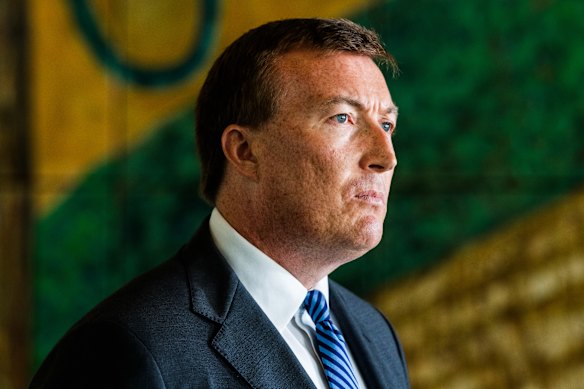
BCA chief executive Bran Black said a range of business and community organisations agree that policy change is needed to boost the economy.Credit: James Brickwood
“We need to cut unhelpful red tape, streamline planning, fix the tax system and improve incentives for investment,” he said.
“These policies can deliver benefits for economic activity across the whole country and importantly ensure future generations aren’t worse off.”
The Australian Academy of Science overnight released research showing the nation’s businesses spend $32.5 billion a year less on R&D than firms in other rich countries, saying this was one of the reasons for Australia’s relatively poor productivity performance.
Many businesses are pressing the Albanese government to increase R&D tax incentives.
But the academy is proposing applying a 0.25-0.5 per cent levy on firms with an annual turnover of $100 million or more. A business that does not spend anything on R&D would face the full levy while it would be discounted, in some cases to zero, depending on how much the firm invests.
The levy would raise between $2 and $12 billion a year that would go towards a special research fund, the earnings on which would be used to support R&D. There would also be extra spending by those firms that lift their expenditure.
Academy chief executive Anna-Maria Arabia said it was not just governments that had to lift R&D spending but also the private sector.
“The current situation is intolerable,” she said.
Another key issue for businesses looking to invest is interest rate settings. On Thursday, Reserve Bank governor Michele Bullock has pushed back against claims that a jump in unemployment has come as a surprise to the institution, in a sign an August interest rate cut is not a done deal.
Financial markets have fully priced in a rate cut at the Reserve’s August 11-12 meeting, largely due to a 0.2 percentage point lift in the unemployment rate in June. The jobless rate hit 4.3 per cent last month, its highest level since the pandemic, with employment growth effectively flat.
The RBA had forecast unemployment to average 4.2 per cent through the June quarter.
Bullock told the Anika Foundation charity that while the figures released last week showed unemployment had increased, it was not out of line with the RBA’s expectations.
Loading
“Some of the coverage of the latest data suggested this was a shock – but the outcome for the June quarter was in line with the forecast we released in May,” she said.
“That on its own suggests that the labour market moved a little further towards balance, as we were anticipating. While the June monthly data showed a noticeable pick-up in the unemployment rate, other measures – such as the vacancy rate – have been stable recently.”
Bullock said there were no signs from official statistics or the Reserve’s own liaison with businesses that employment was likely to “fall off a cliff”, but she noted it was a risk that was being taken into account.