
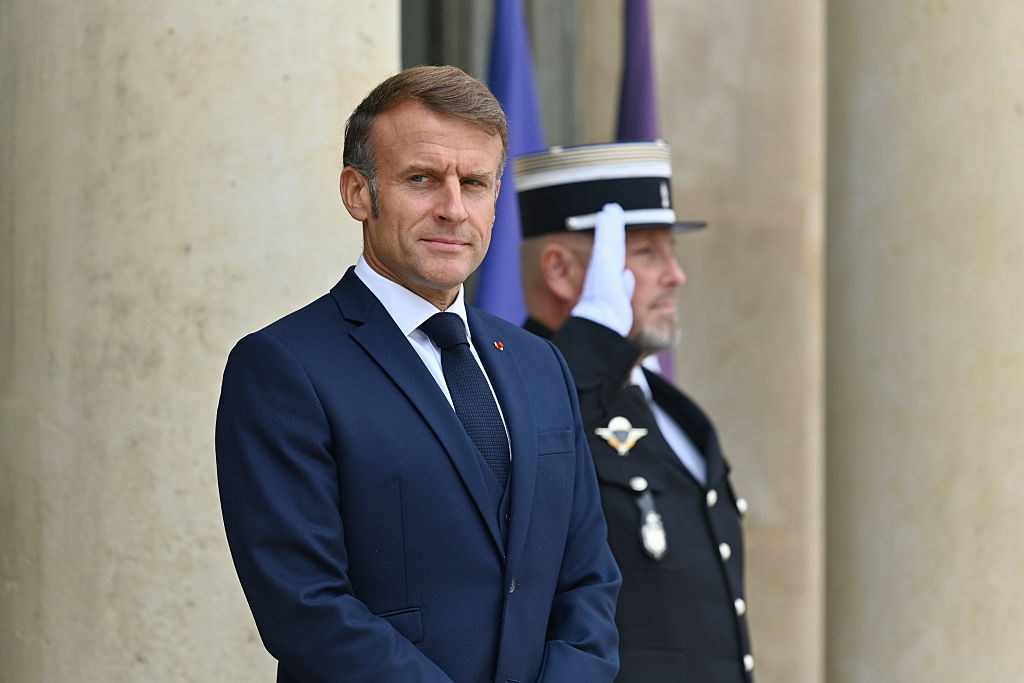
PARIS — Just hours after Israel and Hamas agreed the first phase of a ceasefire plan, officials from a dozen European and Arab–Muslim countries gathered in Paris on Thursday at the invitation of French President Emmanuel Macron to discuss “a political solution” following the expected end of hostilities.
Macron aims to push forward “a two-state solution” in the wake of the recognition of Palestine by 10 more countries at the United Nations on 22 September. The French leader wants to establish a “temporary governance structure for Gaza” before laying the foundations for Palestine’s self-determination.
“We of course welcome the release of the hostages, but we need to work on a plan for what comes next,” confirmed Kaja Kallas, the EU’s foreign policy chief, calling this “an opportunity” that must be seized “right now”.
“It is a day of joy,” said the German Foreign Minister Johann Wadephul. “Germany stands ready to send aid, including medicines and hospital equipment,” he added.
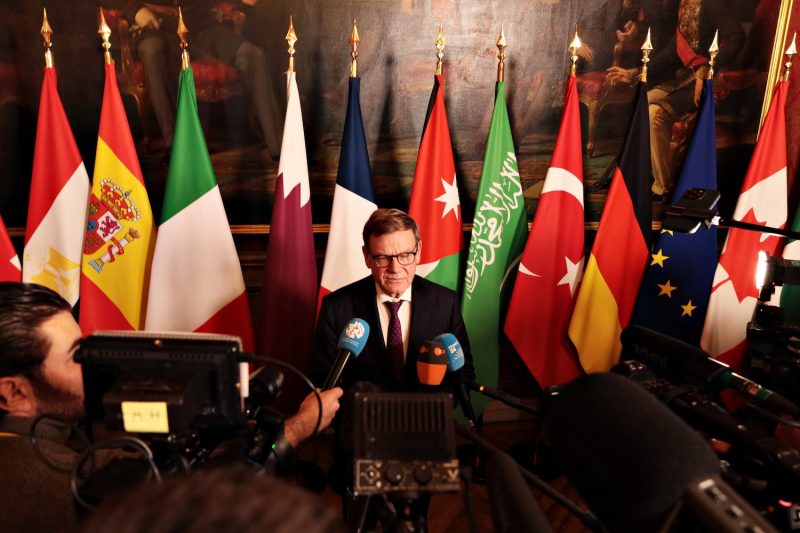
Johann Wadephul [Laurent Geslin/Euractiv]
The Paris meeting, which France sees as complimentary to US efforts to resolve the conflict, is primarily intended to facilitate the delivery of humanitarian aid to the Palestinian enclave and, subsequently to pave the way for the creation of an “international stabilisation force” to ensure security on the ground.
“France is ready to play its part,” Macron confirmed.
However, the details of any such deployment remain unclear, as relations between Paris and Tel Aviv are currently strained. Israeli minister Gideon Sa’ar said yesterday that the meeting convened by the French president was “unnecessary and harmful”.
“We view this as yet another attempt by President Macron to divert attention from his domestic problems,” he added.
These discussions come at a time when Macron is politically weakened by the ongoing crisis in France and is expected soon to appoint his fourth prime minister in just over a year.
Initially expected in Paris, US Secretary of State Mark Rubio ultimately cancelled his trip to France, officially citing “scheduling issues”, according to a spokesperson for the French foreign ministry. The ministry nevertheless stressed that it “remains in constant contact with the Americans.”
(aw)