
The government today announced that it is exploring selling the debt and equity securities it holds in Chorus, the network infrastructure builder that was awarded the vast majority of areas to construct the Ultrafast Broadband (UFB) initiative created in 2009.
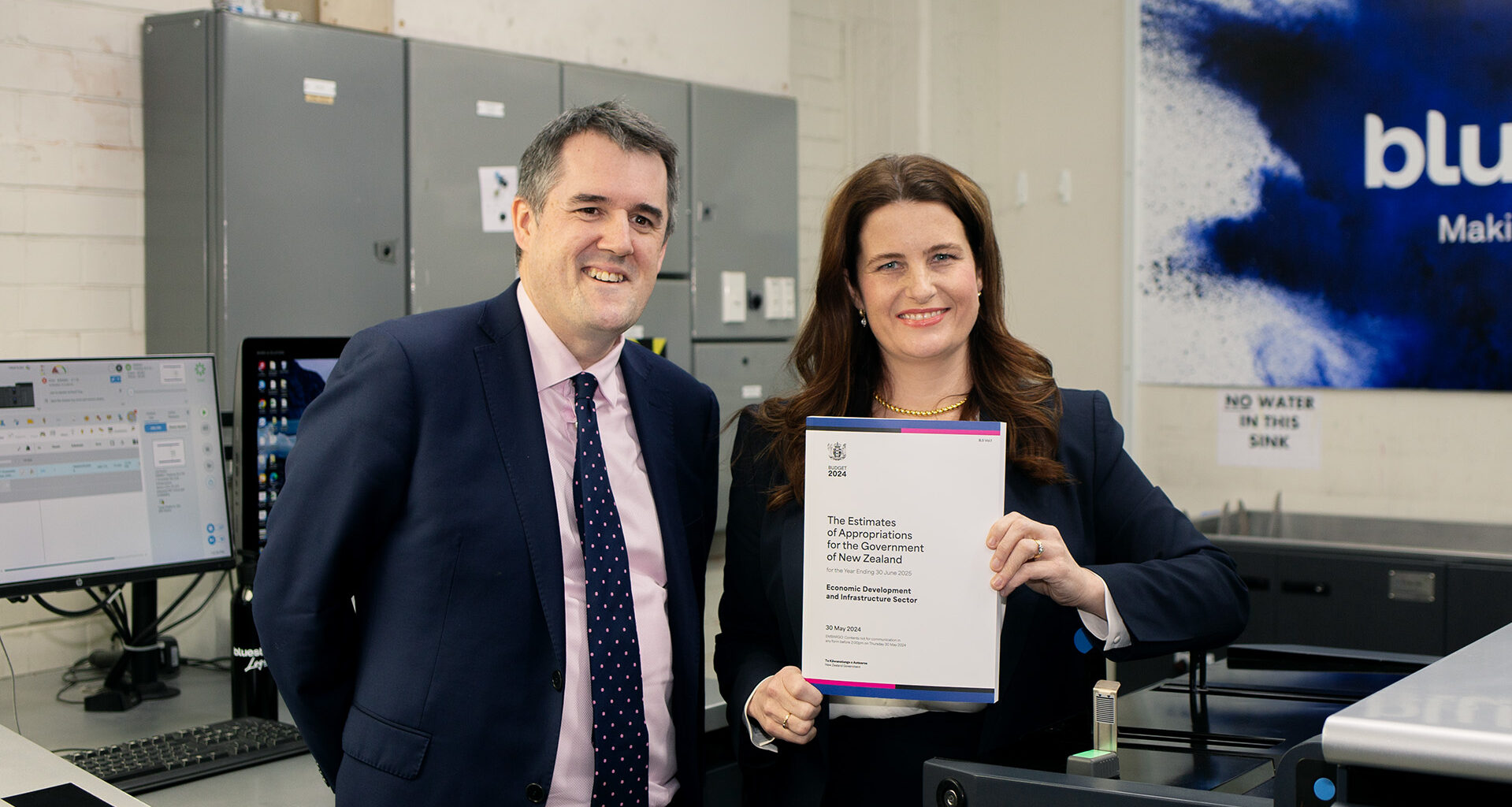
Finance minister Nicola Willis and infrastructure minister Chris Bishop announced the decision to divest the Chorus stake jointly. New Zealand’s National Infrastructure Funding and Financing company NIFFCo will now investigate the feasibility of selling the debt and equity securities the government holds in Chorus.
These were purchased as the Crown’s contribution to funding the UFB, amounting to $566.9 million and $768.5 million respectively, or $1.34 billion in total. Chorus shares trade at $9.26 each on the New Zealand stock exchange presently, with the company’s market capitalisation being $4.05 billion.
If the securities sale to private investors goes ahead, it would take place in early 2026, and done with oversight by the Treasury, Bishop said.
Bishop said the cash would be made available for capital allocations to hospitals, schools and roads in Budget 2026.
Willis said that since the UFB was completed in 2022, there is no reason for the Crown to own the Chorus securities.
“Most New Zealanders were probably not aware the Government owns this investment in Chorus, nor feels any particular benefit from it,” Willis said in a statement.
“That’s why it is sensible and prudent to consider the feasibility of divestment to redirect the Government’s capital stored in Chorus into investments that New Zealanders can benefit from.”
“The Government is continuously identifying opportunities to support its fiscal strategy and to drive economic growth. Early monetisation of NIFFCo’s Chorus securities is one opportunity that is worth exploring,” the finance minister added.
In an announcement to the NZX, Chorus said it will monitor the NIFFCo process.
“If that process results in any disposal of the securities to a third party we do not anticipate any material change to the terms and conditions on which those securities were issued,” the company said.
Speaking at this year’s Bloomberg Address, Willis declined to make a prediction how much the government would get from the sale, but said “I want to get as much as possible.”
Willis also denied that the proposed Chorus divestment amounted to asset sales, which the Coalition government has ruled out for the current term.
“I think that debt securities and equities don’t really fit New Zealanders’ idea of an asset,” she said.
“We don’t own Chorus in any way, and we are essentially a debt lender to it,” Willis added.
“So I don’t think that is a tangible asset in the sense that is meant by the Coalition agreement,” Willis said.
Opposition Labour leader Chris Hipkins viewed the Chorus announcement as an asset sale in an attempt to balance the government books.
“Here we go again. This is the National Party failing to invest in New Zealand’s future. They can’t balance the books so their response to that is to hock off the family silverware,” Hipkins said.
Hipkins attacked the government for borrowing more and investing less, and added that it showed Willis’ tax cuts were unaffordable.
National’s junior coalition partner Act wants more government assets to be “recycled”.
In a press release, Act Party finance spokesperson Todd Stephenson said the announcement was “progress” but should only “be the start” of recycling state-owned assets.
“If it makes sense to free up capital from Chorus, then it makes sense to apply the same logic to $14 billion in energy company shares, a $2 billion farming portfolio, NZ Post, and Quotable Value,” he said.
“When it’s done properly, asset recycling delivers better roads, schools, and hospitals – faster, without piling on more debt. It’s a chance to build the future New Zealanders have been promised for decades.”
Asset recycling refers to selling state-owned assets and reinvesting all of the money into new public assets. It means the net amount of publicly-owned assets does not decrease.
New Zealand First has long opposed asset sales and would be highly unlikely to allow the energy companies or other assets to be sold under a future coalition deal.
Securities structure
The securities owned by the Government are not the same as regular shares traded on the stock market. They are largely special non-voting shares which Chorus can buy back from the Crown at their original issue price.
This means the Crown doesn’t control the company and doesn’t benefit directly from increases in its market valuation, although it is eligible for dividend payments while those shares are still outstanding.
This is why Willis doesn’t consider Chorus to be a state-owned asset and told Bloomberg the securities were effectively a type of loan — not an equity stake.
Another tranche of the securities are structured as interest-free debt, which Chorus repays at face value according to a pre-arranged schedule. The total repayments of both debt and special equity over the next ten years will be $1.3 billion, plus dividends.
This reliable stream of revenue may be attractive to a commercial investor at the right price, allowing the Government to put the capital to work elsewhere.
However, selling the securities could be difficult as they were not designed to be tradable.
NIFFCo will have to work out a commercial valuation, test market appetite, then find the optimal way to sell these unusual assets.
Additional reporting Dan Brunskill