
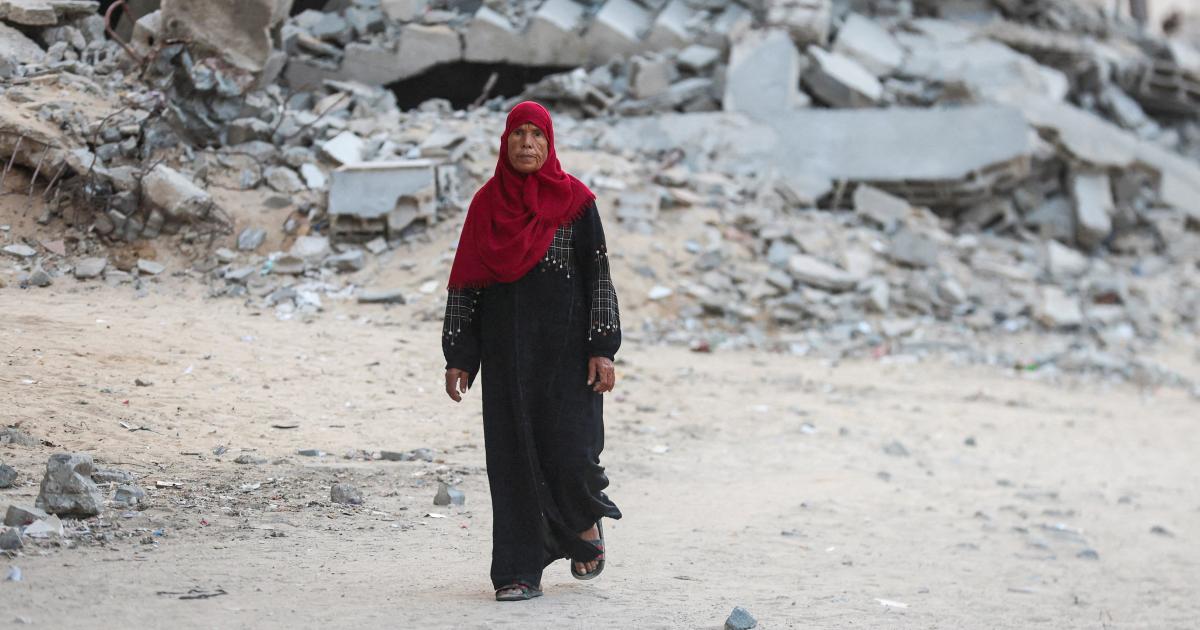
If all goes to plan, by the beginning of Saturday, Israel and Hamas will begin observing a cease-fire. Their weapons will fall silent, and Israeli troops will withdraw from their present positions to an agreed-upon line further back in Gaza. Hamas, meanwhile will release all the living hostages in exchange for 250 Palestinian prisoners serving life sentences and an additional 1,750 Gazans that Israel has captured over the last two years. Humanitarian assistance will immediately flood into the area, and Palestinians will begin attempting to rehabilitate the enclave, remove the rubble, and resume limited commercial activity.
But U.S. President Donald Trump’s peace plan is essentially divided into two phases, and these steps are just phase one. And although such measures are obviously difficult (given how long it has taken for Hamas and Israel to agree to them), they are far easier to implement than the proposed elements of phase two. This phase involves the disarmament of Hamas; Israel’s further withdrawal to a buffer just inside Gazan territory, with a complete withdrawal once Gaza no longer threatens the country; the creation of a board of peace to oversee the enclave’s governance and a technocratic group of Palestinians to administer it; an international stabilization force; and the actual reconstruction of and investment in the strip. It also includes genuinely reforming the Palestinian Authority—the organization that administers the West Bank—to set the stage for the political reunification of Gaza and the West Bank and a pathway to Palestinian self-determination and statehood.
Fulfilling these goals will involve haggling over a variety of both technically and politically fraught questions. Negotiators, for example, will have to determine how and when the IDF will withdraw, who will be in the international stabilization force that helps replace it, where that force will deploy, and what its mission is. (So far, the Egyptian and Emirati governments say the stabilization force will deploy to the crossing points and that Palestinian security forces trained by Egypt and Jordan will be responsible for law and order in the enclave’s interior.) Both this force and the Israelis are likely to face serious problems, such as the real possibility that Hamas will try to subdue the clans in Gaza—including the Al-Shabab, Al-Astal, Al-Manasi, Al-Da’mush—that have been cooperating with Israel. The group would do so for no other reason than to maintain control of the strip. And it is not at all clear what anyone will do, or should do, if Hamas attempts to reassert itself. The Israelis and Hamas have very different expectations about where Gaza will go from here.
The problems and uncertainties are very real. Yet while the road ahead is hard, there is reason for hope. The very same forces that produced phase one of this agreement can be used to achieve phase two. The United States can keep up its pressure on Israel and the Arab states can keep up their pressure on Hamas. Washington and its partners can use the channels they have created to reach phase one to figure out the composition and parameters of the stabilization force. And Israel can keep working with Arab countries to set up a peaceful, better government in Gaza.
UNDER PRESSURE
This cease-fire came together, in no small part, because U.S. President Donald Trump sent a clear message to all the parties involved that it was time to release the hostages and end the war. It was the latest illustration of a longstanding fact: when it comes to the Israeli-Palestinian conflict, the United States has great leverage. As Egyptian President Anwar Sadat said in 1977, in explaining his move to make peace with Israel, Washington holds “99 percent of the cards.” No one else, he realized, could move the country.
Consider the last few weeks, when Trump helped push Israeli Prime Minister Benjamin Netanyahu into agreeing to this deal. Netanyahu may have been able to resist U.S. President Joe Biden’s push for peace by drawing on the support of Republicans, and thus dividing Washington. But he had no such option with Trump. There is no serious political constituency for any effort by Netanyahu to keep fighting over the objections of Trump—something the Israeli prime minister knows all too well. He did not want to test what Trump might do if he rejected his proposals.
Trump had another essential role to play in trying to end this war. The key Arab states and Turkey have the ability to exert leverage over Hamas. And these states want good relations with Trump and for him to have a stake in their own success—which means the American president has indirect sway with Hamas, as well. The Arab countries and Turkey, for example, apparently believed it was time to end the war, and thus applied real pressure on Hamas to be responsive to Trump’s plan.
There are many reasons why Turkey and the Arab states want to be on good terms with Trump. Turkish President Tayyip Erdogan wants American F-35s. Saudi leader Mohammed bin Salman and Emirati leader Mohamed bin Zayid want American cooperation on artificial intelligence and increased U.S. military support. They took notice when Qatar received a security commitment from Trump that, at least on paper, is essentially equivalent to NATO’s Article 5 collective defense provision. Trump, they realized, can promote their interests.
All the key Arab states—and especially the so-called Arab Quint (Egypt, Jordan, Saudi Arabia, and the United Arab Emirates)—desperately want an end to a war that at best complicates their plans to develop their economies and at worst threatens their regimes. The fighting is fostering anger among their publics, which can be mobilized in unpredictable and potentially dangerous ways. That meant they were looking for a way out that only Trump could get Israel to provide, and were happy to pressure and isolate Hamas in return.
There is a final reason why Hamas and Israel finally agreed to a cease-fire: Israelis are starting to recognize that although their extraordinary military achievements have changed the balance of power in the region, weakening Iran and its proxy network, they have lost the political war. Never before has their country been so isolated internationally. Many of Israel’s traditional friends in Europe are leading the charge to recognize a Palestinian state, and some of them are decrying what they say are Israeli war crimes in Gaza. European publics have been protesting in huge numbers against Israel’s actions. Trump has shielded Israel from much of this international pressure, but polling shows there has been a dramatic loss of support within even his own country, with American Democrats, independents, and younger Republicans now far less sympathetic toward Israel. Instinctively, many Israelis feel they cannot satisfy the outside world while still protecting their security and meeting their own needs. But for Israel, the cold reality is that its security will suffer more from remaining this isolated than it will from abandoning Netanyahu’s goal: the complete subjugation of Hamas in Gaza (which required a seemingly endless campaign). Eventually, the prime minister seemed to agree it was time to find a way to end the war.
Aligned Incentives
Hamas, furious about losing power and committed to weakening Israel, could try to violate the cease-fire’s various terms. If so, it might spark renewed war. If the group moves to quickly recoup and the interim administration and stabilization force do nothing to stop it, Israel will act.
Hopefully, however, both this administration and force will fight back against any such effort by Hamas. The two countries most likely to invest in reconstruction—Saudi Arabia and the United Arab Emirates—share Israel’s goal of disarming Hamas and making sure it does not retain control over Gaza. And the broader constellation of forces—a powerful United States, a wider Arab world committed to helping end the conflict, and an Israel that wants the fighting to stop—are also cause for optimism. They mean the remaining obstacles can be overcome.
Implementing phase one will, by itself, create some momentum for phase two, including by reducing the incentives to resume fighting. No one will want appear responsible for resuming the war. But this momentum will last only so long. If nothing else, the Trump administration must thus quickly work with its partners to present a clear understanding of what is meant by each of the remaining 20 points of the president’s plan, and who will take what steps to implement each one. That means the administration must clarify how disarmament should be done. It should explain how much disarmament is required before Israel can move to the next phase of withdrawal. Washington and its partners will need to establish which forces will deploy to Gaza—and make sure those they are not only at the crossing points. Palestinian security forces cannot be expected, from the outset, to assume responsibility for protecting the Gazan public. The United States and its allies must figure out whether militaries from outside the region will be part of the stabilization force, and Washington must make clear what it is prepared to do to support this force logistically, including when it comes to providing intelligence and coordinating with the Israelis. Similarly, the United States, the Arab states, and other interested parties need to figure out who and what will ramp up humanitarian assistance. They must find ways to ensure that such aid goes to those who most need it in Gaza and that it is not seized by Hamas or other armed militants.
There is a Palestinian public in Gaza that craves normality and is likely to be supportive of forces distributing assistance and safeguarding the public. But creating a workable security system that is capable of addressing all these problems will require tenacity and hard work. Trump and his foreign policy team (which likely needs to be expanded to preside over all the different issues) must remain focused and engaged, and hold every actor’s feet to the fire.
The Arab states, meanwhile, must keep pressuring Hamas and the Palestinian Authority. These countries (or at least Saudi Arabia and the United Arab Emirates) seem as if they are finally ready to assume much greater responsibility for the Palestinians. This marks a sea change. Arab countries have historically exploited the Palestinian issue as a political slogan but have taken little interest in solving it. They have viewed the conflict as the responsibility of the United States and Israel. When Washington tried to persuade the Arab states to pressure Palestinian leader Yasser Arafat into accepting U.S. President Bill Clinton’s parameters for settling the conflict in December of 2000, none of them agreed. This was, in no small part, because the Arab states feared Arafat would accuse them of trying to force him to betray the Palestinian national cause. But there is no Palestinian leader today who has Arafat’s stature, and leading Arab states understand ignoring the Palestinian problem can threaten their own agendas and priorities. As a result, they are more likely to ensure that Hamas cannot control Gaza directly or indirectly and support steps on the ground to ensure it doesn’t. To achieve a lasting peace, the Arab states must also insist that the Palestinian Authority carries out substantial reforms, such as sidelining Mahmoud Abbas, the organization’s discredited leader, and replacing him with someone new who is internationally respected. Such measures are necessary if Gaza and the West Bank are to be politically unified. Arab countries know the more they do to create a workable Palestinian administration, the more likely Trump is to press Israel not only to stop the war in Gaza but also to stop its creeping annexation of the West Bank.
The Israelis, for their part, must work with the Arab states in transforming Gaza. The government needs to support an overhaul of the enclave’s educational system and, critically, endorse a reformed PA eventually assuming control over Gaza. Right now, Netanyahu is opposed to such measures, but he must realize that the Arab commitment to remaking Gaza will be to Israel’s advantage. Arab countries, in turn, must remain willing to work with the Israeli government. That, in turn, requires repairing relations between Israel and many of these states, which have soured.
None of this will be easy. But the alternative—a return to fighting—would be worse. A committed Washington, in partnership with Arab countries, can thus make sure that talks between Hamas and Israel stay on track, and thus put a real stop to this terrible war.
Loading…