
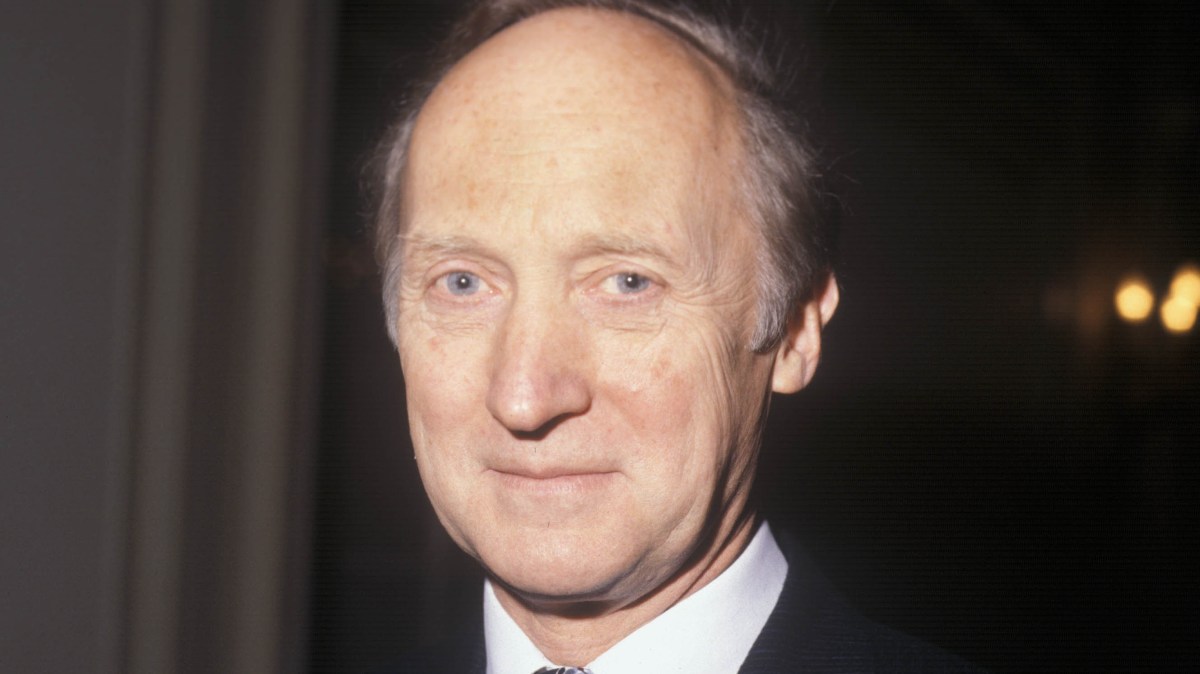
Peter Baxendell was widely regarded as the opposite of the popular image of a tycoon. However, while the Financial Times said that he was totally devoid of pomposity in 1979, it noted: “Few people who have worked with him have ever heard him raise his voice, but there is general agreement not to be around when he did.”
His equanimity was tested to the limit by the growing criticism of his companies, Shell Transport and Trading and Royal Dutch Shell, for apparently continuing to supply South Africa’s apartheid regime in the 1970s and 1980s. As early as 1963, the United Nations had urged all other countries not to sell oil to the regime, but Baxendell had deemed it “undesirable” to publish detailed information about the amount of crude and refined oil products it supplied to South Africa. Between January 1979 and March 1980, the Amsterdam-based Shipping Research Bureau claimed 26 tankers owned or chartered by Shell unloaded at South African terminals.
The company’s policy was not to sell crude oil directly to South Africa, but its officials acknowledged that middlemen may have sold Shell oil to the country, and that its South African subsidiary was free to make its own arrangements. A senior crude oil trader for Shell’s European operations testified at a trial in Houston, Texas, that the company was supplying oil to South Africa as long as the shipments were not from members of the Organisation of Petroleum Exporting Countries (Opec), which was then boycotting the country.
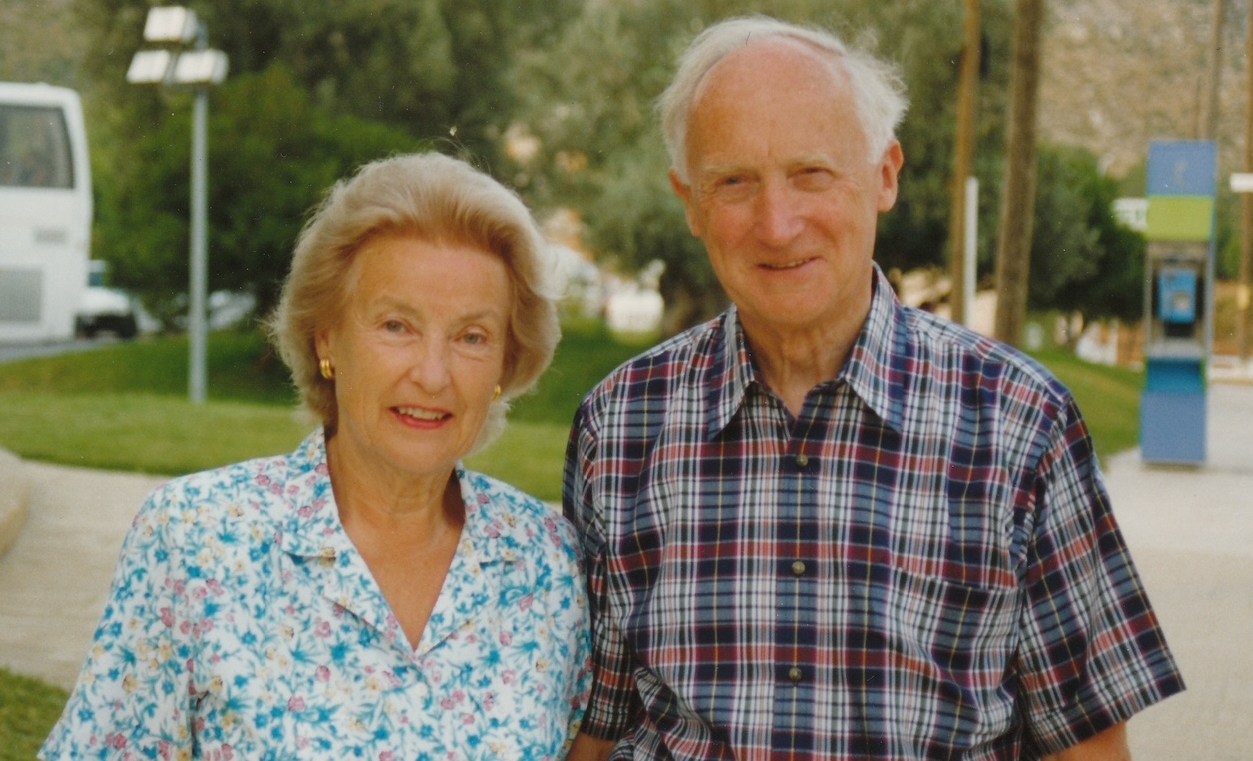
Baxendell with his wife, Rosemary. The couple met at Imperial College in 1949 and had four children
Anti-apartheid groups pressured the board to withdraw from South Africa, organising pickets outside the Shell Centre on London’s South Bank and other Shell offices, as well as urging consumers not to patronise Shell petrol stations. The campaign gained momentum as investigators alleged that Shell had received secret payments from the South African government to facilitate its breach of oil sanctions.
Baxendell’s last year at the helm, 1985, was marked by black employees of the National Union of Mineworkers striking in solidarity over wages and other issues at the Rietspruit coal mine in the Transvaal, which Shell half-owned. A spokesman said the company was “unequivocally opposed to apartheid as an affront to humanity”.
Baxendell became managing director of Shell UK in 1973, the year the oil crisis broke out, when Saudi Arabia raised the price from $3 to $12 a barrel after the Yom Kippur war that October, leading to an international economic crisis. Shell began searching for fresh sources of oil. The high price made it financially worthwhile to develop the technically difficult North Sea fields up to 500 metres deep, despite operating frequently in storms, with high waves and strong winds battering the rigs.
He took over as chairman of Shell Transport and Trading at 54, earlier than planned, after his predecessor, Michael Pocock, died unexpectedly in 1979. As part of the strategy to diversify away from the Middle East, he oversaw the purchase of the US-based Belridge Oil for $3.6 billion in 1979. Five years later, Shell paid $5.7 billion for the 30 per cent it did not previously own of its US operation.
After leaving Shell, Baxendell became chairman of the former aircraft maker Hawker Siddeley. After its aerospace operations had been nationalised in 1977, becoming a founding component of British Aerospace, the company became a general engineering business that was hit by the late 1980s recession. He did his best to cut costs and sell unprofitable activities, but the company succumbed to a hostile takeover by BTR in 1992, and he stepped down.
Peter Brian Baxendell was born in Runcorn, Cheshire, in 1925, the only child of Leslie Baxendell and Evelyn (née Gaskin). His father was an electrical engineer at the Runcorn Alkali Company, later part of Imperial Chemical Industries (ICI). In the First World War, Leslie had been a Royal Navy signaller at Gallipoli and on the Western Front.
As a child, Peter was keen on cricket, particularly wicketkeeping and batting, and was evacuated to Wales when Liverpool was a wartime bombing target. He attended St Francis Xavier’s school, Liverpool, where he excelled at science. He was due to study metallurgy at the University of Sheffield, but his headmaster suggested he accept an invitation to apply for a Shell scholarship to study petroleum engineering at Imperial College London’s Royal School of Mines. It was a wartime course, squeezed into two years, without vacations.
Baxendell was captain of Imperial’s squash and badminton teams, and represented the college at tennis and rowing. He met Rosemary Lacey on the Imperial College tennis courts, where she went on to play for the University of London and at Junior Wimbledon. They married in Cairo in 1949 and had two sons and two daughters, Peter, John, Anne and Gillian, who went into information technology, marketing and aviation.
“Despite his busy life,” Peter recalled, “my father always put family first, and we were a very close family. When we were young, he rigged an old car seat into the back of our estate car so that all six of us could fit in and we’d go on driving holidays all across Europe. Even when we had left home, Sundays were great family gathering days throughout his life, whether for lunch or my mother’s famous teas.”
He joined Shell in 1946, and in 1963 became technical director of Shell-BP Petroleum Development Nigeria, pioneering the search for oil there. He returned to London in 1966 on the eve of the Nigerian civil war to head Shell’s southeast Asia division, and later went back to Nigeria as managing director after the war had ended. In addition to chairing Hawker Siddeley, he was a director of Sun Life Assurance of Canada and the motor dealer Inchcape.
In 1972, Baxendell was appointed CBE for service to Anglo-Nigerian interests. He was knighted in 1981, choosing the motto: “Do nothing in anger.” He became a commander of the Dutch order of Orange-Nassau in 1985 and was a fellow of the Royal Academy of Engineering.
Baxendell played tennis and squash into his sixties, was a keen fly-fisher, and in later life played bowls and croquet at the Hurlingham Club. He always enjoyed watching sport, particularly cricket.
His son Peter said: “He approached life like he approached sport, placing great value on teamwork and camaraderie.”
Sir Peter Baxendell, businessman, was born on February 28, 1925. He died on September 13, 2025, aged 100