
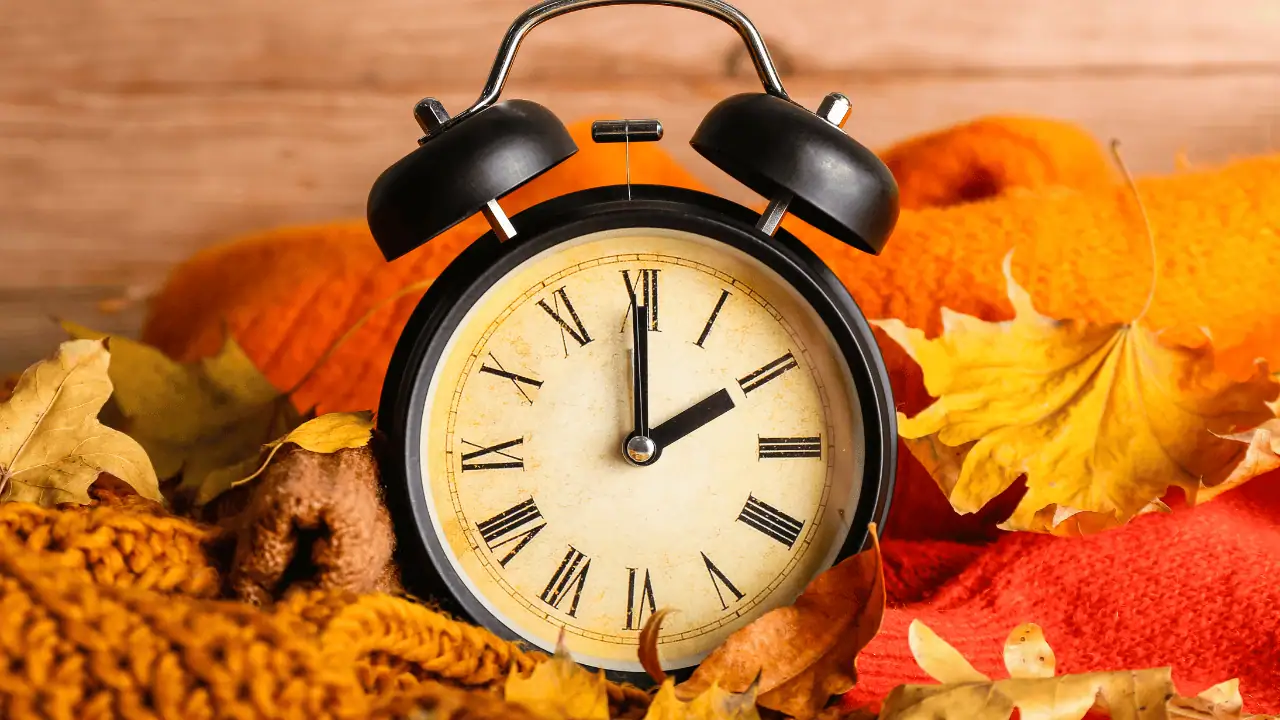
The time has arrived—well, almost.
Clocks will turn back an hour next month as daylight saving time ends, marking the return to standard time with brighter mornings and earlier sunsets as winter approaches.
Daylight saving time ends earlier this year in Canada than it did in 2024. The clocks will get turned back by an hour at 2 a.m. on Sunday, Nov. 2. That’s the second-earliest date, Nov. 1 being the earliest the time change can end.
Last year, daylight saving time ended on Nov. 3. Looking forward to fall 2026, the first Sunday in November falls on Nov. 1, and in 2027 it falls on Nov. 7.
Daylight saving time begins on the second Sunday of March and ends on the first Sunday of November each year. In 2025, the clocks moved forward on March 9; the next “spring forward” will happen on March 8, 2026.
It might feel like an extra hour of sleep is on the way, but don’t forget to manually adjust any clocks that aren’t connected to the internet, including those on walls, ovens and microwaves.
Beyond the bonus sleep, time changes can have real impacts on health. Research from Johns Hopkins suggests that the time shift can lead to higher stress, disrupted sleep and even a temporary increase in car accidents.
In 2020, Ontario passed the Time Amendment Act to make daylight saving time permanent, but the change hasn’t taken effect. The province is waiting for Quebec and New York to make similar moves before proceeding.
Most of Canada, including Ontario, still observes the biannual clock change, while Yukon, most of Saskatchewan, and parts of B.C. and Quebec remain on standard time year-round.
—With files from Declan Finucane
Last 30 Days: 48,402 Votes
All Time: 951,672 Votes
5702 VOTES
Should cities be allowed to keep speed cameras in school zones?