
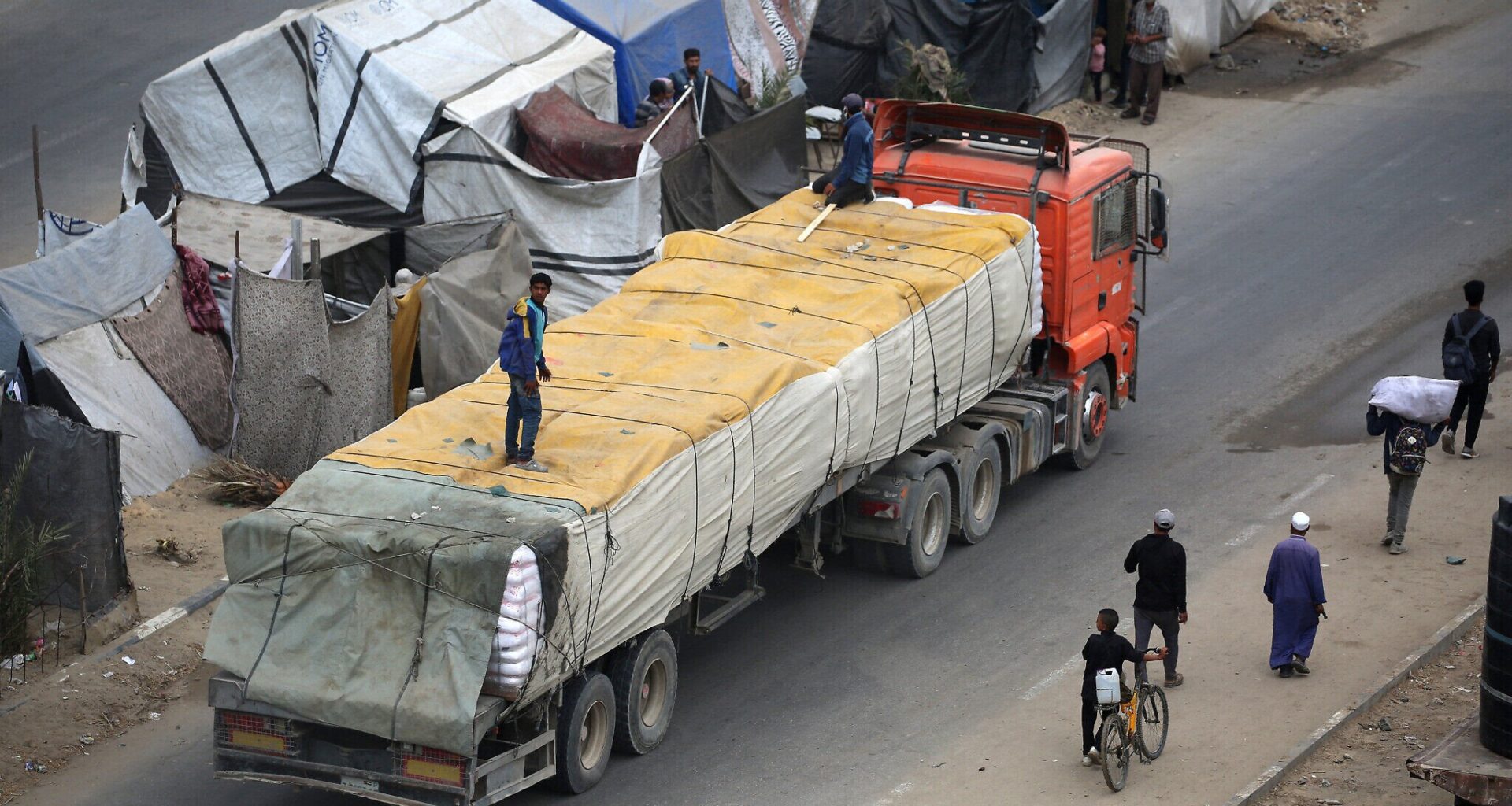
Aid deliveries to Gaza appeared to ramp up on Sunday following the first phase of a ceasefire there, as the Israeli- and US-backed Gaza Humanitarian Foundation said it would shutter its aid distribution sites in the southern Strip over the coming days, during the release of the hostages.
The Israeli defense body in charge of humanitarian aid in Gaza, COGAT, has said that the amount of aid entering the Gaza Strip is expected to ramp up from Sunday to around 600 trucks per day — the amount the UN has said is needed to feed Gaza amid the war.
Egypt said it was sending 400 trucks carrying aid into Gaza on Sunday. The trucks will have to be inspected by Israeli forces before being allowed in.
An Israeli security official confirmed that the surge in aid had begun.
Associated Press footage showed dozens of trucks crossing the Egyptian side of the Rafah crossing. The Egyptian Red Crescent said the trucks included medical supplies, tents, blankets, food and fuel.
Get The Times of Israel’s Daily Edition
by email and never miss our top stories
By signing up, you agree to the terms
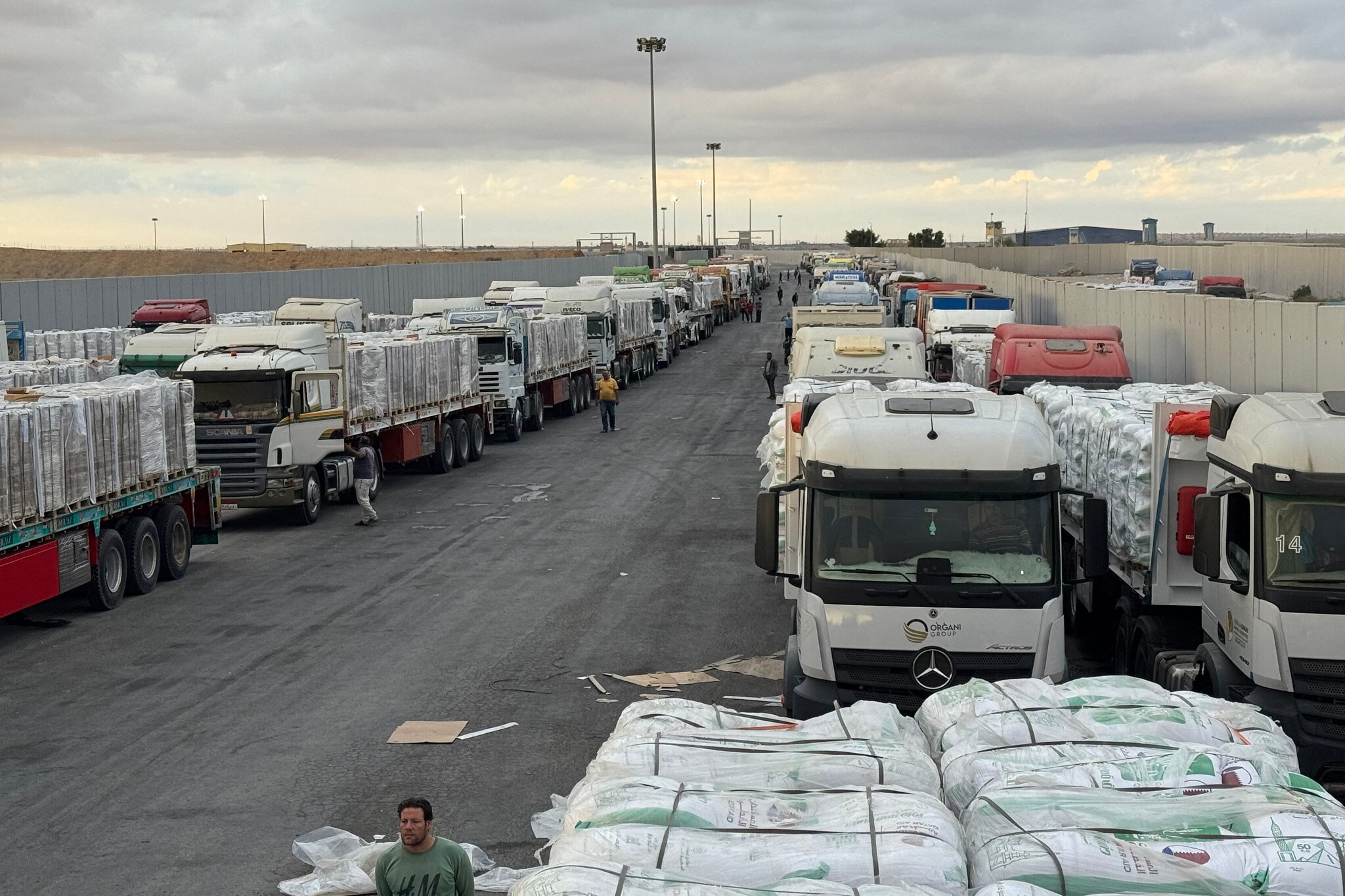
Trucks loaded with humanitarian aid are parked on the Egyptian side of the Rafah crossing, waiting to get access to the Gaza Strip, on October 12, 2025 (AFP)
The trucks will then head to the inspection area in the Kerem Shalom crossing for screening by Israeli troops.
Footage from media outlets in Gaza also showed trucks passing through Khan Younis and Wadi Gaza, in the Strip’s center, on their way to Gaza City, in the north.
The trucks were guarded by club-wielding men whose identity and affiliation were unclear.
قافلة شاحنات محملة بالمساعدات تمر عبر خان يونس في #غزة #العربية pic.twitter.com/rfUCFnRTuW
— العربية (@AlArabiya) October 12, 2025
Other footage also showed Gazans walking around an abandoned Gaza Humanitarian Foundation aid distribution site in the Netzarim Corridor area of central Gaza.
The site of the controversial, US- and Israeli-backed group was abandoned as the IDF withdrew from the area on Friday, kicking off a 72-hour countdown for Hamas to release the remaining 48 hostages under the ceasefire deal.
In southern Gaza, according to the Kan public broadcaster, Israel asked the GHF to close its aid sites in areas under IDF control over the coming days to let the army concentrate on the release of the hostages and enable COGAT to handle the increase of aid entering Gaza as part of the deal with Hamas.
A source involved in the matter confirmed to The Times of Israel that the aid sites in Rafah are closed temporarily amid the hostage release, but said the sites will reopen afterward and be active during the ceasefire.
هذا ما تبقى من مركز المساعدات “الإنسانية” في منطقة نتساريم GHF
هنا كان يتم إذلال الناس للحصول على وجبة طعام أو كيلو رز
هنا كانت الحشود من المحاصرين تقف في طوابير تحت الشمس الحارقة لساعات قبل السماح لهم بالحصول على حقهم في الغذاء..
هنا كان المحتل الصهيوني وحليفه الأمريكي يتناوبان… pic.twitter.com/jhTM2t4H3Q
— Khaled Safi ???????? خالد صافي (@KhaledSafi) October 10, 2025
A spokesperson for GHF also confirmed that “over the next few days, during the transfer of the hostages to Israel, there will be tactical changes in GHF operations and temporary closures of some distribution sites may occur.”
“There is no change to our long-term plan,” the spokesperson added.
However, several Palestinians said Sunday that the GHF sites in Rafah and in central Gaza had been dismantled following the ceasefire deal.
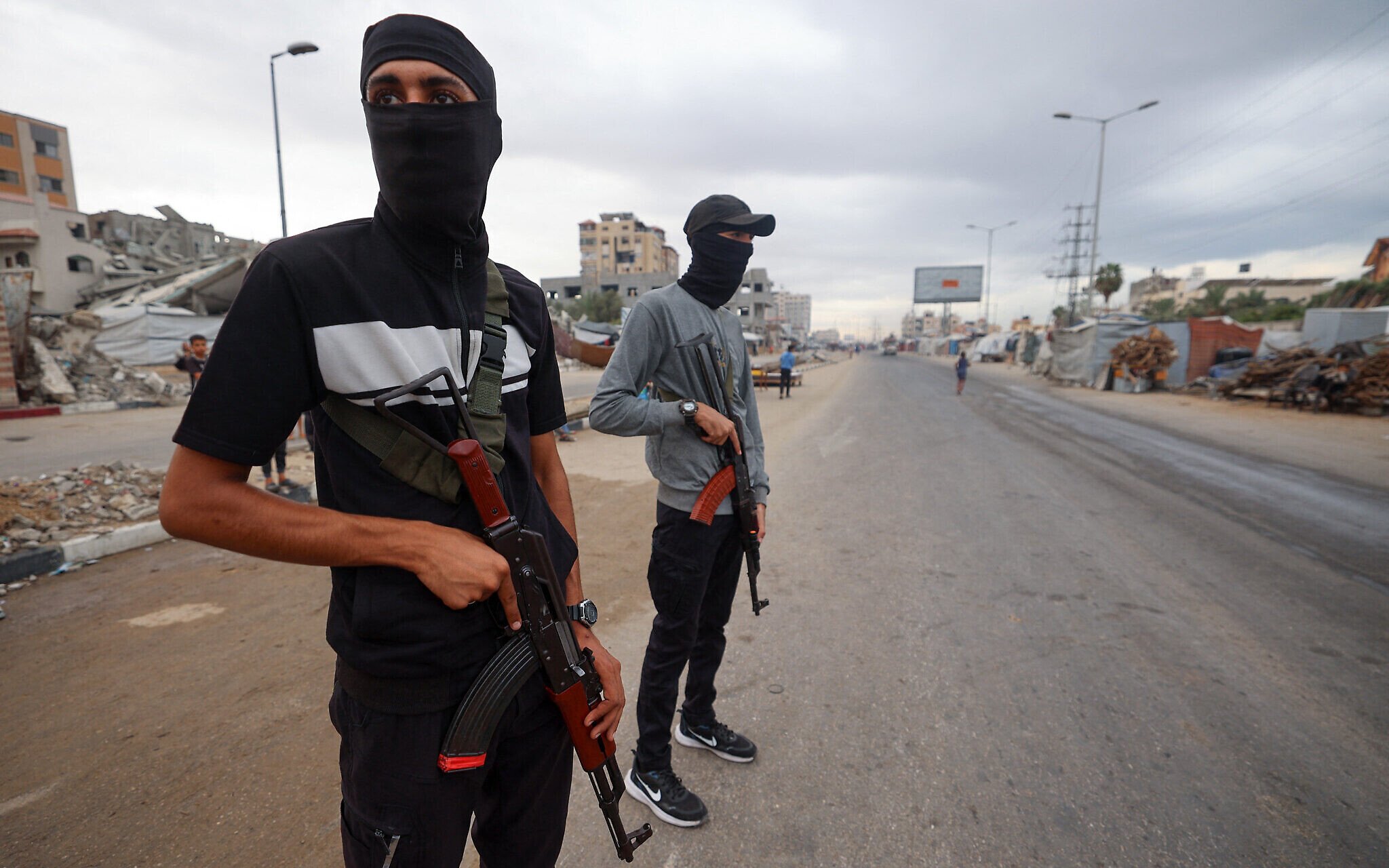
Members of the internal security forces loyal to the Palestinian terror group Hamas man a checkpoint in the Nuseirat refugee camp in the central Gaza Strip, on October 12, 2025 (Eyad BABA / AFP)
Hoda Goda, who used to go to the GHF sites in Rafah earlier this year, said people had dismantled the structures and taken wood and metal fences GHF workers used to control the crowds.
Another Palestinian, Ehab Abu Majed, said the site in eastern Khan Younis was also dismantled, and there was no food distribution in the past two days. Ahmed al-Masri, a man living in the central Nuseirat refugee camp, said a third site in the Netzarim corridor area was also dismantled.
GHF began operating in May after nearly three months in which Israel blocked the flow of aid into Gaza following the collapse of the previous ceasefire.
مراسل الجزيرة يرصد منطقة مركز توزيع المساعدات الأمريكية في محور نتساريم | تقرير: رامي أبو طعيمة#حرب_غزة pic.twitter.com/50KMrFM9DV
— قناة الجزيرة (@AJArabic) October 11, 2025
The private group, which is staffed and secured by American contractors, was meant to circumvent Hamas in the delivery of aid, after Israel accused the terror group of systematically looting aid to Gaza since the war there was sparked when Hamas invaded Israel on October 7, 2023.
GHF was shunned by the UN and other aid groups who said its distribution plan placed Palestinian aid-seekers in danger. The agency’s operations were put under further scrutiny amid a period of near-daily reports of deadly Israeli gunfire in the vicinity of its aid sites.
In the meantime, amid an expanding Israeli offensive in Gaza City, the UN declared a famine in parts of northern Gaza, in an August report that Israel has rejected.
According to the ceasefire-hostage deal announced last week, international aid to the Gaza Strip is set to increase significantly during the truce. Hamas officials have claimed they were promised the aid would come through the UN and not other sources.
An Israeli security official told The Times of Israel that the humanitarian clause of the ceasefire deal includes the daily entry of 600 humanitarian aid trucks operated by the UN, approved international organizations, the private sector, and donor countries. The official said the trucks would mainly include food, medical equipment, shelter supplies, as well as fuel for essential operations and cooking gas.
In addition, Israel was enabling the entry of essential equipment for the repair of critical infrastructure such as water lines, sewage systems, and bakeries, according to the official.
Aid trucks would be able to move freely between north and south Gaza via the Rashid coastal road and Salah a-Din highway, following the IDF’s pullback in Gaza, the official said.
The official said Gazan civilians would also be able to exit the Strip via the Rafah Crossing, in coordination with Egypt, following Israeli security approval and under the supervision of the EU mission, similar to a mechanism in the January 2025 ceasefire.
And for the first time, Israel will allow Gazan civilians who left the Strip during the war to return to Gaza via the Rafah Crossing, “subject to Israeli approval and to a specific mechanism that will be coordinated later with the Egyptian side,” the official added.
In recent months, the UN and its partners have been able to deliver only 20% of the aid needed in Gaza because of the fighting, border closures and Israeli restrictions on what enters, UN aid chief Tom Fletcher said last week, addig that the UN has about 170,000 metric tons of food, medicine and other humanitarian aid ready to enter Gaza once Israel gives its okay.
Times of Israel staff contributed to this report.