
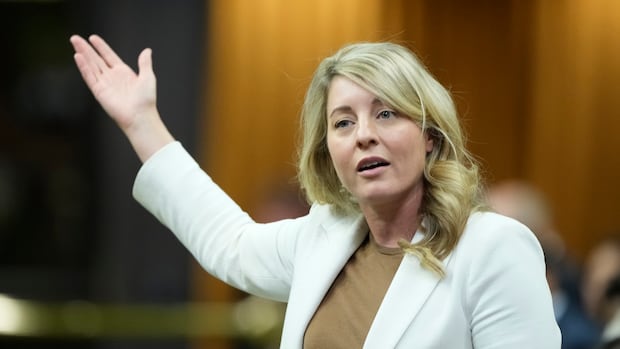
Canada-U.S. trade negotiations are “going ahead in the right direction” and Canadian companies are repositioning themselves to lean away from overreliance on American trade, says Industry Minister Mélanie Joly.
In an interview on Rosemary Barton Live airing Sunday morning, Joly explained her takeaways from Prime Minister Mark Carney’s meeting with U.S. President Donald Trump in Washington earlier this week.
“I think you saw there was a very respectful discussion and tone between the prime minister and the president,” Joly told host Rosemary Barton. The minister added that face-time with Trump is important because the president is ultimately the deal-maker.
“We know that no deal has been struck. We know that negotiations are going ahead in the right direction,” Joly said.
Canada continues to hunt for a tariff deal with the U.S. government and has yet to land one even after months of bilateral engagements. But according to Carney, the two sides are currently “negotiating terms” of a deal and Canada will come out ahead.
WATCH | Carney, Poilievre on White House meeting: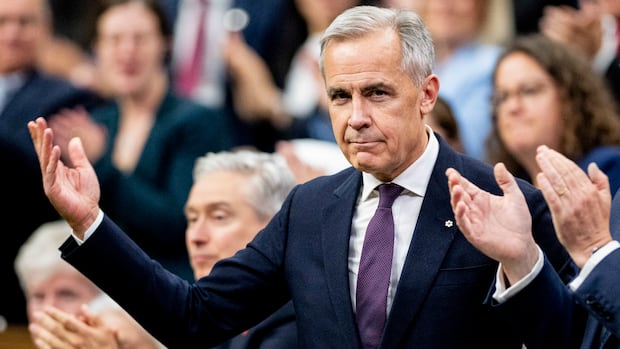
Carney and Poilievre spar over PM’s ‘meeting of the minds’ with U.S. president
Prime Minister Mark Carney and Leader of the Opposition Pierre Poilievre squared off in question period on Wednesday about the prime minister’s trip to Washington, D.C., to meet with U.S. President Donald Trump.
While the initial focus is on a deal related to the steel, aluminum and energy sectors, Carney said on Wednesday the two sides are “working on the modalities of an auto agreement” and some sort of solution to the punishing tariffs on the forestry sector.
Joly said the Liberal government “will fight for every single job in the auto sector. These are our jobs, these are our people, and we’ll make sure that we stand with them [and] that we work with them.”
Meanwhile, Canadian companies are sending more of their products to Europe to ease their reliance on U.S. trade, Joly said.
She referenced Aluminerie Alouette — a Quebec aluminum manufacturing company — which sent four per cent of its entire export to Europe in the first quarter of this fiscal year. In the second quarter, that figure was 57 per cent, according to a report from Bloomberg.
“So we’re seeing diversification of markets working,” Joly said.
Some business gone forever: steel CEO
Michael Garcia, CEO of Algoma Steel, told Barton it’s “been a very difficult and challenging time” for his company as it grapples with Trump’s 50 per cent tariff, which has “effectively closed the U.S. market to us.”
Garcia also said a lower tariff, like 10 to 15 per cent is not ideal but “certainly it would be a much better position than we are in today. I think that would allow many in the Canadian steel industry, many suppliers to re-enter the U.S. market because we are quite competitive.”
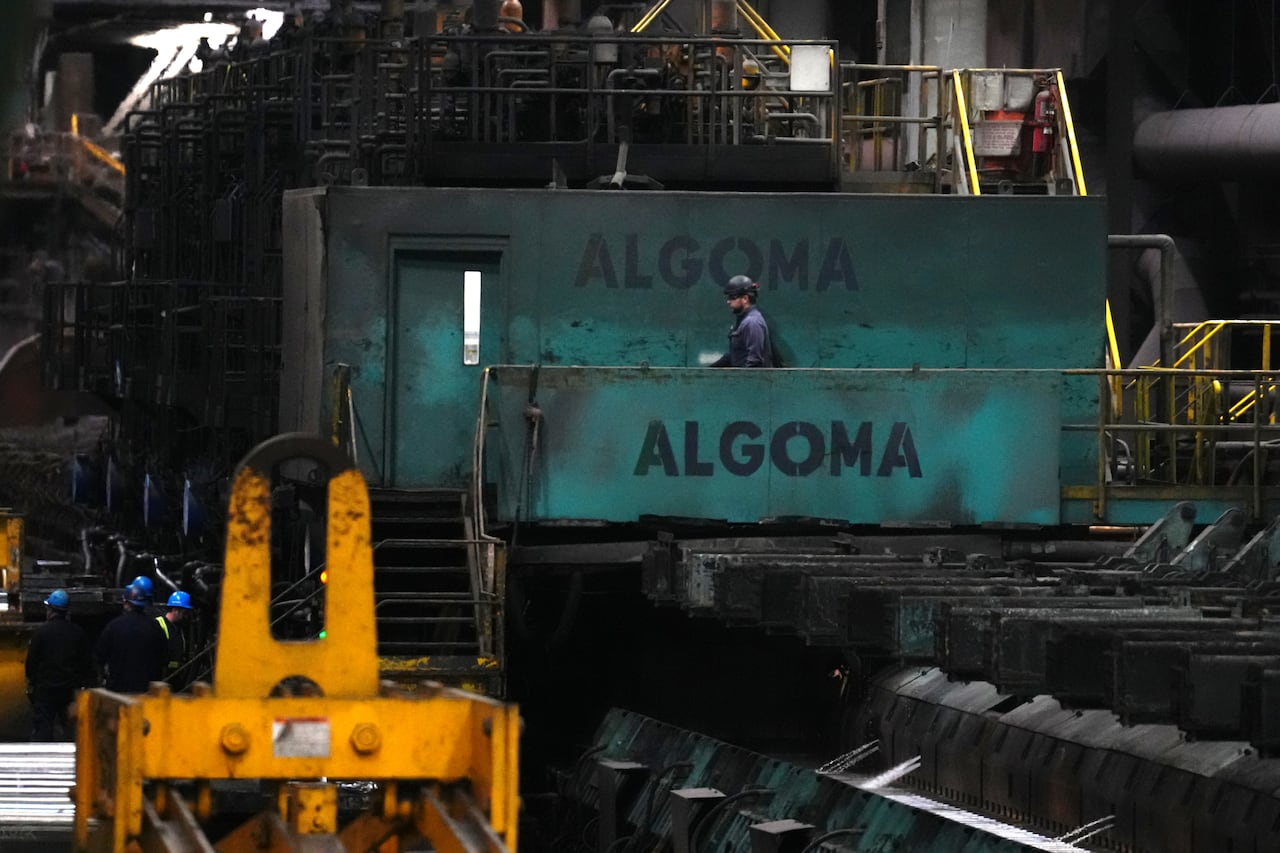 A worker is shown at Algoma Steel in Sault Ste. Marie, Ontario on Friday, April 25, 2025. (Sean Kilpatrick/The Canadian Press)
“Could we win back all the business we lost under 50 per cent? No, I don’t think so. Some of that business is very difficult to win back.”
Although the foreign market is challenging, Garcia said there’s big potential for his company in the Canadian market as Carney’s government pushes ahead with its “Buy Canadian” policy.
A big part of Algoma’s future is “being the foundational bedrock of the steel industry in Canada” and supplying the material for defence, infrastructure and energy products in Canada, Garcia said.
“There’s opportunity almost everywhere we look, as long as the fundamental driver is growth and building Canada.”
New Brunswick mulling retaliation
In a separate interview also airing Sunday morning, New Brunswick Premier Susan Holt told Barton her province is considering retaliation after Trump announced new tariffs at the end of September which will go into effect on Tuesday.
It means a further 10 per cent tariff on softwood lumber, in addition to the 35 per cent tariff already in place, as well as a new 25 per cent duty on some finished wood products including cabinets and upholstered furniture.
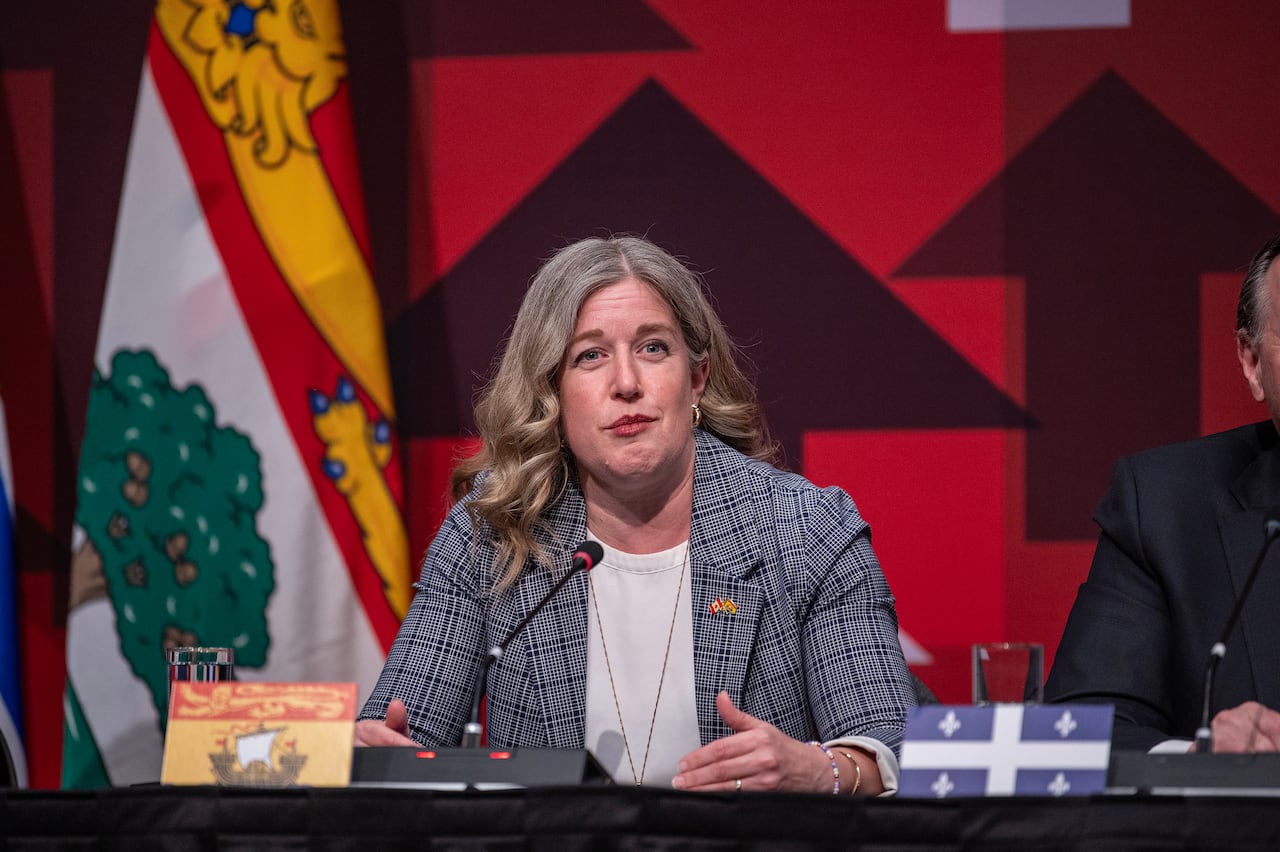 Premier of New Brunswick Susan Holt speaks to media following a first ministers’ meeting in Saskatoon, Sask., Monday, June 2, 2025. (Liam Richards/The Canadian Press)
Holt said she won’t reveal retaliation plans to the province’s opponents “at this point in time, but that evaluation is certainly happening.”
“We are constantly evaluating our tools, our leverage points and what seems to be having an effect on changing the president’s mind and advancing progress in this deal-making that we want to see from him and Lutnick and the rest of the team.”
As for Canada’s push to secure a deal, Holt said her province would like to see “light at the end of the tunnel” when it comes to softwood lumber tariffs, which she added will “hurt our economy tremendously.”