
Anthony Albanese has condemned Israel for “the killing of civilians, including children” but stopped short of saying Australia would recognise a Palestinian state, as France has committed to doing.
In the Australian government’s strongest condemnation of Israel yet, the prime minister said the actions of Benjamin Netanyahu’s government in denying access to aid “cannot be defended or ignored”.
“The situation in Gaza has gone beyond the world’s worst fears,” Albanese said in a statement.
But Albanese made clear Australia was sticking with its stance on Israel and the Palestinian territories, saying the country was still committed to a two-state solution.
French president Emmanuel Macron committed overnight to recognising a Palestinian state, becoming the first G7 state to do so.
Australia recently joined 27 other countries in a major global statement condemning Israel for the “drip feeding of aid” and the “inhumane killing” of Palestinians.
“Tens of thousands of civilians are dead, children are starving. Gaza is in the grip of a humanitarian catastrophe,” Albanese said in his statement on Friday. “Israel’s denial of aid and the killing of civilians, including children, seeking access to water and food cannot be defended or ignored.”
He added: “We call on Israel to comply immediately with its obligations under international law. This includes allowing the United Nations and NGOs to carry out their lifesaving work safely and without hindrance.”
Global condemnation and outrage of Israel’s actions in Gaza have sharply increased in recent weeks and days. International humanitarian organisations have pleaded for attention on starvation and malnutrition concerns for civilians still remaining in Gaza.
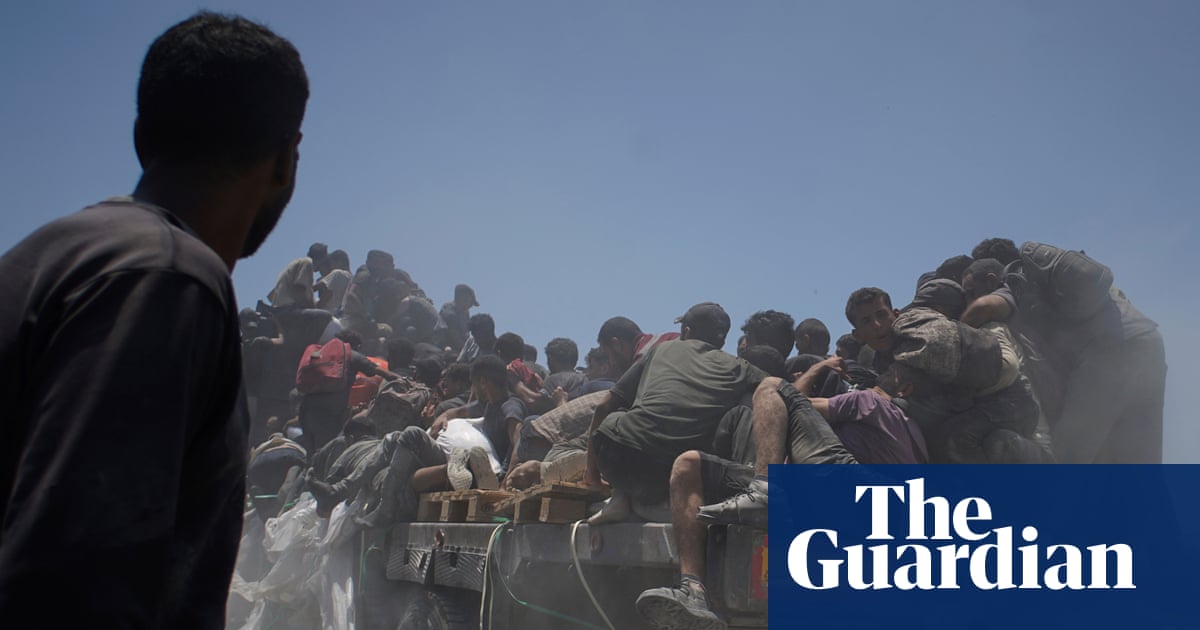
At least 45 people have died of hunger in the last four days. The UN and aid groups blame Israel’s blockade of almost all aid into the territory for the lack of food. Images of skeletal and starving children have been published on newspaper front pages worldwide.
A breakdown in negotiations over a Gaza ceasefire appears to have partly contributed to new statements from Australia, the United Kingdom, France and other western nations on Friday (Aest).
Albanese stressed that Australia “condemns the terror and brutality of Hamas and we reiterate our call for the immediate release of the remaining hostages”, and said “every innocent life matters. Every Israeli. Every Palestinian”.
“We continue to support all international efforts to facilitate a ceasefire, recognising that an immediate and permanent ceasefire gives the best hope of bringing hostages home and easing the agony of their loved ones.”
But the prime minister expressed major concern over the ongoing humanitarian situation in the besieged territory, and reiterated the government’s support for a two-state solution, which he said was necessary for a “just and lasting peace”.
“Any proposals for the permanent forced displacement of the Palestinian population must be abandoned,” he said.
“Australia is committed to a future where both the Israeli and Palestinian peoples can live in peace and safety, within secure and internationally-recognised borders.”
“Until that day, every effort must be made here and now to safeguard innocent life and end the suffering and starvation of the people of Gaza.”
Albanese’s statement did not foreshadow further specific actions, and his office would not comment on what further actions Australia may take. The federal government in June placed financial sanctions and travel bans on two Israeli government ministers, but the government is coming under pressure from humanitarian groups and rank-and-file Labor party members to consider levelling sanctions.
Labor MP Ed Husic said on Thursday that the federal government “need to do more”.
“The government should be prepared to work with others to ramp up sanctions in a coordinated way, absolutely,” he told a press conference.
“We’re hitting a ‘grandkid moment’. The ones that follow us are going to ask us all – at this point, confronted with one of the biggest moral, humanitarian [issues], and frankly this is a matter of conscience as well – what we did, to speak up and press for action to stop this?”