
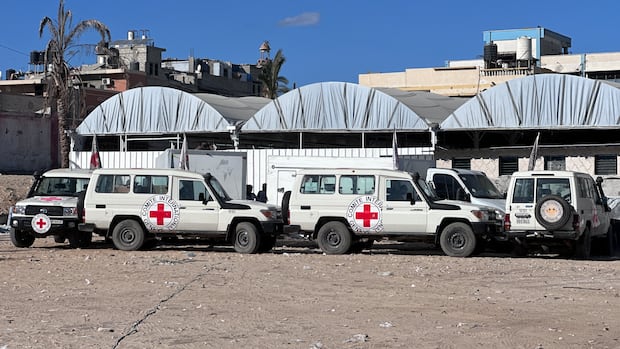
Local health authorities in Gaza say they have received 45 bodies of Palestinians held by Israel on Tuesday, as Israel announced it will keep the Rafah crossing shuttered after Hamas did not hand over the remaining bodies of hostages.
Mohammad Zaqout, director general of Gaza hospitals, says the bodies arrived in Gaza via the International Committee of the Red Cross in a way that “respects the sanctity of the martyrs’ bodies.”
Zaqout said officials are still waiting to receive the list of names from Israeli authorities, adding that the bodies were placed in morgues, with some identifiable but others that are not.
“We are still waiting, once they are confirmed, we will publish those names so families can identify their loved ones,” he told CBC News freelance videographer Mohamed El Saife.
“Things were going according to plans. God willing we will be able to receive more bodies so families can bury their loved ones,” he said outside of Nasser Hospital in the southern Gaza city of Khan Younis, where the bodies were taken.
The hospital said some of the bodies showed signs of torture and having their hands bound. It was not immediately clear when or how they died.
 People watch as a truck carrying the bodies of Palestinians who had been held in Israel during the war arrives at Nasser hospital, in Khan Younis on Tuesday. (Ramadan Abed/Reuters)
If the list of names is not provided, Zaqout said health officials will have to publish their pictures for families to identify them.
Israel still holds hundreds of bodies of Palestinians killed since Oct. 7, 2023, including of fighters who took part in the attack on southern Israel and the fighting afterward.
A total of 450 bodies were to be returned to Gaza from Israel, according to officials at Nasser Hospital.
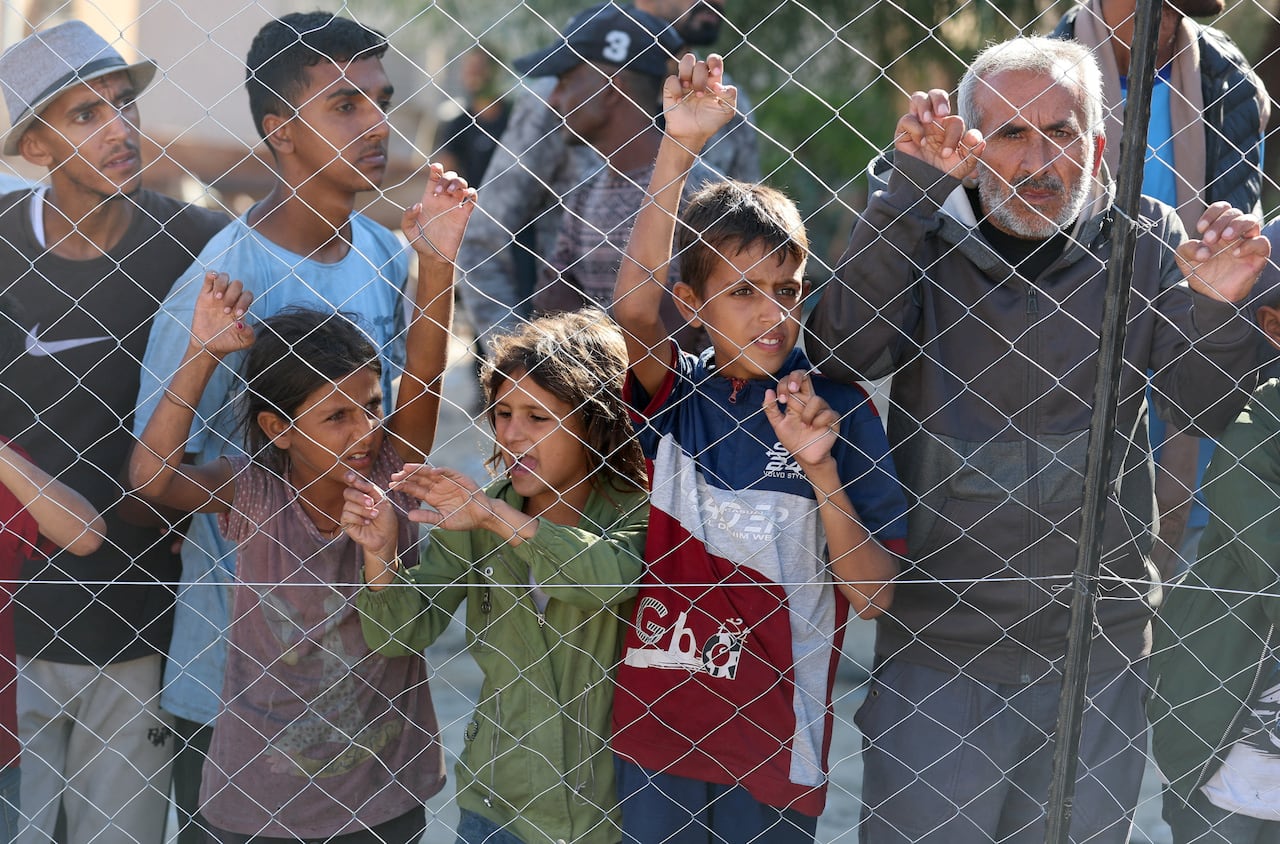
Rasmiya Qadih was waiting outside Nasser Hospital, hoping to be able to identify her son, who has been missing since October 2023, among the bodies.
“I don’t know if he was captured or if he is a martyr, I asked everywhere and can’t find him,” said Qadih, whose has had six children killed in the two-year war and another remains held in an Israel prison.
“Every time they bring in bodies to any hospital, I come to look for him.”
At least 7 killed in Israeli fire
Meanwhile, the Gaza Health Ministry reported Tuesday that seven people were killed in Israeli fire, despite the tenuous ceasefire which was still in place.
According to Reuters, health authorities say several of those were killed in drone fire as they were checking on houses in a suburb east of Gaza City, and a separate airstrike killed another.
Hamas accused Israel of violating the ceasefire. The Israeli military said it had fired on people who crossed truce lines and approached its forces after ignoring calls to turn back. The military did not provide evidence.
WATCH | Health authorities report seven people killed in Israeli fire on Tuesday:
7 Palestinians killed by Israeli gunfire in Gaza
Seven people have been killed after Israeli forces opened fire on several people they say approached soldiers near the agreed-upon ceasefire ‘yellow line’ in northern Gaza on Tuesday. The Israeli military didn’t immediately comment on any casualties in the incident.
Under the ceasefire deal, Israeli forces pulled back to where they were in August, which was before they launched their latest offensive on Gaza City. The pullback leaves a number of hard-hit Palestinian neighbourhoods under Israeli control, and Israel has warned residents not to try to return to homes there.
Half the amount of aid to be allowed in
Israel told the United Nations it will only allow 300 aid trucks into Gaza — half the agreed daily number — from Wednesday. No fuel or gas will be allowed in, except for specific needs related to humanitarian infrastructure, according to a note seen by Reuters and confirmed by the UN.
Israeli officials told Reuters Tuesday that the Rafah border crossing between Gaza and Egypt will remain closed through Wednesday after Hamas failed to hand over the remains of more than 20 hostages under the U.S.-brokered ceasefire deal.
The flow of aid into the Palestinian enclave was reduced on Tuesday as trucks filled with humanitarian aid remained in long queues at the Rafah border.
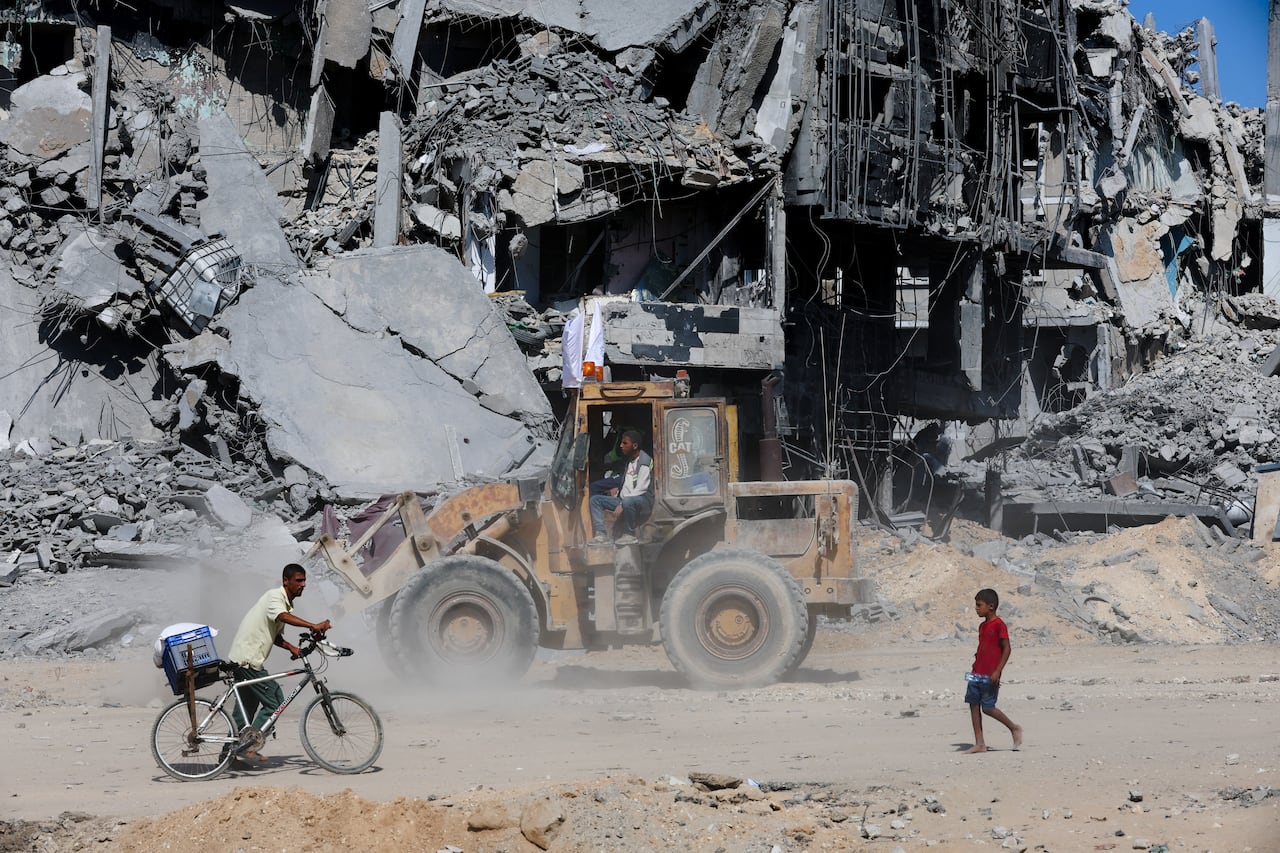 Palestinians pass by rubble in Khan Younis. (Ramadan Abed/Reuters)
The return of deceased hostages from Gaza progressed more slowly than Israelis had hoped after Hamas turned over the bodies of four of the 28 dead hostages on Monday. The group previously indicated that recovering the bodies of some dead hostages may take longer, as not all burial sites amid the widespread rubble of Gaza are known.
Later Tuesday, Hamas told mediators it will begin transferring bodies of four more deceased Israeli hostages to Israel at 10 p.m. local time (3 p.m. ET) on Tuesday, an official involved in the operation told Reuters.
WATCH | Water systems completely destroyed, aid worker says: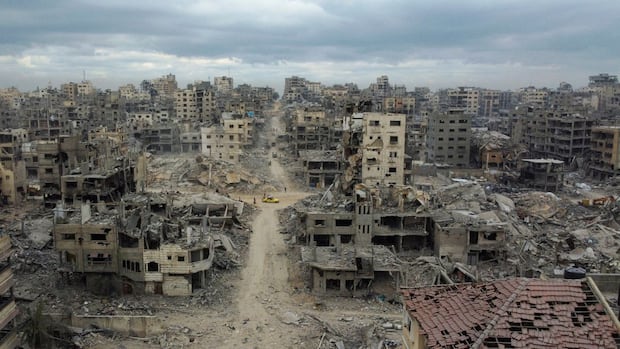
‘Need is immense’ in Gaza as ceasefire holds, says UNICEF spokesperson
Tess Ingram, a spokesperson for UNICEF in Gaza City, says people are returning home after the announcement of a ceasefire to find entire neighbourhoods lacking the food, water and clothing needed to survive the coming winter. Dismay over remaining hostage bodies not returned
The Hostages Family Forum, a grassroots organization representing many of the hostage families, called it a “blatant violation of the agreement by Hamas.”
On Monday, Israelis celebrated the return of the last 20 living hostages in Gaza and Palestinians rejoiced at Israel’s release of some 2,000 prisoners and detainees as part of the ceasefire’s first phase.
The top official in Israel co-ordinating the return of hostages and the missing, Gal Hirsch, told the families in a note that pressure was being applied on Hamas through international mediators to expedite the process.
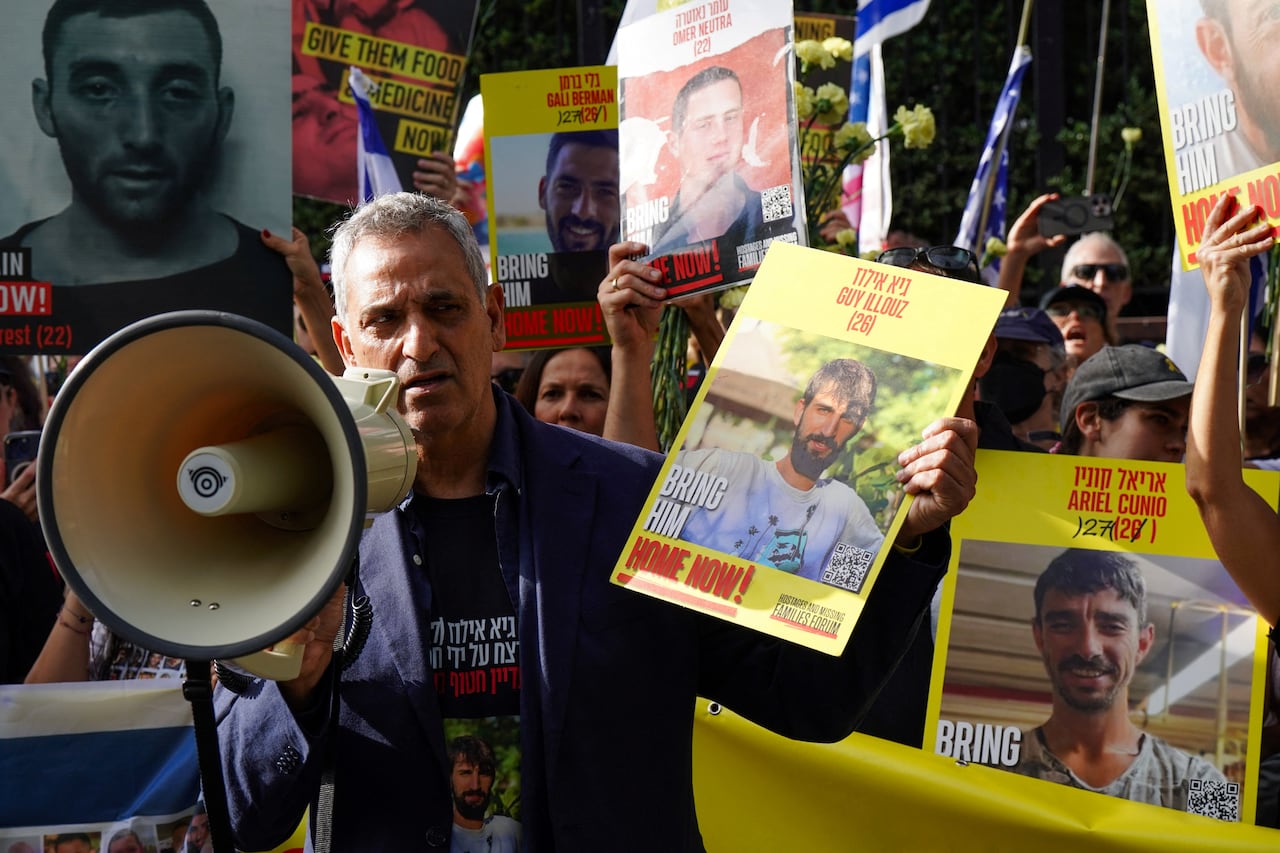 Michel Illouz, father of Israeli hostage Guy Illouz, speaks at a demonstration in New York City on Sept. 26, during the week of the United Nations General Assembly. (Bing Guan/Reuters)
On Tuesday, the Israeli military identified two of the dead hostages returned from Gaza a day earlier — Guy Illouz from Israel and Bipin Joshi, a student from Nepal.
Both were in their 20s when Hamas-led militants took them during the Oct. 7, 2023, attack on that ignited the war. Illouz was abducted from a music festival and Joshi from a bomb shelter.
Israel said Illouz died of his wounds while being held captive without proper medical treatment, while Joshi was murdered in captivity in the first months of the war.
WATCH | Joyous, poignant scenes as hostages return: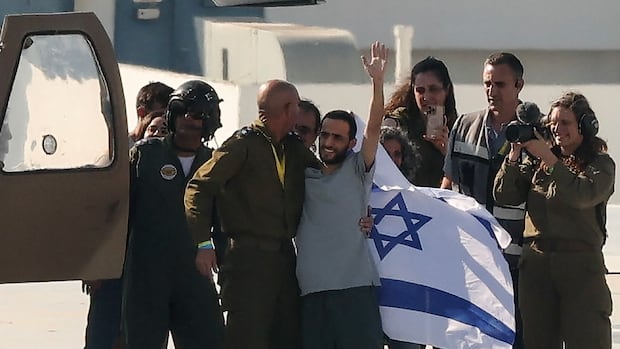
Families of living Israeli hostages rejoice at their return
The remaining 20 Israeli hostages who are alive have been released and are now on Israeli soil. Many of the families said their first hellos through a video call. The hostages themselves were flown to hospital for medical and mental health treatment.
The ceasefire plan introduced by U.S. President Donald Trump called for “all hostages, alive and deceased” to be returned within 72 hours of the agreement’s acceptance.
But it also provided a mechanism if that didn’t happen, saying Hamas should share information about any remaining deceased hostages and “exert maximum effort to ensure the fulfillment of these commitments as soon as possible.” The agreement signed last week also said Israel would provide information on the remains of Palestinians who died in Israeli custody.
Palestinians who were freed in past exchanges have reported frequent beatings, insufficient food and deprivation of medical care in Israeli prisons. A 2024 UN report said that since Oct. 7, 2023, thousands of Palestinians have been held arbitrarily and incommunicado by Israel, often shackled, blindfolded, deprived of food, water, sleep and medical care and subjected to torture or degrading treatment.
Israel maintains that it follows international and domestic legal standards for the treatment of prisoners and that any violations by prison personnel are investigated.
Long-term challenges for lasting peace
Difficult questions remain about what happens next in Gaza, including whether Hamas will disarm and who will govern and help rebuild the territory. Also unanswered is the question of Palestinian statehood, which is a central concern across the region.
“The first steps to peace are always the hardest,” Trump had said as he stood with foreign leaders in Egypt on Monday for a summit on Gaza’s future. He hailed the ceasefire deal he brokered between Israel and Hamas as the end of the war in Gaza — and start of rebuilding the devastated territory.
WATCH | ‘It’s an incredible feeling,’ former Palestinian detainee says: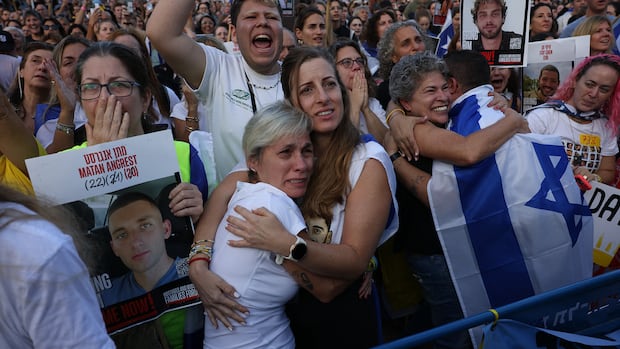
Israel releases 1,900 Palestinian prisoners after living hostages returned
Israelis welcomed the remaining living hostages home, and Palestinians received nearly 2,000 freed prisoners from Israel. This swap was a central point of the first phase of ending the war, according to the Trump administration.
In Egypt, Trump urged regional leaders to “put old feuds aside” as world leaders met to discuss the challenges ahead in securing a lasting peace. Representatives from Israel or Hamas were not at the summit.
The war has killed more than 67,600 Palestinians, according to Gaza’s Health Ministry, which does not say how many were civilians or combatants. It says women and children make up around half the dead, and many independent experts say its figures are the most reliable estimate of wartime casualties.