
 Press enter or click to view image in full size
Thank you for joining me today.
The rise of Artificial Intelligence magnifies the importance of journalists with true expertise, top-notch sourcing, and historical depth. These journalists, like me, tell and analyse in-depth stories. Their goal is to enhance their readers and listeners’ ability to form informed opinions of their own.
We don’t just chronicle events. Our reporting and analysis are shaped by years of on-the-ground coverage, expertise, and historical knowledge. In my case, I have covered geopolitics, the Middle East, and the Muslim world for decades, having been based in multiple countries, including Israel, Egypt, Saudi Arabia, Iran, the UAE, Lebanon, Kuwait, and Turkey.
Hard-hitting reporting and analysis that lets the chips fall where they may is even more critical in a world of brutal wars, unimaginable humanitarian crises, and increasing authoritarianism.
That is The Turbulent World with James M. Dorsey’s mission since its inception 15 years ago.
Thousands worldwide are avid readers and listeners of The Turbulent World. Join them in helping to maintain and expand the column and podcast by becoming a paid supporter by clicking here.
Subscribing allows you to participate in a poll, listen to the podcast, watch the video, access the archive, post comments, and direct message me with your questions.
Exchanging Hamas-held hostages for Palestinians incarcerated in Israeli prisons was the easy bit.
Ensuring that the ceasefire equates a permanent end to the war and arrangements for the post-war administration and reconstruction of war-ravaged Gaza, let alone a resolution of the Israeli-Palestinian conflict, is the difficult bit.
US President Donald Trump’s 20-point plan is a declaration of principles and objectives with no terms or mechanism of implementation beyond the prisoner exchange, the fragile ceasefire, and the US promise to send 200 troops to Israel, rather than Gaza, to oversee the truce.
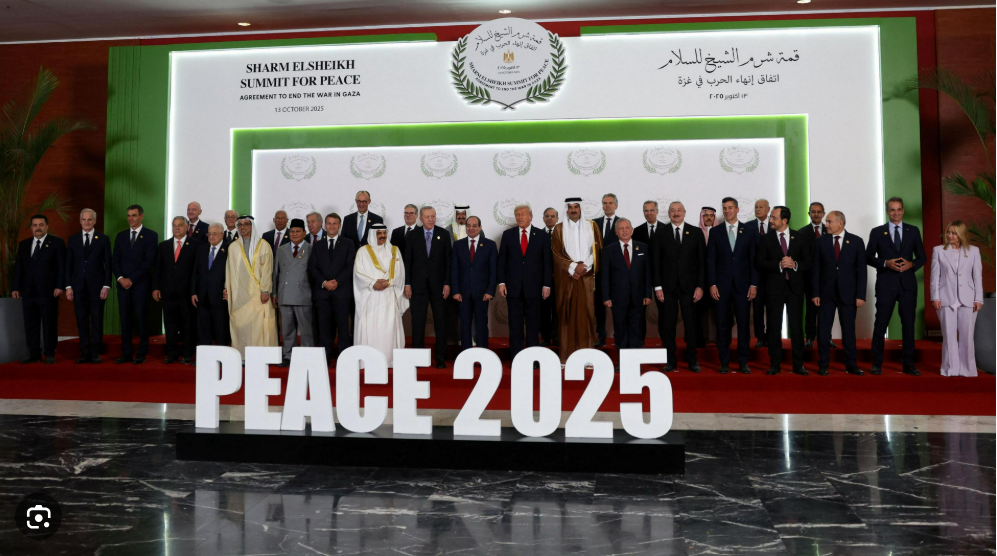
Mr. Trump hopes that the 20-nation summit in the Egyptian resort of Sharm el-Sheikh will ensure that Egypt, Qatar, Turkey, the United Arab Emirates, and Indonesia contribute troops that may enter the Strip as part of an international stabilisation force.
Even so, who will administer post-war Gaza remains an open question, as is what the mandate of the non-American troops, dubbed an international stabilisation force, will be.
With no good options, Hamas has placed a risky bet on Mr. Trump and Arab and Muslim states as guarantors that Israel will remain committed to the proposal and not restart the war once the group has released its captives.
From Hamas’s perspective, the group has already gotten off to a shaky start.
While Mr. Trump has put his credibility on the line by attaching his name to the proposal and making a victory lap in Israel and Egypt, his track record is one of a short attention span, which means Israel may just have to bide its time in undermining progress in the implementation of the proposal and/or reviving the war.
Moreover, Arab and Muslim states appear reluctant to engage in a process that does not include a credible pathway to the creation of an independent Palestinian state and could be seen as offering Israel a fig leaf.
Mr. Trump’s Arab and Muslim partners in his Middle East endeavour have made clear to the president that there can be no peace process without Israel committing to end its 57-year-long occupation of Palestinian lands, including Gaza, the West Bank, and East Jerusalem, and the creation of a Palestinian state.
Mr. Trump’s proposal makes only a non-committal reference to a Palestinian state.
Even so, Mr. Trump, together with Egyptian President Abdel Fattah al-Sisi, put Palestinian national aspirations in the spotlight by inviting Palestinian President Mahmoud Abbas to the Sharm el-Sheikh summit.
Weeks after denying Mr. Abbas and his entourage US visas to attend last month’s United Nations General Assembly in New York, Mr. Trump publicly greeted the Palestinian leader, shook his hand, and posed for photographs with him.
“Abbas’s high-profile presence alongside global leaders…strengthens secular Palestinian nationalism. While it is too early to declare the full revival of Palestinian nationalism, Sharm El-Sheikh represents a clear moment of diplomatic affirmation,” said journalist Daoud Kuttab.
Even though the Trump proposal contains something for everyone, few in the Middle East, the Muslim world, Israel, or Palestine have wholeheartedly embraced the proposal; most recognise that it is the only game in town.
By the same token, none of the Middle Eastern or Muslim players was willing to get on the wrong side of Mr. Trump by accepting it conditionally or rejecting it out of hand.
“While (the proposal) is likely to save numerous lives, at least for the time being, and should be welcomed for that reason alone, it is hardly a peace agreement nor one that lays the basis for attaining Palestinian rights,” said analyst Mouin Rabbani.
Press enter or click to view image in full size
Moreover, Mr. Netanyahu has so far publicly refrained from declaring that the ceasefire and prisoner exchange mean an end to the war. Mr. Netanyahu’s Cabinet has only endorsed the proposal’s first phase, involving the ceasefire and prisoner exchange.
In a video statement, Mr. Netanyahu threatened to use force if Israel’s demands, including Hamas’s disarmament, were not met. “If this is achieved in the easy way, it’s all for the better. And if not, it’ll be achieved the hard way,” he said.
Ironically, Mr. Netanyahu’s limiting of his acceptance of the Trump proposal to the proposal’s first phase makes it easier for Hamas to negotiate the terms of the plan’s other provisions, such as the demand that the group immediately disarm.
Hamas has insisted that it would disarm only once an independent Palestinian state is established.
Equally worryingly, Mr. Trump, in a repetition of a problematic history, drafted his plan in consultation with Mr. Netanyahu but not with any Palestinians whose buy-in is a sine qua non.
Instead, the Trump proposal puts whatever Gaza administrative body made up of non-aligned Palestinians is created under the guardianship of a ‘Board of Peace’ presided by the president with controversial former British Prime Minister Tony Blair as its possible chief executive.
Palestinians may be willing to accept Mr. Trump, in a bid to keep him engaged, but are unlikely to accept Mr. Blair, who is perceived as an Israeli frontman and is widely viewed as complicit in the US invasion of Iraq in 2003.
Moreover, as a result of Mr. Netanyahu’s interventions, the proposal omits any reference to the West Bank. This makes Mr. Trump’s projection of the ceasefire as the launching pad for a long elusive resolution of the Israeli-Palestinian conflict a fata morgana.
Similarly, the Trump formula risks alienating Palestinian public opinion that has shifted towards greater support of a two-state-solution because of the Gaza war. If taken into account, the shift mitigates in favour of the Trump proposal even though it does not contain a firm commitment to the establishment of an independent Palestinian state.
Press enter or click to view image in full size
Palestinians “want anything that will stop the bloodshed…. The current situation has increased people’s commitment to ending the conflict,” said Ramallah-based pollster Zayne Abudaka.
Countering Israel’s insistence that Gaza needs to be ‘deradicalised,’ Mr. Abudaka suggested that a majority of Palestinians advocated peaceful means to achieve their goals, including boycott, divestment, and sanctions against Israel, protests, and negotiations.
“Armed resistance is not unpopular, it’s just (in) not the top three (preferred options)… People are not anti-resistance, they just want to practically do things that will keep them on their land and relatively safe while also pushing back and hurting the enemy,” Mr. Abudaka said.
Implicitly suggesting that Israel, too, may need deradicalisation, Mr. Abudaka noted that Palestinian, rather than Israeli, public opinion favoured a peaceful resolution of the Israeli-Palestinian conflict.
Multiple polling of Israeli Jews suggests that a majority of Israelis want an end to the war to achieve the release of the Hamas-held hostages and because they don’t see the war achieving Mr. Netanyahu’s war goals, which they support despite distrusting the prime minister.
Similarly, Hamas has good reason to concede that it will not be part of Gaza’s post-war administration.
“People don’t want Hamas to rule Gaza — that’s very strong, they don’t want that. They didn’t like Hamas before the war, and they like it much less now,” Mr. Abudaka said.
Hamas suffered a further setback with Israel’s refusal to include Marwan Barghouti, a leader of Al-Fatah, the backbone of the West Bank-based, internationally recognised Palestine Authority, and Popular Front for the Liberation of Palestine (PFLP) General Secretary Ahmad Sa’adat, in the exchange of the Hamas-held captives for Palestinians in Israeli prisons.
Hamas had insisted that Israel release Mr. Barghouti, who is serving five life sentences plus 40 years for planning attacks that led to the killing of four Israelis and a Greek monk.
Mr. Barghouti is widely viewed as a figure who can unite the Palestinian polity. He consistently emerges in opinion polls as the most popular Palestinian leader, whom Palestinians would vote for in a presidential election ahead of Palestine Authority President Mahmoud Abbas and Hamas leaders.
In a sign, if one were needed, that Israel rejects an equitable resolution of the conflict and is likely to squash Mr. Trump’s dream of an “everlasting peace” in the Middle East, Israel’s refusal to release Mr. Barghouti is designed to keep Palestinians divided and weak in future negotiations.
Press enter or click to view image in full sizeSaleh al-Jafarawi
Adding to the Trump proposal’s pitfalls, divisions within Gaza and the spectre of internal strife gained greater prominence with the killing on Sunday of 28-year-old Saleh Al-Jafarawi, a controversial social media figure and journalist with alleged links to Hamas accused of pocketing millions of dollars raised to fund the construction of a children’s hospital.
Mr. Al-Jafarawi’s Israeli and Palestinian detractors have provided no evidence for his alleged wrongdoing.
Wearing a bullet proof vest that identified him as a journalist when he was killed, Mr. Al-Jafarawi was assassinated during clashes between Hamas and the powerful Doghmush clan. Hamas and the Doghmush have long been at loggerheads because of the clan’s involvement in weapons smuggling and drugs trafficking.
Israel unsuccessfully tried to convince the Doghmush to join a future Gaza administration of non-aligned Palestinians that would be attentive to Israeli concerns.
Mr. A-Jafawari told Al Jazeera days before his killing that he had received Israeli death threats.
“Honestly, I lived in fear for every second, especially after hearing what the Israeli occupation was saying about me. I was living life second to second, not knowing what the next second would bring,” Mr. Al-Jafarawi said.
Dr. James M. Dorsey is an Adjunct Senior Fellow at Nanyang Technological University’s S. Rajaratnam School of International Studies, and the author of the syndicated column and podcast, The Turbulent World with James M. Dorsey.