
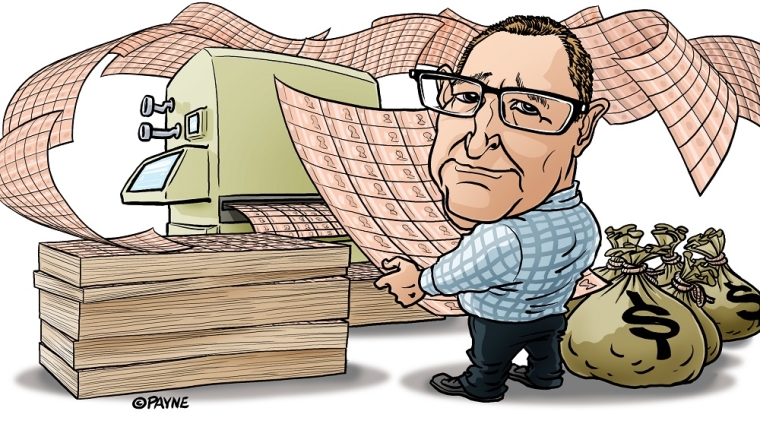
The Reserve Bank says its pandemic-era bond buying programme roughly offset its $11 billion fiscal cost by increasing tax revenue and reducing interest payments on Government debt.
Paul Conway, the central bank’s chief economist, gave a speech on the use of alternative monetary policy tools at Citi Australia & New Zealand Investment Conference on Wednesday.
New research released alongside the speech assessed the costs and benefits of the Large- Scale Asset Purchases (LSAPs), which were used in 2020 and 2021 as monetary policy stimulus after the Official Cash Rate was cut to its lower limit of 0.25%.
The LSAP saw the Reserve Bank buy about $53 billion of Government bonds from private investors to lower long-term interest rates and support borrowing during the recession. This decision was widely criticised after the Bank hiked rates to fight inflation, crystallising losses on its bond portfolio of roughly $10.5 billion or 3.2% of GDP.
But Conway said RBNZ research found the LSAP’s direct cost was offset by its indirect benefits. It first restored market confidence, then lowered long-term interest rates which held down the exchange rate and supported exports.
“By boosting economic activity during the pandemic, LSAPs increased government tax revenues. This higher revenue almost entirely covered the direct losses from LSAPs, leaving consolidated Crown debt virtually unchanged over the medium term,” he said.
The International Monetary Fund came to a similar conclusion in 2023 research, and Former Governor Adrian Orr often defended the policy as being worth the cost.
Still, Conway said the policymakers would have preferred to use negative interest rates if that tool had been available in 2020. The research showed similar economic results as the LSAP but without a cost to the Crown balance sheet.
RBNZ’s research also showed the LSAPs did not contribute materially to the subsequent rise or peak in inflation, although broader policy reviews have found the central bank should have tightened policy sooner to fight inflation.
Conway said buying $53 billion in government bonds through the LSAP programme and providing $19 billion in bank funding was similar to policies in Australia and Canada.
But NZ’s fiscal policy response was larger and longer. Treasury estimates the total cost of the pandemic response will cost $66 billion, or 20% of GDP — the second most after the United States.
“This lag and persistence in pandemic-related fiscal spending resulted in fiscal policy continuing to add economic stimulus while monetary policy became restrictive to reduce inflation and keep medium-term inflation expectations in check,” Conway said.
“In other words, containing inflation over this period required the OCR to be higher than otherwise if fiscal support during the pandemic had been more timely and temporary.”
*Also see this Of Interest podcast episode: Ex-Bank of England Deputy Governor Paul Tucker on how quantitative easing exposed government finances to rising interest rates.