
Clare said international education was an important national asset, which brought billions into the economy each year while fostering friendships across the world. “But we need to manage it sustainably and that’s what these allocations for universities do,” he said.
Loading
Part of this involved giving four regional universities – Charles Sturt University (allocated 1600 students), Federation University (1800), the University of Newcastle (2050) and Charles Darwin University (2650) – the highest proportional increase to their allocations.
“We’re making sure growth in international education happens in a way that supports the national interest and spreads benefits more evenly,” Clare said.
“Regional universities play a vital role in local communities and economies and we’re backing them with more places.”
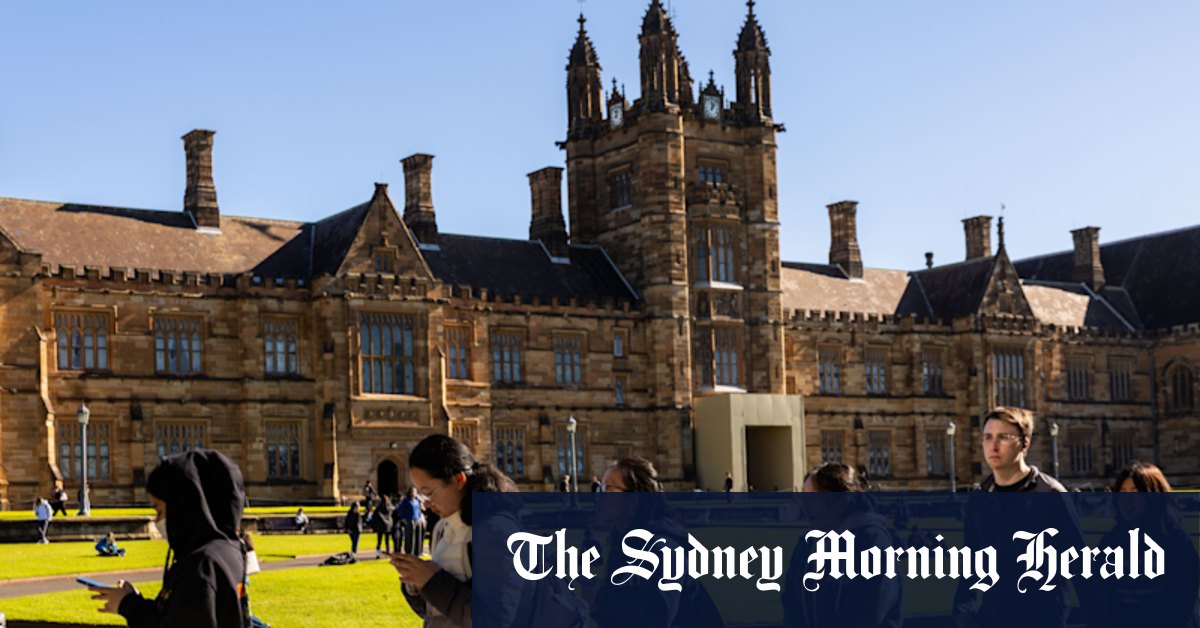
The largest number of students, however, will still be funnelled to the biggest city universities. The University of Sydney will receive the largest allocation of international students next year (11,900), followed by Monash University (11,300), the University of Melbourne (10,500) and the University of NSW (10,350).
In their applications to grow their international student numbers, universities had to show they were meeting government priorities to build new housing, engage with South-East Asia, and diversify their overseas student markets.
A government statement said the universities that proved they were building new accommodation had received increased allotments, noting there were now 11,000 beds under construction, 15,000 with development approvals, and 12,000 in the planning process.
The conditions are intended to meet community expectations for boosted housing supply and to stop universities from relying on a single overseas market. Many of the Group of Eight universities, including Sydney, have a significant focus on students from China, for example.
University of Sydney vice-president Kirsten Andrews said the institution was continuing its discussions with the government as it sought to increase the diversity of its student mix over time. While the majority of overseas enrolments still come from China, it has boosted its intake from India, Malaysia, Vietnam, Pakistan and Africa.
“Our goal is to deliver an outstanding education for all our students, and international students contribute enormously to the broad range of perspectives, ideas and cultures in our classrooms and on campus – currently making up 35 percent of our undergraduate cohort,” Andrews said.
“Our commencing international student load was 4 per cent lower in 2025 than 2024. Like all universities, we were invited by the government to apply for an increase to our international student target, and we did so to demonstrate our commitment to building a more diverse student community.”
Cut through the noise of federal politics with news, views and expert analysis. Subscribers can sign up to our weekly Inside Politics newsletter.