
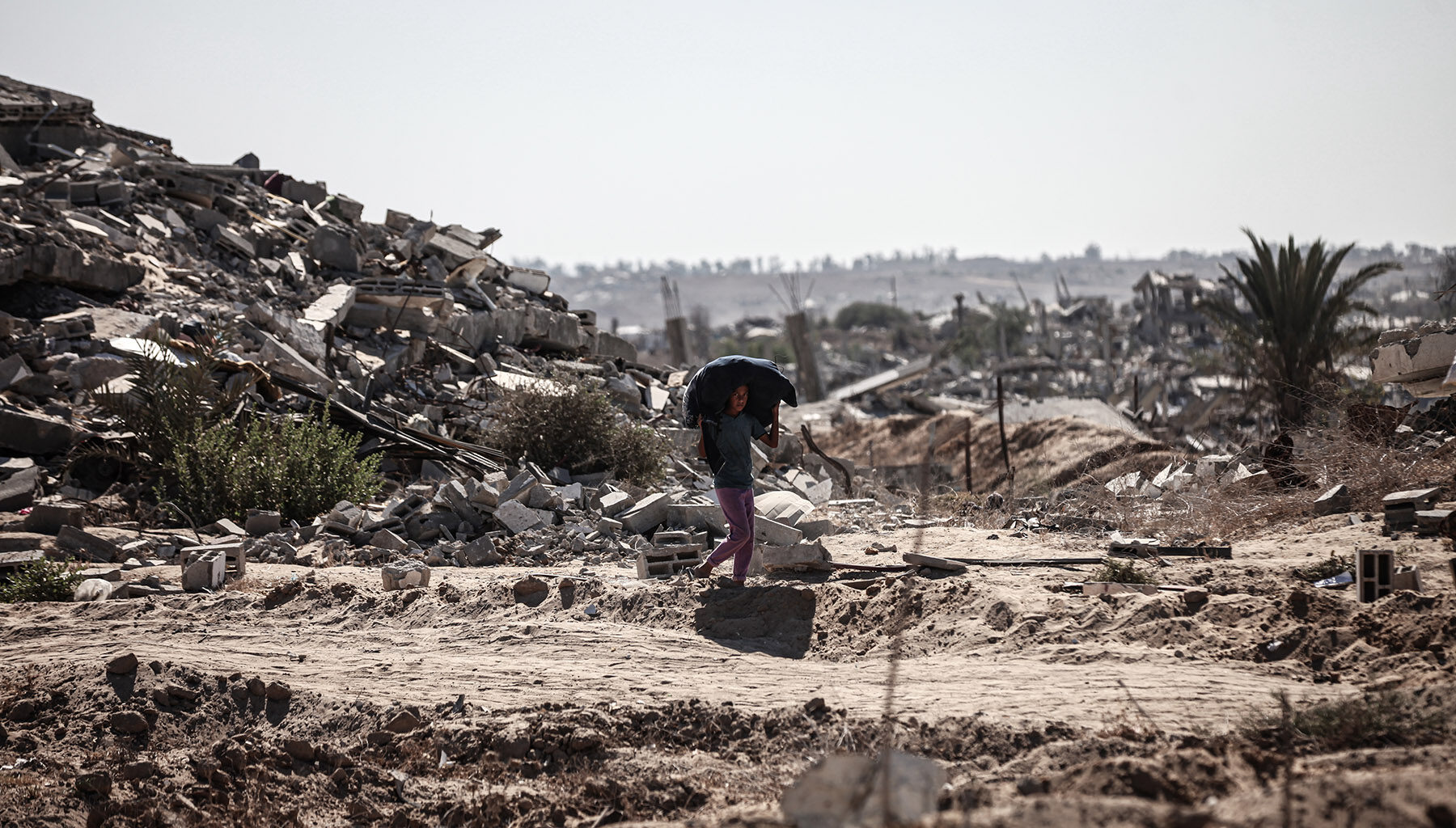
The ceasefire, while welcomed by the world and most here in Gaza, has not brought true relief to the Strip. A pause in bombing does not immediately erase the hunger, disease or grief that define daily life. Families still wait in long lines for food, children still die of preventable illnesses and significant amounts of aid remain trapped behind closed crossings and the ongoing Israeli blockade.
Every day is a negotiation for survival. Words from a pen on paper do little to change these material realities, even while generally welcome if such a deal can end the fighting.
Questions linger in the rubble: What law allows the obliteration of entire families in their homes? What justice explains why children, mothers and the elderly became targets of starvation and bombardment? What kind of peace can emerge from the ashes when the very foundations of humanity have been shattered?
What can be seriously recovered now and in the future after such a tragedy? Have we even reached a point of political will necessary to effectively answer such questions?
Despite the global language of democracy, human rights and international law, Gaza stands as a reminder of how selectively these ideals are applied. The lesson is clear: Many of the same voices that rise to defend justice elsewhere fall silent when it comes to Palestinians. This silence is not ignorance. It is a choice reflective of a world unwilling to confront its moral contradictions.
The war has tested not only Gaza’s endurance, but the conscience of humanity. Every destroyed home is a testimony; every displaced family, a question to the world. Can justice truly exist when some lives are considered expendable, or when empathy depends on geography and identity?
And yet, amid the devastation, Gaza endures. People continue to live, to love and to rebuild fragments of normal life from beneath the rubble. Every act of survival—a loaf of bread baked over the ruins, a child’s laughter, a mother’s embrace—becomes a quiet form of resistance. These small, daily acts reclaim an entire people’s dignity in a world that has denied its humanity and existence for far too long.
Even in the face of unbearable loss, hope refuses to die. In the shattered neighborhoods of the north, families plant small gardens beside tents, children draw on broken walls and neighbors share what little they can spare. These moments, fragile as they are, speak louder than any declaration of a ceasefire.
Indeed, they are the human element continuously lost in the language of geopolitics and state interests that are averse to the moral consistencies necessary to advance as a global society.
The world may look away, but Gaza still speaks—not through politics or power, but through endurance. Its voice is the sound of survival, the unbreakable will of a people who refuse to vanish, even when surrounded by death and silence. Whether the ceasefire marks another smokescreen in Israel’s long-running assault on Palestine and its people, or a true moment for positive change, is irrelevant to this reality, as Palestinians in Gaza learned long ago.