
“You always think, oh, I want to be settled [before having a baby], but I think as you approach your late 20s, you realise how hard it is to get ahead,” she says. “You’re often renting and not earning that much. And having a baby, especially in the private sector, and raising them is expensive.”
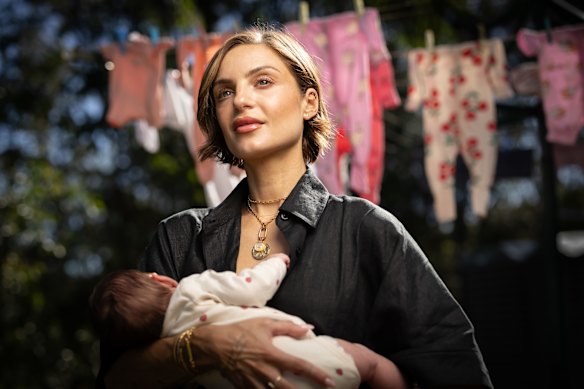
Domenica Calarco had her first child at 32, having thought she would start her family in her 20s.Credit: Wolter Peeters
The median age of parents has continued a slow but steady climb over the past decade, and was 32.1 years for mothers and 33.9 years for fathers in 2024.
ABS head of demography Beidar Cho said the shift towards older parenthood reflected broader social changes and economic shifts, including more time spent in higher education, along with higher workforce participation by women.
“It also shows evolving patterns in how and when people choose to start families compared to previous generations,” she said.
Loading
Despite now feeling more settled, Calarco said she had no immediate plans to have more children.
“I’m one of three children, so when I was younger, I thought I’d have two or three myself at least,” she said. “But I think the reality of raising children in 2025 is that it’s so much more expensive. I’d probably need a bigger car, I would need more room in my house, and then I think about how I want to raise my daughter … giving her the things that I didn’t have.”
Pelin Akyol, research manager for the e61 think tank, said Australia’s declining fertility rate was driven by three factors: later parenthood, parents having fewer children, and a rising share of people without children.
“The most significant of those is parents having fewer children, leading to smaller average family size,” she said, noting that economic factors contributed to people having fewer children.
“Concerns about the cost of raising children and job security have consistently ranked as the most important factors for both men and women in the decision to have a child.
“In recent years, three factors have increased in importance, particularly for young women: the cost of raising children; time and energy for one’s career; and availability and affordability of quality childcare.”
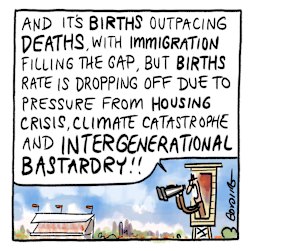
Credit: Matt Golding
The number of registered births from 2023 to 2024 fell across most states and territories, with WA recording the biggest fall of 4.7 per cent.
Victoria recorded the largest increase at 12.9 per cent, but the bureau noted this was due to an improvement in birth registration processing times in 2024 following a period of delays.
The birth rate in NSW fell 3.4 per cent from 90,000 in 2023 to just under 87,000 in 2024: the lowest figure in 20 years, partly due to an increase in birth registration processing times.
The median age of mothers was highest in the ACT at 32.8 years, while the median age of fathers was highest in Victoria at 34.4 years.
Cut through the noise of federal politics with news, views and expert analysis. Subscribers can sign up to our weekly Inside Politics newsletter.