
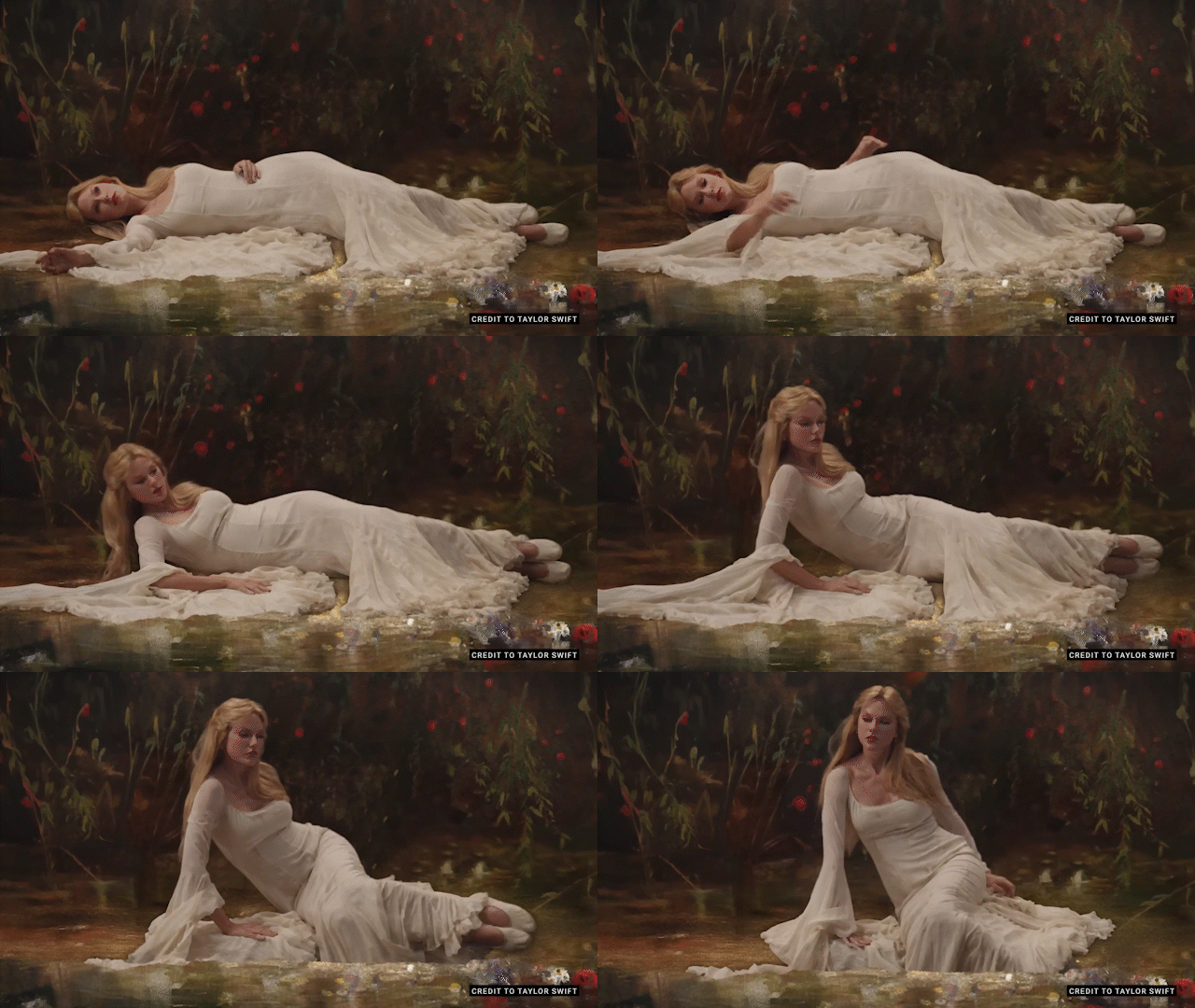
They are both heroines befitting of their age. One wears sprigs of rue (a marker of regret) and sings “Young men will do’t, if they come to ’t; By Cock, they are to blame”; the other wears Versace sequins and sings, “We are never, ever, ever getting back together”.
Now the fates of Ophelia, the tragic character of Shakespeare’s Hamlet, and the pop superstar Taylor Swift are entwined in a debate involving art institutions in London and Germany and millions of fans around the world.
The music video for the singer’s hit The Fate of Ophelia features the verdant image of Swift lying as Shakespeare’s Ophelia did, “mermaid-like” in a “weeping brook”. However, which exact painting inspired the Pennsylvania-born musician is the subject of intense debate among fans.
In Germany, “Swifties” are thronging the usually sedate art nouveau section of the Hesse state museum of art and nature after an unexpected plug from the world’s largest pop icon.
In recent days hundreds have made the pilgrimage to Museum Wiesbaden near Frankfurt to behold its painting of Ophelia that bears a resemblance to the opening scene of the video for Swift’s hit, released on October 3.
The melancholy work by Friedrich Wilhelm Theodor Heyser shows Hamlet’s rejected lover wearing a white dress surrounded by lilies and red flowers. In the video, Swift, 35, lies in the same pose before awakening and strutting out of a frame.
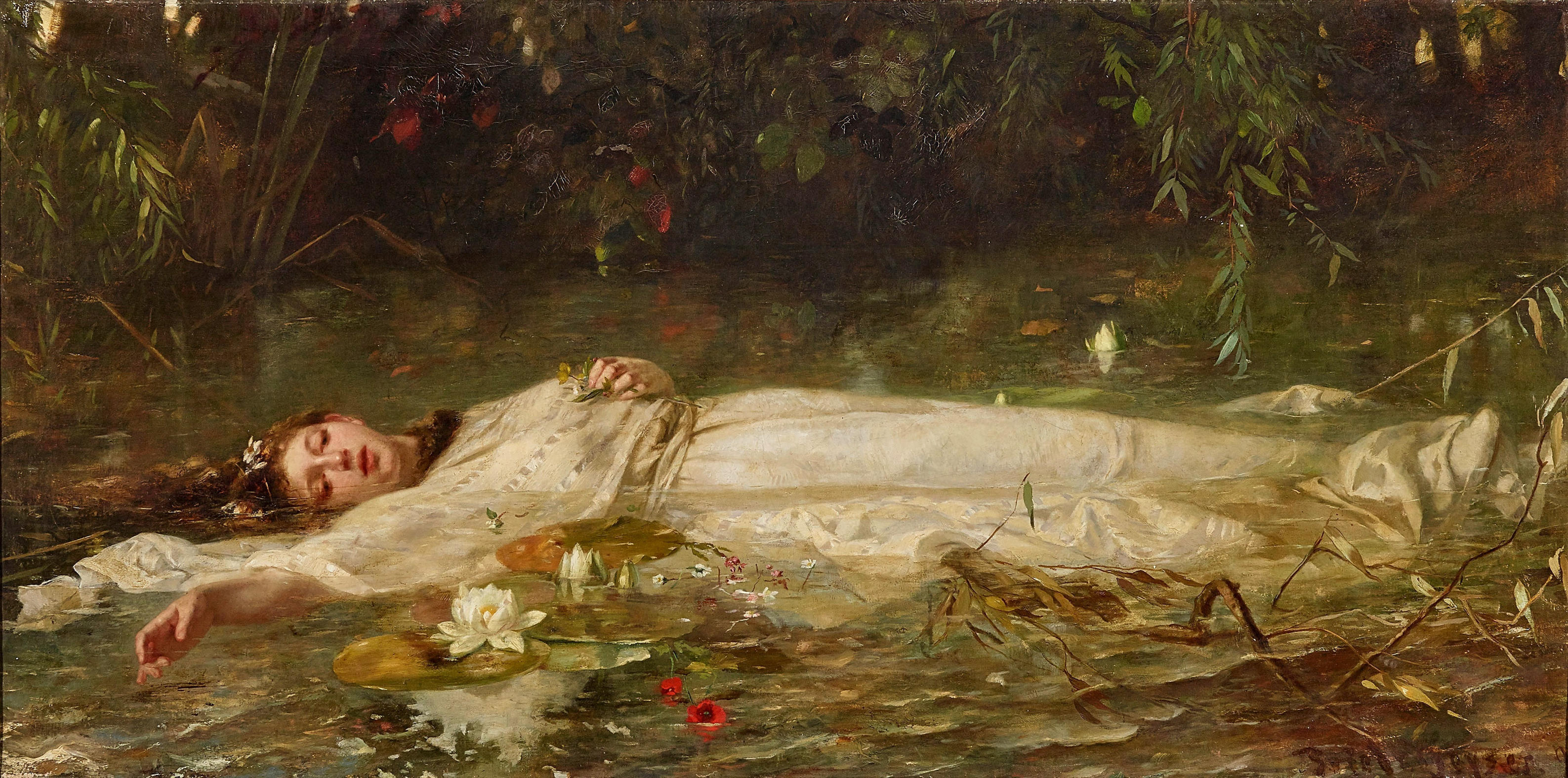
Friedrich Wilhelm Theodor Heyser’s Ophelia
ALAMY
Susanne Hirschmann, the museum’s spokeswoman, said 500 people, including many young visitors, had come last weekend just to see the painting and had been taking selfies with it. On average, the art nouveau section gets only 50 visitors a day. “Someone even came all the way from Hamburg. We’re surprised, and delighted,” she said.
“We can’t be 100 per cent sure [the painting] was the inspiration for the video but it’s very, very similar, also with the nature around her, the branches and the colours with the red flowers. We’ve had to put up a rope barrier so people don’t get too close but so far it’s been very good; people have been enjoying themselves and there have been no problems.”
• Taylor Swift: The Official Release Party of a Showgirl review — a little bit ‘is that it?’
The museum is offering special guided tours on November 2, a Sunday, to explain the history of the painting and the figure of Shakespeare’s Ophelia. “Anyone dressed as a Swiftie will get the tour free,” she said.
However, the museum’s work may not be the only Ophelia-related inspiration for Swift.
The work by Heyser, probably created around 1900, was inspired by the 1852 rendition of Ophelia by the English pre-Raphaelite painter John Everett Millais that hangs in the Tate Britain, London.
Millais’s painting also appears to be referenced by Swift, at the end of the video and on the album cover, showing the singer in a bejewelled garment in bathwater.
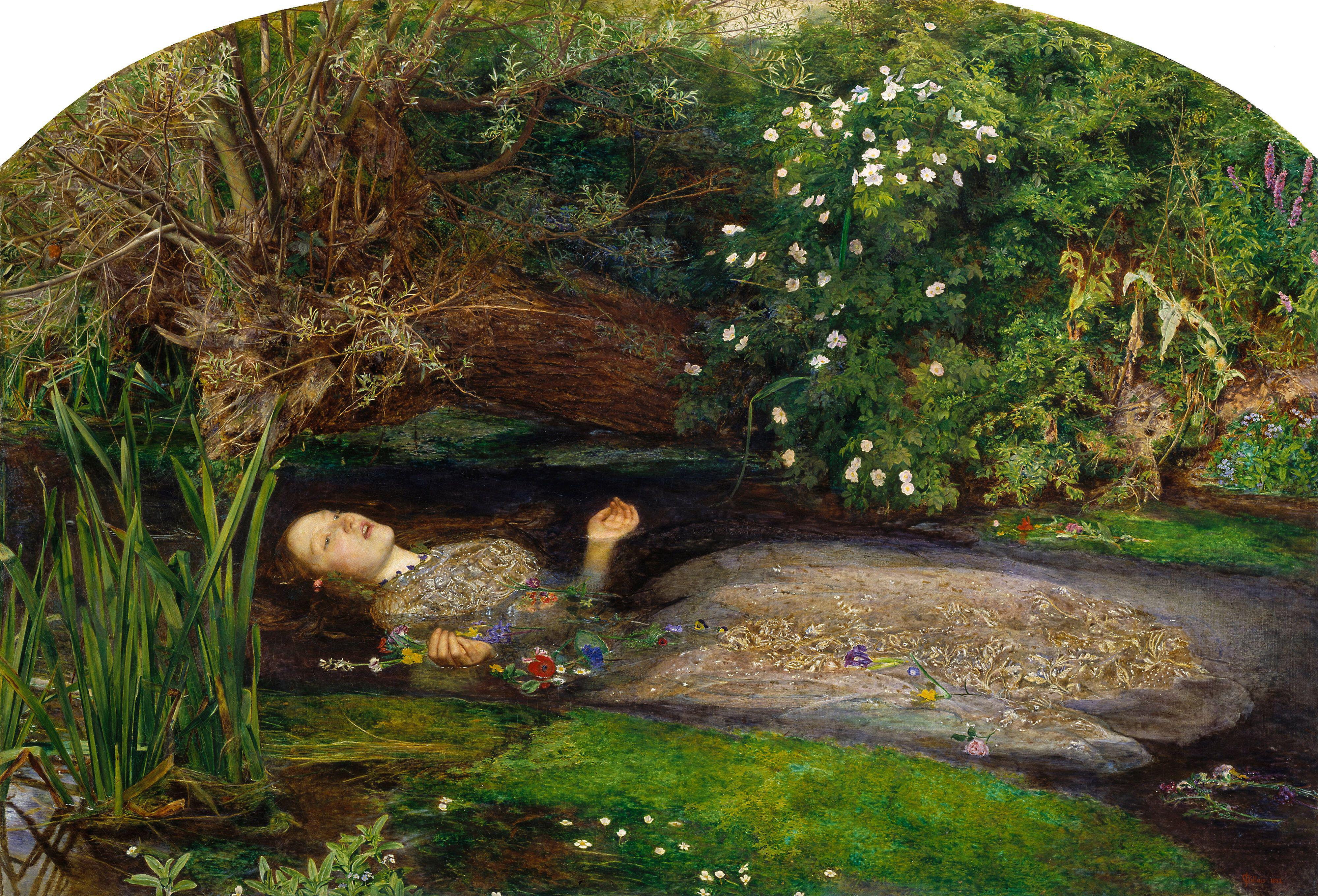
John Everett Millais’s Ophelia
ALAMY
Elly McCausland, 36, from Ghent, a longtime fan, professor of English literature and author of books on Swift, agreed that Millais’s Ophelia was also an inspiration to the star.
“The gown she’s wearing in the music video [made by designers in Australia] resembles much more closely the Heyser painting, as does her opening pose in the video, but the flowers in the Millais painting have been linked to the flower-covered piano that Swift performed on at the Eras tour, suggesting she had been thinking of the painting long before she released the album,” she said.
“I would also point out that Swift is known for mashing up different iconography and cultural references. The video for Love Story, for example, alludes to Romeo and Juliet but its aesthetic is much more medieval than Renaissance.
“Similarly, the video for The Fate of Ophelia not only draws on the Millais-Heyser paintings, but also, to my mind, Waterhouse’s The Lady of Shalott painting — especially since she talks about sitting alone in a tower in the lyrics. So I think she’s cherry-picking various literary and artistic references and combining them to suit her meaning, rather than remaining faithful to one particular vision or interpretation.”
The song, released on Swift’s latest album, The Life of a Showgirl, has set a streaming record on Spotify with more than 30 million streams in a single day, beating a record she set with the hit Fortnight.
• The story behind every song on Taylor Swift’s The Life of a Showgirl
Hirschmann, the curator, said: “We’re looking at what else we can offer. This has all come as a surprise and we’re still planning. But I must say it’s great that works of art, whether it’s Millais’s Ophelia or ours, are being talked about again as a result of this, and that a very large audience is learning more about it.”
The Swift fan Ishbel Ross, 25, agreed that the music video looked more like the German painting. “You can see that it mimics it more accurately but I know that the second painting was the actual inspiration for the album cover, so she does reference both of them throughout the album,” she said. “I think that’s why it’s the lead single, because it has huge thematic significance.”
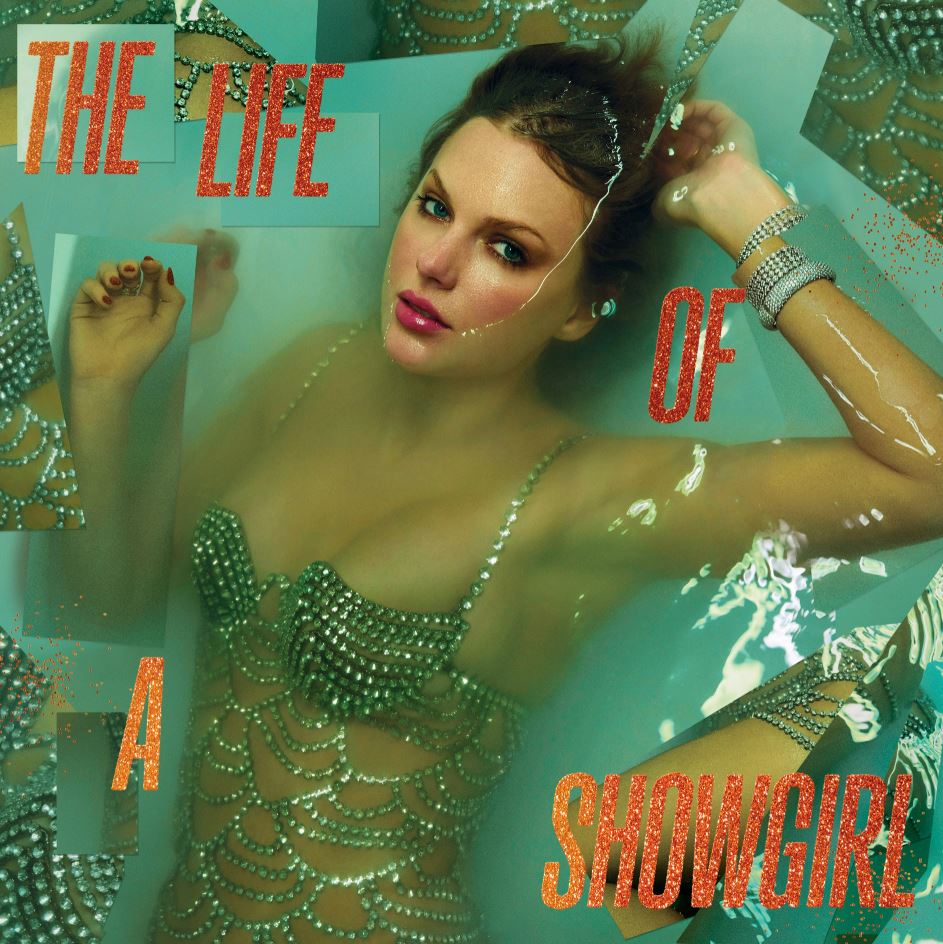
The album cover
TAYLOR SWIFT
Ophelia has inspired many paintings and featured in songs by artists including Bob Dylan, the Grateful Dead and Tori Amos, aided by the musicality of her name.
Innocent, demure and suppressed, the character goes mad after Hamlet kills her father and rejects her, driving her to death where she falls into a brook: “Till that her garments, heavy with their drink/ Pull’d the poor wretch from her melodious lay/ To muddy death.”
In Swift’s song, Ophelia finds love and is saved from her fate, finding a happy end.