
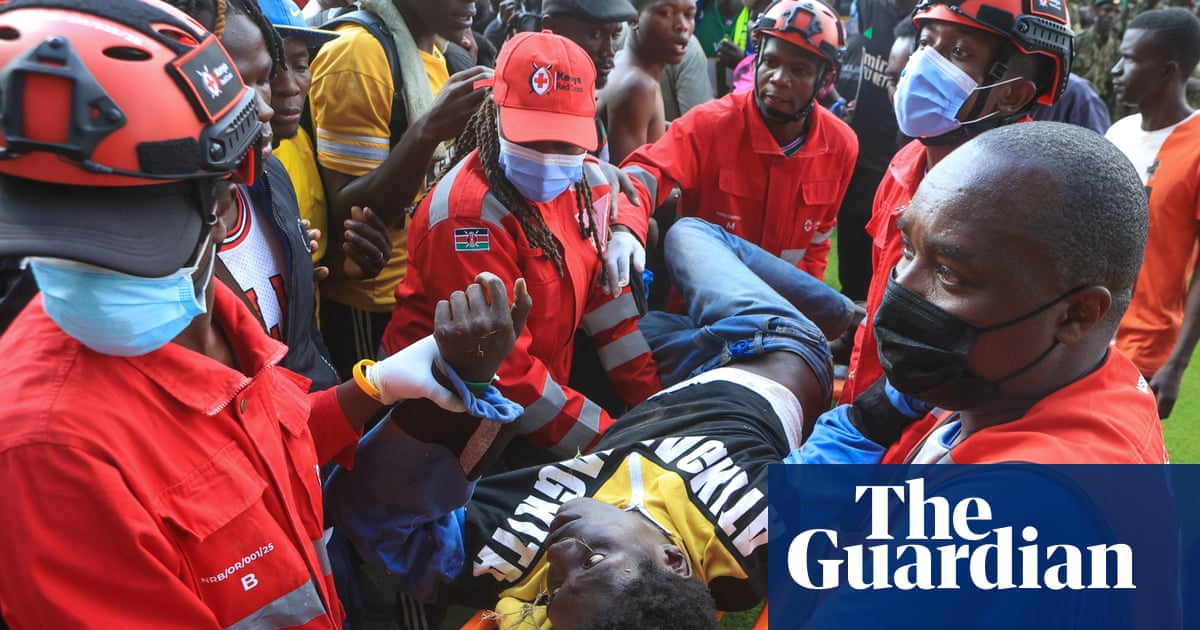
Four people have been killed in Kenya’s capital, Nairobi, after security forces fired shots and teargas to disperse huge crowds at a stadium where the body of the opposition leader Raila Odinga was lying in state.
Odinga, a major figure in Kenyan politics for decades who was once a political prisoner and ran unsuccessfully for president five times, died on Wednesday aged 80 in India, where he had been receiving medical treatment.
With thousands of his supporters on the streets from early morning, chaos erupted when a huge crowd breached a gate at Nairobi’s main stadium, prompting soldiers to fire in the air, a Reuters witness said.
A police source told Reuters that two people were shot dead at the stadium. KTN News and Citizen TV later said the death toll had increased to four, with scores injured. After security forces fired shots, police used teargas to disperse thousands of mourners, the two broadcasters reported, leaving the stadium deserted.
Earlier in the day, thousands of mourners briefly stormed Nairobi’s international airport, interrupting a ceremony for the president, William Ruto, and other officials to receive Odinga’s body with military honours. The incident prompted a two-hour suspension of airport operations.
Crowds also flooded nearby roads and tried to breach parliament, where the government had originally scheduled the public viewing.
Though mainly known as an opposition figure, Odinga became prime minister in 2008 and also struck a political pact with Ruto last year in a career marked by shifting alliances.
Officers inside Kasarani stadium, where security forces used teargas and opened fire to disperse crowds. Photograph: Daniel Irungu/EPA
He commanded passionate devotion among supporters, especially in his Luo community based in western Kenya, many of whom believe he was denied the presidency by electoral fraud.
skip past newsletter promotion
Nesrine Malik and Jason Okundaye deliver your weekly dose of Black life and culture from around the world
Privacy Notice: Newsletters may contain information about charities, online ads, and content funded by outside parties. If you do not have an account, we will create a guest account for you on theguardian.com to send you this newsletter. You can complete full registration at any time. For more information about how we use your data see our Privacy Policy. We use Google reCaptcha to protect our website and the Google Privacy Policy and Terms of Service apply.
after newsletter promotion
Many of Odinga’s mourners, who were not yet born in 1991 when Kenya became a multi-party democracy, paid tribute to Odinga’s efforts as an activist.
Felix Ambani Uneck, a university student, said at the stadium: “He fought tirelessly for multi-party democracy, and we are enjoying those freedoms today because of his struggle.”