
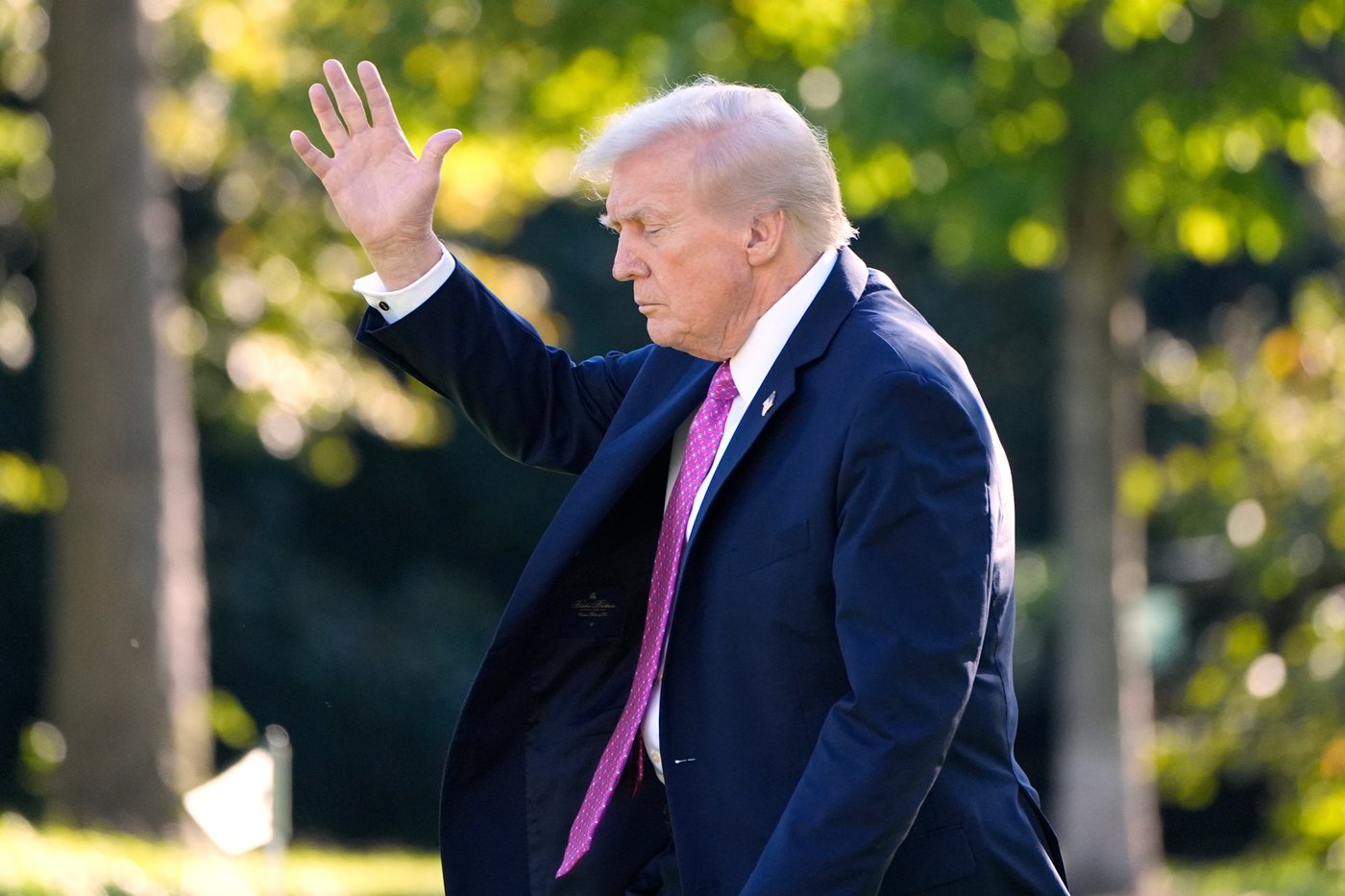
WASHINGTON — U.S. President Donald Trump signed a proclamation Friday to slap a 25 per cent tariff on imported medium- and heavy-duty trucks beginning Nov. 1, with a carveout for vehicles traded under the Canada-U.S.-Mexico Agreement.
Trucks compliant with the trade agreement, better known as CUSMA, will be tariffed only on their non-American parts.
The latest levies will not hit auto parts that are compliant under the North American trade pact for now. A fact sheet from the White House said that exemption will be in place until Commerce Secretary Howard Lutnick, in consultation with U.S. Customs and Border Protection, establishes a process to apply tariffs to the non-U.S. content of the parts.
A 10 per cent tariff will be placed on buses and motorcoaches.
The administration also included a tariff discount for companies that produce and sell completed automobiles in the United States, a move that intends to offset the impact of duties on imported parts.
Trump used Section 232 of the Trade Expansion Act of 1962 to impose the latest truck tariffs — which will hit semi-trailers and big pickup trucks — mirroring the levies he had already slapped on smaller automobiles earlier this year.
It adds to a growing list of sector-specific duties that include steel, aluminum, copper and lumber.
Trump threatened the heavy truck levies last month, saying it would protect American industry from “unfair outside competition.”
“President Trump is fortifying America’s ability to manufacture medium- and heavy-duty trucks and essential parts, which is vital for America’s military readiness, emergency response capabilities and critical infrastructure for economic activity,” the White House fact sheet said.
The American Trucking Association has voiced its opposition to the duties, saying it could drive up prices in an industry that is already being slammed by steel and aluminum tariffs.
In a May submission to the government, it said the American trucking industry operates on thin margins and was in a freight recession for years, with falling rates and increased costs for operating trucks.
The trucking lobby group wrote that it “does not believe that the importation of heavy-duty trucks poses a national security threat, as outlined below.”
The North American automobile industry is deeply integrated and many of the trucks were already being made in the United States with parts from other countries.
The effects of the latest tariffs are more likely to be felt in Mexico — although some heavy- and medium-duty vehicle companies do have operations in Canada.
Paccar, which produces large commercial trucks, has divisions in Canada. It laid off employees at its Ste-Thérèse, Que., plant in August.
This report by The Canadian Press was first published Oct. 17, 2025.
Kelly Geraldine Malone, The Canadian Press