
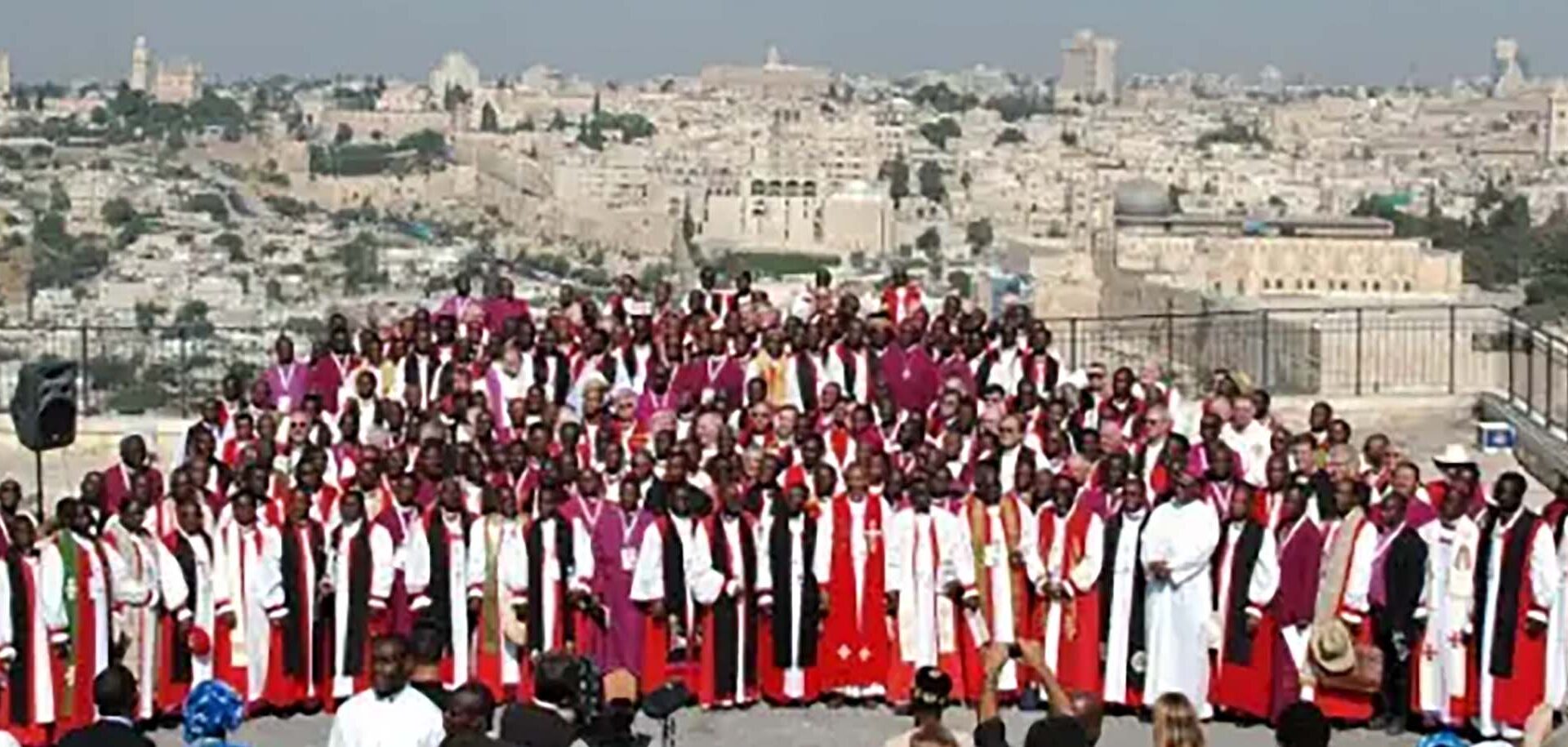
In one of the largest schisms in Western Christianity since Martin Luther launched the Protestant Reformation, the global Christian faith has witnessed a fracture of monumental proportions.
Today, Oct. 16, the bishops of the Global Fellowship of Confessing Anglicans, known as GAFCON, announced they are cutting all ties with the Anglican Communion and its historic “first among equals,” the archbishop of Canterbury, over what they deem a rejection of biblical authority.
They declared themselves to be the true Anglican Communion.
GAFCON previously described itself as “a global movement, gathering authentic Anglicans, guarding God’s gospel, growing orthodox leaders, and generating missional resources, for the glory of God.” Its website says the movement began in 2008 “when moral compromise, doctrinal error and the collapse of biblical witness in parts of the Anglican communion had reached such a level that the leaders of the majority of the world’s Anglicans felt it was necessary to take a united stand for truth.”

Laurent Mbanda, archbishop of the Anglican Church of Rwanda, chairman of Gafcon since 2023
GAFCON is primarily composed of churches from the Global South, particularly Africa, along with conservative groups in North America, South America and Australia. GAFCON’s global presence includes African provinces such as the Church of Nigeria, the Anglican Church of Kenya, and the Church of Uganda and North American provinces including the Anglican Church in North America, which formed a split in the Episcopal Church and the Anglican Church of Canada.
While the debates leading to this decision run decades deep, the schism was precipitated by the recent election of Sarah Mullally as the first female archbishop of Canterbury. Describing herself as a pro-choice feminist, Mullally’s ascension to the historic See of Canterbury — long the spiritual head of the global Anglican faith — was the final straw for many conservative provinces. As major outlets have reported, her election was met with both celebration and immediate objection.
In a communiqué posted today, GAFCON leaders stated they are forming a new body, the Global Anglican Communion. This new structure will require participating provinces — the autonomous national churches of the Anglican faith — to have no connection to the See of Canterbury or the Anglican Communion’s administrative council.
This break reflects years of turmoil. It follows the resignation of former Archbishop Justin Welby, who stepped down in disgrace over a mishandled abuse crisis. Beyond that, the communion has been fracturing for years along theological lines: the ordination of women to the diaconate, priesthood and especially the episcopacy; LGBTQ inclusion and same-sex marriage. Two years ago, when the Church of England approved blessings for same-sex couples, the Global South Fellowship of Anglicans, a related conservative body, declared it was time to seek new spiritual leadership.
“The communion has been fracturing for years along theological lines.”
At their upcoming 2026 assembly, GAFCON will elect a chairman for a new administrative council, creating a rival “first among equals” to the archbishop of Canterbury. It is an echo of the Western Schism of the church, when the papacy was split between Rome and Avignon from 1378 to 1417.
Today’s development affects nearly 110 million Anglicans worldwide. GAFCON claims to represent 85% of them (roughly 75 million people), although these figures are disputed. In the United States, this global realignment is mirrored in the division between The Episcopal Church in America and the breakaway Anglican Church in North America.
That the new Archbishop is a woman is certainly a factor for provinces that believe the office belongs only to men. But what is most emblematic of the problem is that Mullally was hailed as a candidate who could “bridge the divide.” In her own words, Mullally is a “pro-choice feminist” who spearheaded the very project to create liturgies for same-sex blessings.
Only time will tell if this new communion can avoid the pitfalls of the fundamentalism and separatism it now embodies: backbiting, infighting and endless theological disputes. Serious concerns remain about the rhetoric and practices within some GAFCON provinces. The Archbishop of Nigeria once derided the ACNA for allowing “closet homosexuals” to serve as a “virus” to infect the church. Issues of polygamy, the treatment of women and anti-gay laws that constitute human rights abuses remain unresolved problems.
While “schism” may not be the technically perfect term — as that requires a formal anathema from both sides — the practical effect is the same. And the Church of England will likely do what it has done for the past three decades: Nothing.

David Bumgardner
David Bumgardner is a writer, theologian and educator living in Columbus, Ohio. He is a former BNG Clemons Fellow and a graduate of Texas Baptist College at Southwestern Seminary. He is a licensed commissioned pastor and holds an evangelism license through the Anglican Province of the Democratic Republic of the Congo, Diocese of Boga, and Missio Mosaic, an ecumenical missional society and religious order. He is awaiting the conferral of his master of arts in practical theology degree from Winebrenner Theological Seminary. He is currently conducting postgraduate theological research (MTh) at the University of Aberdeen in New Testament and Early Christianity.
Related articles:
First female archbishop of Canterbury faces multiple challenges
Why I am not without hope for Sarah Mullally | Opinion by Cara Meredith
It’s time for evangelicals to leave Anglicanism | Opinion by David Bumgardner