
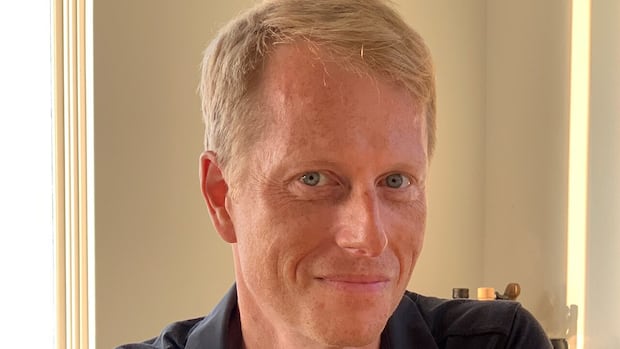
Election results out of Newfoundland and Labrador went against the traditional grain, a political scientist says, en route to a Progressive Conservative majority government.
Alex Marland, a political scientist at Acadia University, said rural areas like the west coast of Newfoundland have historically been a stronghold for the Liberal Party, while the metro-St. John’s region has favoured the Progressive Conservatives.
But the 2025 election saw an inverse. The Liberals won only one seat in western Newfoundland — Corner Brook — while the PCs were shut out of St. John’s, who voted Liberal and NDP.
“This is something that we’ve seen really right across the country. In fact, you could look at the United States, you could look at the United Kingdom,” Marland told CBC News on Thursday.
“You can see this pattern playing out, that progressive parties are very much urban concentrated, and parties that are more conservative and traditional values are much more concentrated in rural areas.”
Marland said a political divide felt across other parts of Canada can also be compared to Newfoundland and Labrador. The PCs received 44.4 per cent of the total vote, while the Liberals received 43.4 per cent.
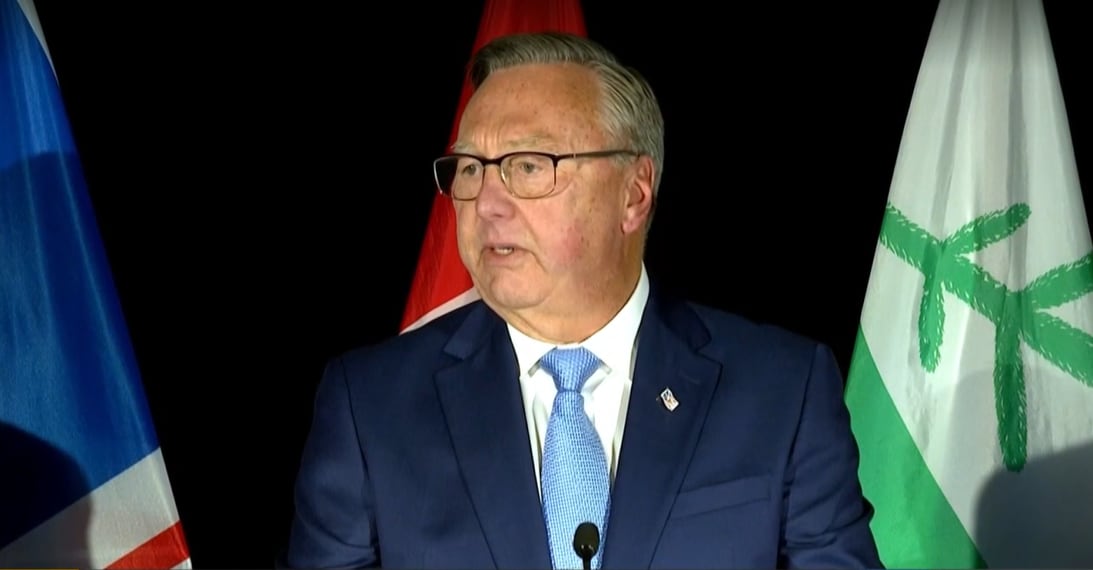 Premier-designate Tony Wakeham and the PC Party received 44.4 per cent of the total vote. (CBC)
“Let’s not make any mistake here, in some ways the story is that Newfoundland and Labrador is pretty divided,” Marland said.
“The seats went toward the Conservatives, but if you look at how the votes went, it really tells that there’s not a lot of agreement in the entirety of the province about the political direction and where things should go.”
Marland said there are other takeaways as well, like a slow and steady approach from the PCs that focused on addressing the needs of residents they spoke to at the doors.
Addtionally, the victory of two longtime Independent candidates — Eddie Joyce and Paul Lane — has few parallels. Joyce has been a member of the House of Assembly since 1989, and Lane since 2011.
“This just doesn’t happen in Canadian politics,” Marland said. “There’s something very special going on in Eddie Joyce and Paul Lane, to manage to keep getting re-elected as Independents.”
Will Hogan stay on as leader?
While Liberal Leader John Hogan won’t be continuing as premier, he did win his seat in Windsor Lake. He didn’t say what his future plans were in his concession speech, but did say his work would resume.
Marland said Hogan winning his seat puts him in an interesting position, as other leaders historically have moved on when that scenario happens.
Hogan’s decision is ultimately a personal one, but Marland said there is historical precedent to look toward.
 Liberal Leader John Hogan retained his seat in Windsor Lake. (Paul Daly/The Canadian Press)
“Often they stick around and they do it for a short period of time, and then they announce that they’re resigning. So it could be because of a desire to show constituents that they wanted to respect the fact that they were elected,” he said.
“But I would predict that John Hogan will step down at some point, and there will be a byelection … that’s what the pattern normally is.”
Download our free CBC News app to sign up for push alerts for CBC Newfoundland and Labrador. Sign up for our daily headlines newsletter here. Click here to visit our landing page.