
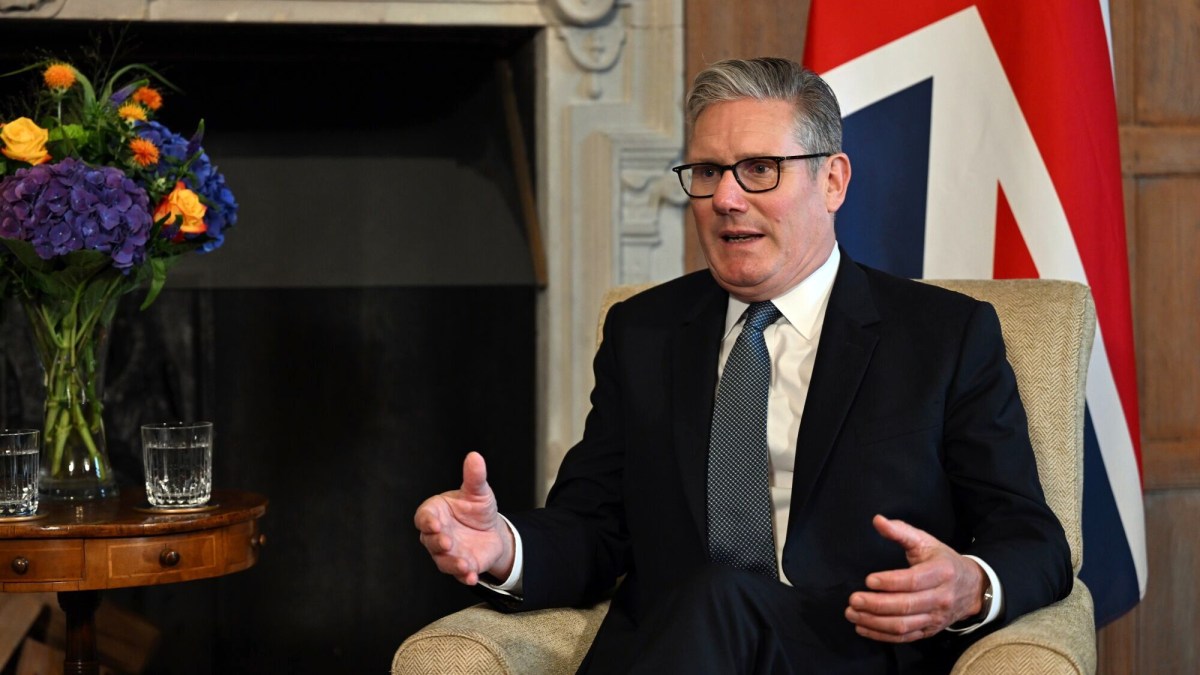
Sir Keir Starmer has rejected a call by more than 130 Labour MPs to follow Emmanuel Macron and formally recognise a Palestinian state amid concerns that the issue would overshadow President Trump’s visit to the UK.
The French president announced on Thursday that he would formally recognise a Palestinian state at the UN General Assembly in September, increasing pressure on Starmer.
Cabinet ministers have privately been urging the prime minister to do the same and on Friday more than a third of his backbenchers signed a letter calling on him to follow suit.
The issue threatens to dominate Trump’s four-day visit to the UK, which formally begins on Saturday.
Marco Rubio, the US Secretary of State, said that Macron’s decision was “reckless” and “only serves Hamas propaganda and sets back peace”. “It is a slap in the face to the victims of October 7,” he added.
Speaking on Friday before flying to Scotland for a five-day visit, Trump said that Macron’s announcement “doesn’t matter”. “He’s a very good guy. I like him, but that statement doesn’t carry weight,” he said, adding: “Here’s the good news: What he says doesn’t matter. It’s not going to change anything.”
Trump addresses Macron’s statement on Palestine
Starmer’s reluctance is likely to deepen divisions within the cabinet, with one member of the government immediately branding the response “deeply inadequate”.
A senior government source said that there were concerns that recognising a Palestinian state while Trump was visiting could derail discussions over a US-UK trade deal. Starmer is meeting Trump at his Turnberry golf course on Monday.
In a statement released after talks with Macron, Friedrich Merz, the German chancellor, and Giorgia Meloni, the Italian prime minister, Starmer made clear that he would not bring forward an announcement.
Starmer said that while he was “unequivocal” about recognising a Palestinian state, he would only do so at a time of “maximum utility to improve the lives of those who are suffering”. It means that the UK will not recognise a Palestinian state until there is a ceasefire with the return of the October 7 hostages, and humanitarian aid is restored to Gaza.
Starmer said: “Alongside our closest allies, I am working on a pathway to peace in the region, focused on the practical solutions that will make a real difference to the lives of those that are suffering in this war.
“That pathway will set out the concrete steps needed to turn the ceasefire, so desperately needed, into a lasting peace.
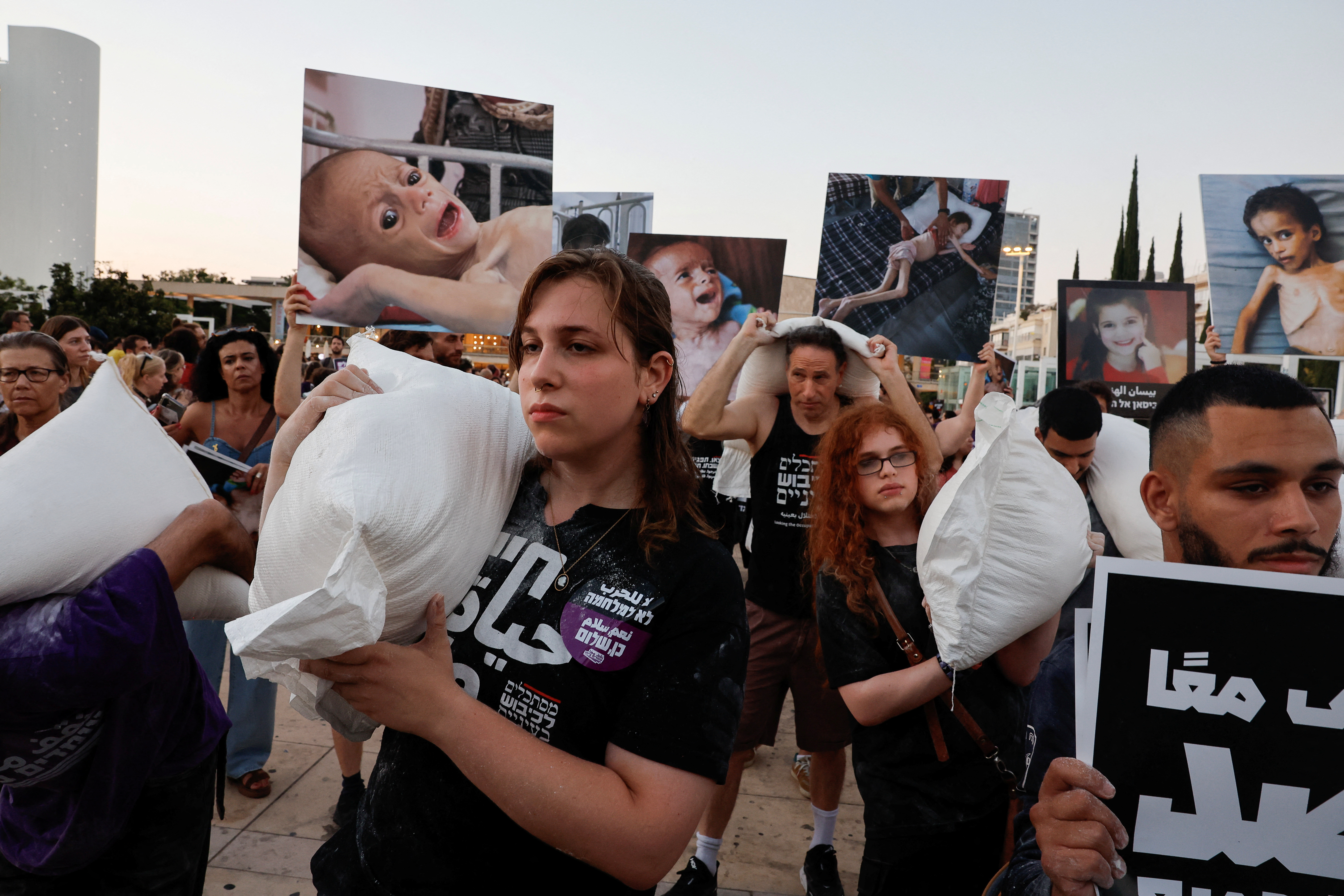
Protesters in Tel Aviv carry sacks of flour as they demand an end to the war in Gaza and the release of all hostages
AMMAR AWAD/REUTERS
“Recognition of a Palestinian state has to be one of those steps. I am unequivocal about that. But it must be part of a wider plan which ultimately results in a two-state solution and lasting security for Palestinians and Israelis. This is the way to ensure it is a tool of maximum utility to improve the lives of those who are suffering — which, of course, will always be our ultimate goal.”
He said that the scenes in Gaza were “appalling” and “unrelenting”. “The continued captivity of hostages, the starvation and denial of humanitarian aid to the Palestinian people, the increasing violence from extremist settler groups, and Israel’s disproportionate military escalation in Gaza are all indefensible,” he said.
A total of 136 Labour MPs — equivalent to a third of Starmer’s parliamentary party — have signed a cross-party letter calling for Britain to stand up to its “historic responsibility” and recognise a Palestinian state. The letter was signed by 221 MPs in total.
It said: “Whilst we appreciate the UK does not have it in its power to bring about a free and independent Palestine, UK recognition would have a significant impact due to our historic connections and our membership on the UN Security Council, so we urge you to take this step.
“British recognition of Palestine would be particularly powerful given its role as the author of the Balfour Declaration and the former Mandatory Power in Palestine. Since 1980 we have backed a two-state solution. Such a recognition would give that position substance as well as living up to a historic responsibility we have to the people under that mandate.”
• Why Israel can’t brush off France’s recognition of a Palestine state
The letter was organised by Sarah Champion, a Labour MP and chair of the international development select committee. It was signed by 19 select committee chairs in total including the Labour MPs Emily Thornberry, Tan Dhesi, Debbie Abrahams and Florence Eshalomi. Jess Morden, the chair of the Parliamentary Labour Party, was also a signatory.
Israel condemned Macron’s decision. Binyamin Netanyahu said the announcement “rewards terror” and warned that a Palestinian state would be a “launch pad to annihilate Israel”. The Knesset, Israel’s parliament, voted to annex the West Bank — a move which would make a Palestinian state impossible.
Itamar Ben-Gvir, national security minister and the most outspoken far-right minister in Netanyahu’s cabinet, said: “Complete halt of ‘humanitarian’ aid. Total occupation of the Strip. Total destruction of Hamas. Encouragement of migration. Settlement.
“This is not the alternative path — this is the royal road to securing the release of the hostages and achieving victory in the war.”
• Israel and US pull out of Gaza ceasefire talks with ‘selfish’ Hamas
Sir Jeremy Greenstock, a former British ambassador to the UN, was one of 50 diplomats who signed a letter calling for Starmer to unilaterally recognise a Palestinian state.
He said it would go beyond “rhetoric” and encourage countries in the Middle East to follow suit.