
Unlock the White House Watch newsletter for free
Your guide to what Trump’s second term means for Washington, business and the world
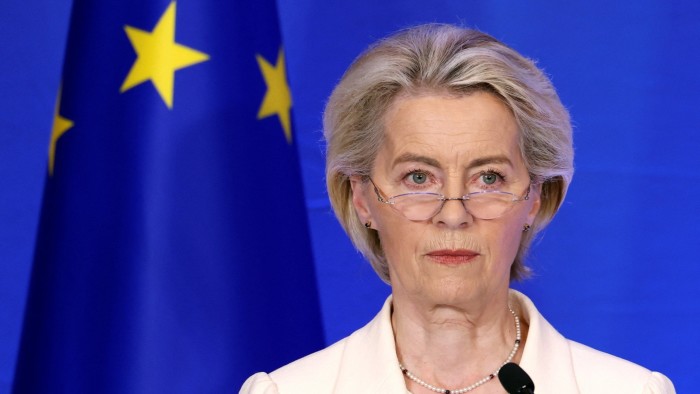
European Commission president Ursula von der Leyen has said she will meet US President Donald Trump on Sunday, raising hopes the two will agree an outline trade deal and avoid a transatlantic trade war.
People familiar with the draft agreement say it would set tariffs of about 15 per cent on most imports into the US from its biggest trading partner.
“Following a good call with @POTUS, we have agreed to meet in Scotland on Sunday to discuss transatlantic trade relations, and how we can keep them strong,” von der Leyen posted on social media on Friday.
She will travel to Scotland “at the invitation” of Trump, the commission has said, where Trump is spending a weekend golfing and meeting UK officials who are lobbying for him to lower tariffs on steel and whisky.
Following a good call with @POTUS, we have agreed to meet in Scotland on Sunday to discuss transatlantic trade relations, and how we can keep them strong.
— Ursula von der Leyen (@vonderleyen) July 25, 2025
Negotiations are expected to continue as the two sides try to close remaining gaps ahead of Trump’s August 1 deadline, after which he would impose 30 per cent tariffs.
The talks have lasted almost four months, during which the US has been charging an extra 10 per cent tariff on EU exports. That so-called reciprocal tariff came on top of pre-existing duties averaging 4.8 per cent.
Speaking to reporters as he left the White House on Friday morning, Trump said there was a “50-50 chance” or “maybe less than that” that the US would strike a trade agreement with the EU.
“It’ll be a deal where they have to buy down their tariffs,” Trump said. “Because they’re right now at 30 per cent, and they’ll have to buy them down. Or they could leave them the way they are, but they want to make a deal very badly.”
As part of the US trade deal with Japan that was agreed earlier this week, Tokyo pledged to invest $550bn in strategic American sectors such as semiconductors. On Thursday Trump said the country had “bought down their tariffs”.
On a trade-weighted basis, which accounts for the specific goods traded, however, the previous level of duties averaged 1.6 per cent.
Trade between the US and EU in goods and services amounted to €1.6tn in 2023, making it one of the biggest trading relationships in the world. Trump is determined to reduce the annual trade deficit in goods of nearly €200bn in 2024.
Tariffs on the EU of about 15 per cent would mirror the deal struck between the US and Japan. It would reduce US tariffs on cars and car parts from 27.5 per cent. The EU is still pushing for some steel and aluminium exports to enter the US at rates lower than the 50 per cent Trump has imposed on national security grounds.
Pharmaceutical products, which Trump has threatened with high tariffs, would also pay 15 per cent.
Both sides would waive tariffs on aeroplanes and parts, and some medical devices. The two sides are still discussing whether to do the same for spirits, according to people familiar with the situation.
Recommended

The trade negotiations with the US have divided the EU. Some leaders, such as German Chancellor Friedrich Merz, had been pressing the commission into negotiating a quick deal in order to relieve pressure on industry. Others, such as French President Emmanuel Macron, had been more reluctant to agree quickly in the hope of achieving a better outcome.
Carmakers had been pushing for a separate deal covering automotive imports. Volkswagen chief executive Oliver Blume said on Friday that the German group could consider transferring production into the US and increase exports out of America after it revealed a €1.3bn hit from tariffs.
The deal will need to be approved by member states, probably in an emergency meeting of ambassadors over the weekend. If there is a deal, Brussels will suspend the implementation of countermeasures that would hit €93bn worth of US imports with tariffs from August 7.