
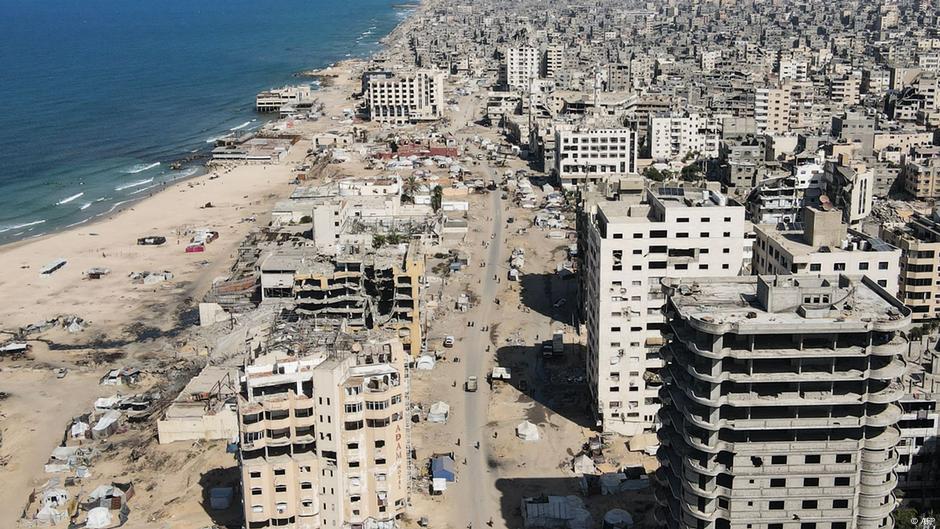
The European Union has not ruled out imposing sanctions on Israel as a way to pressure it into guaranteeing that the Gaza ceasefire is enforced, the bloc’s foreign police chief Kaja Kallas said Monday after meeting with EU foreign ministers in Luxembourg.
“The ceasefire has changed the context — that is very clear for everybody,” Kallas said.
“However, unless we see real and sustained change on the ground, including more aid reaching Gaza, the threat of sanctions remains on the table.”
DW’s Brussels correspondent Rosie Birchard said there’s no doubt that the situation for Gazans has changed since September, when the EU’s executive unveiled plans to sanction two far-right Israeli ministers and partially suspend the EU-Israel trade deal over what the bloc called rights violations in Gaza.
Those proposals were always unlikely to get sufficient backing from EU states to kick in. Germany was the key hold-out, though Hungary had also vowed to veto where it could.
But now that a fragile ceasefire is in place, EU foreign ministers have been assessing what to do next.
We asked the bloc’s top diplomat whether she intended to push sanctions forward — or scrap them.
Kaja Kallas told reporters there were “very divergent views” at Monday’s meeting.
“So what is something that we landed on? [It] is that we don’t move with the measures now, but we don’t take them off the table either, because the situation is fragile,” Kallas said.
“We need to see, really, the improvement of humanitarian aid reaching Gaza. We need to see also Palestinian revenues that are given to Palestine, or released by the Israeli authorities,” she added.
“We need to see journalists and humanitarian aid workers getting in. We need to see also the international NGOs registration to be unrestricted.”
Gaza aid shortage continues amid fragile truce
To view this video please enable JavaScript, and consider upgrading to a web browser that supports HTML5 video