
OSLO – Norway’s long and complicated entanglement with Middle East diplomacy resurfaced in recent days – not in Jerusalem or Gaza, but in the marble halls of its own parliament.
The Gaza peace deal broke a political impasse in Oslo that had paralysed talks over how to use the country’s €1.8 trillion sovereign wealth fund. The deal has once again reshaped the domestic politics of a nation that has spent decades seeing its global moral standing as inseparable from its efforts in the Middle East.
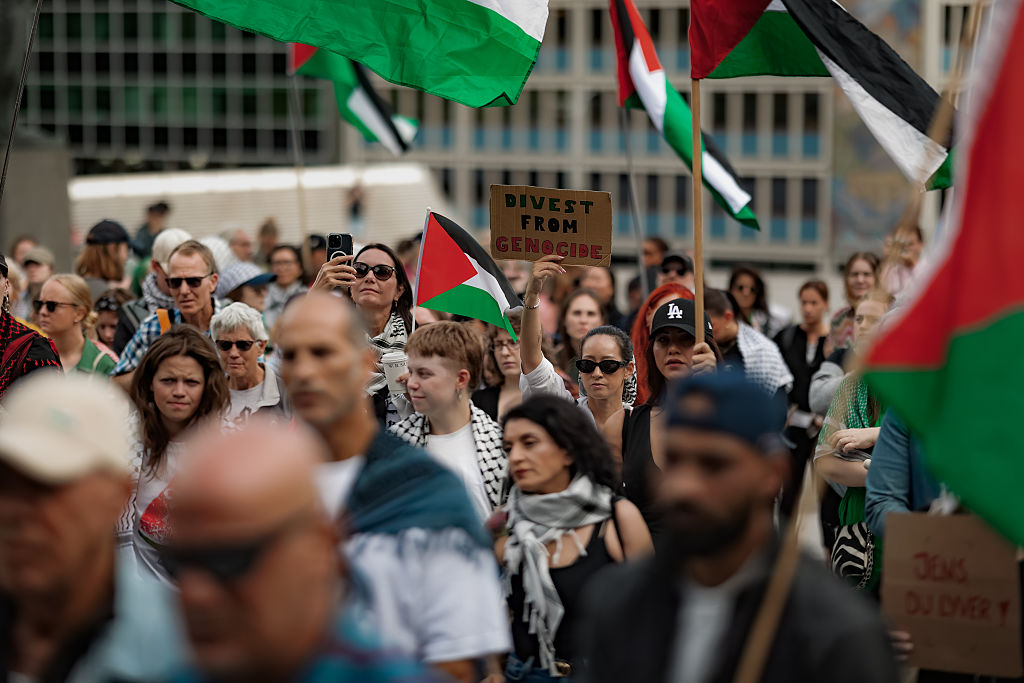
Israel’s war in Gaza – fought some 3,600 kilometres from Oslo – emerged as one of the defining issues in Norway’s September election. The fighting, and the international outrage surrounding it, fuelled a fierce debate over whether Norway’s giant oil fund should divest from companies tied to Israel’s military operations.
Under growing public and political pressure, the fund withdrew investments from 23 companies deemed directly or indirectly complicit in the war.
The centre-left Labour Party won the election, but its fragile coalition quickly found itself hostage to the Socialist Left Party (SV), which refused to join budget negotiations unless the fund cut ties with a further 16 firms.
That stand-off ended last week, when SV dropped its ultimatum after the announcement of the Gaza peace deal – and after securing a parliamentary resolution instructing the government to ensure Norway “does not risk becoming complicit in violations of international law in Palestine”.
The move may ease tensions not only in Oslo but also in Washington. The US State Department had expressed concern in September over the fund’s decision to divest from Caterpillar, the American construction company whose bulldozers are used by Israel. The decision, a department spokesperson told Euractiv in an emailed statement, “appears to be based on illegitimate claims against Caterpillar and the Israeli government”.
A frayed friendship
Last year, Israel recalled its ambassadors from Ireland, Spain, and Norway after the three countries jointly recognised Palestine. In a rare diplomatic rebuke, Israel revoked the accreditation of Norwegian diplomats and accused Oslo of aligning with Hamas.
To outsiders, it may seem strange that Norwegians – prosperous, peaceful and geographically distant from the conflict – so often take positions that provoke their allies. But to Hilde Henriksen Waage, a historian at the Peace Research Institute Oslo, the current tensions are merely the latest chapter in a decades-long story.
“Two foreign policy questions occupied Norwegians after the Second World War: NATO and Israel,” Waage said in an interview.
From admiration to disillusion
For Norway’s post-war Labour Party, which dominated national politics for much of the twentieth century, Israel was once viewed as a kindred experiment – “a socialist paradise,” Waage said – and the two Labour movements developed an unusually close bond.
That warmth began to cool in the late 1970s, after the Iranian Revolution severed Israel’s oil supply. Under American pressure, Norway agreed to sell oil to Israel but also sought assurances from Yasser Arafat, leader of the Palestine Liberation Organisation, that doing so would not make Norway an enemy of the Arab world.
Arafat saw an opportunity. He asked Norway to use its connections in Israel to establish a secret diplomatic channel – a backdoor that would eventually lead to the 1993 Oslo Accords.
“Suddenly we were this important peace nation,” Waage said. “Getting access to Washington, being mentioned in Brussels.”
But the euphoria of the Oslo Accords gave way to decades of stalemate. As hopes for a two-state solution faded, so too did Norwegian patience. A nation that once admired Israel’s resilience became increasingly sympathetic to the Palestinians – and frustrated with its own inability to deliver peace.
The collapse of balance
That uneasy balance was shattered after Hamas’s 7 October 2023 attacks in Israel and the ensuing war in Gaza. Norway, Waage said, “realised that the old diplomatic formula – being equally friendly with both sides – was a complete failure”.
“Instead of talking to the stronger party, Israel,” she said, “Norway changed its policy completely – and started to say: ‘We side with the Palestinians.’”
Israel’s leaders saw betrayal. Avi Nir–Feldklein, Israel’s ambassador to the European Union and formerly ambassador to Norway, accused Oslo of rewarding terrorism and of buying into Hamas’s narrative after it condemned Israel’s raid on Gaza’s Al–Shifa hospital in April 2024. He has also warned of rising antisemitism in Norway.
Norwegian officials insist their criticism applies equally to both sides – and that the same standard of international law governs their judgements.
The €1.8 trillion question
In August, Norway’s oil fund found itself pulled into the heart of the Gaza debate. A media investigation revealed that the fund had earned millions from investments in a company maintaining Israeli fighter jets. Many Norwegians were outraged.
“The threshold for exclusion is intentionally high,” said Svein Richard Brandtzæg, chair of the fund’s Ethics Council, in comments to Euractiv. “There must be a clear link between violations of humanitarian law and the company in which the fund is invested.”
But Brandtzæg acknowledged that the issue is uniquely complex because “Israel is fully integrated into the Western economy.” That, he said, makes determining complicity exceedingly difficult.
Fund managers have long argued that the fund’s credibility depends on staying above politics. But as public anger grew, Prime Minister Jonas Gahr Støre’s government ordered a review of all Israel-related holdings – and shortly after, divestments were announced.
Brandtzæg maintains that the decisions were made before the political storm broke. Yet Waage argues that the fund “handled the debate extremely badly,” failing to anticipate the public fury such investments would provoke.
The politics of principle
Now, three of the four parties in Støre’s new coalition are demanding further divestments – and even economic sanctions – against Israel. For the moment, the peace deal brokered by US President Donald Trump appears to have cooled tensions enough to keep the coalition together. But the deeper question of how Norway balances its moral ambitions with its economic power remains unresolved.
That tension is not confined to the halls of government. In Oslo, the city’s trade-union federation – representing more than 100,000 workers – has called for a one-day “Palestine strike” on 26 November, the anniversary of the largest deportation of Jews from Norway during the Second World War. Its slogan: “Stop the genocide – the Oil Fund out of Israel.”
Kirsti Bergstø, leader of the Socialist Left Party, said the movement would not stop there. “SV will not give up,” she said, “but will continue to work for pulling the oil fund out of Israel – and companies that contribute to occupation and war crimes”.
Israel vehemently denies committing war crimes in Gaza and insists that its campaign there, triggered by the horrific events of 7 October, was an act of self-defence. But Norway – a nation that once saw itself as Israel’s closest European friend – is no longer listening.
(cm, mk, vib)