
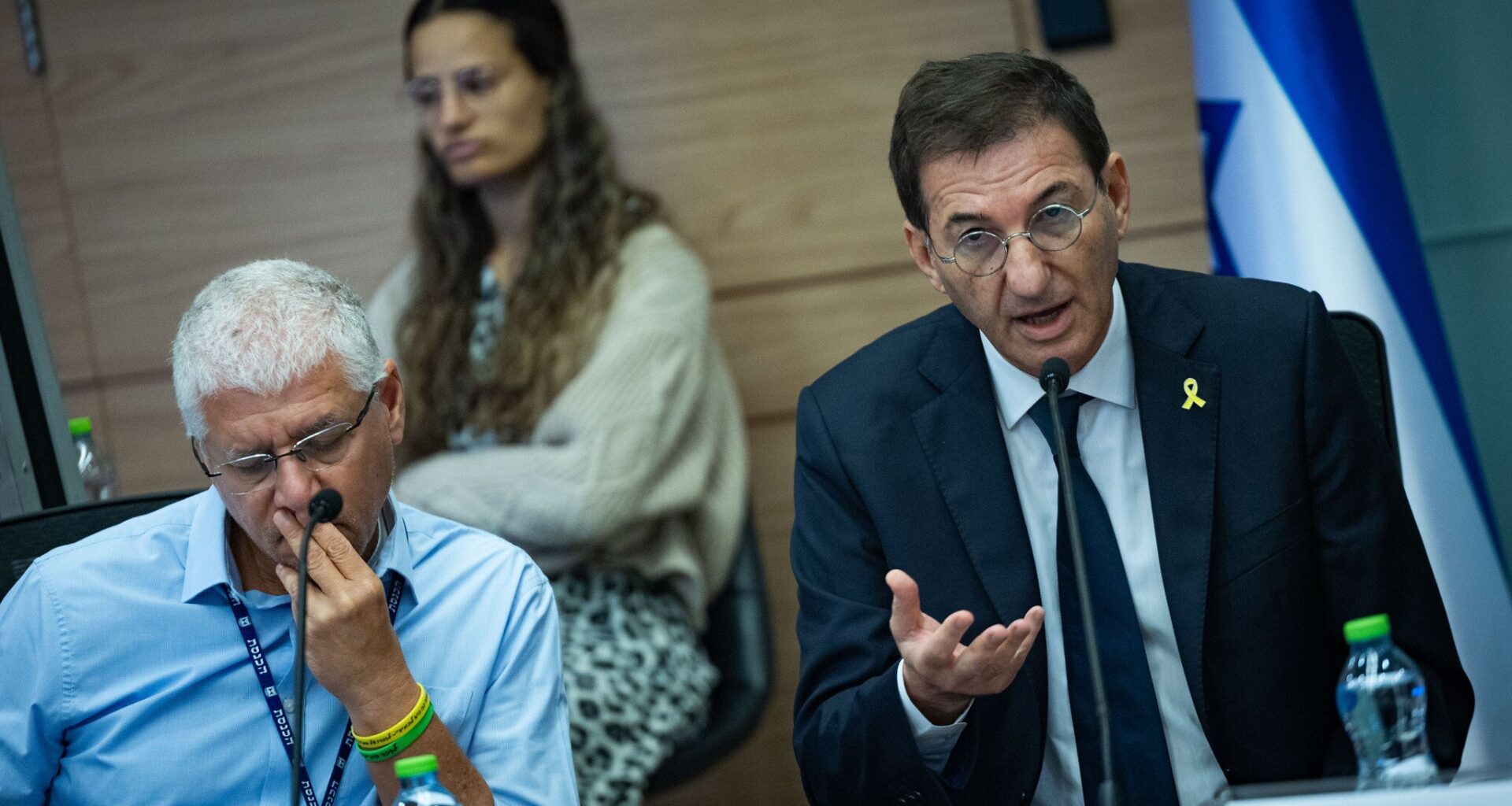
Knesset Foreign Affairs and Defense Committee chairman Boaz Bismuth (Likud) announced Monday that he was postponing a series of scheduled discussions of the government’s controversial military conscription bill for the ultra-Othrodox community.
The move comes despite the government being eager to push ahead with the bill that would codify draft exemptions for much of the Haredi community and pavethe way for the ultra-Orthodox parties to return to the coalition.
Bismuth said the delay was meant to provide his panel’s legal adviser with the opportunity to formulate an updated version of the bill.
“In light of the fact that the legal adviser requires additional time to prepare a draft of the conscription bill for discussion based on the summary document that was submitted, the committee chair has decided to postpone the discussions that were planned for the coming week,” a spokesman for the committee said in a statement.
Bismuth was reportedly hoping to present the bill at a committee meeting later this week, as is being demanded by the Haredi parties, which are said to be eager to see the proposal passed into law. Instead it will be brought before the committee next week.
Get The Times of Israel’s Daily Edition
by email and never miss our top stories
By signing up, you agree to the terms
Last Thursday, Bismuth submitted a document outlining the principles of a potential ultra-Orthodox draft bill to committee legal adviser Miri Frenkel Shor. The ultra-Orthodox community largely opposes serving in the military and has historically been granted blanket exemptions.
The Likud lawmaker’s office said that “based on the document, a draft law will be formulated in the coming days that will guide the committee in the continuation of the legislative process to regulate the issue of conscription.”

Ultra-Orthodox men draft into designated Haredi units in the IDF as part of the September draft cycle, September 1, 2024. (Israel Defense Forces)
According to Hebrew-language news reports, the document stipulates that within five years, 50 percent of the annual Haredi draft cohort will be conscripted, and the age of exemption will remain at 26. Government funding for yeshivas will only be cut if they fail to meet army enlistment quotas after a year, and sanctions on individuals who do not serve in the army will only go into effect after two years if the overall enlistment goal is not met.
Moreover, those sanctioned will not lose their driver’s licenses, although restrictions on issuing licenses to draft evaders will apply.
Bismuth’s proposal immediately drew harsh criticism from opposition politicians who say that its real purpose is to pave the way for the ultra-Orthodox Shas party to return to the coalition after it resigned earlier this year in protest of a previous Haredi draft bill. Former Shas MK Ariel Attias represented the Haredi parties in negotiations over Bismuth’s new proposal for the controversial bill
Addressing the Knesset during the opening of parliament’s winter session, Prime Minister Benjamin Netanyahu said the government will pass a bill to draft 10,000 Haredim into the military within two years.
Bismuth met with Netanyahu on Monday evening in what the lawmaker’s office said was a previously scheduled meeting with the prime minister.
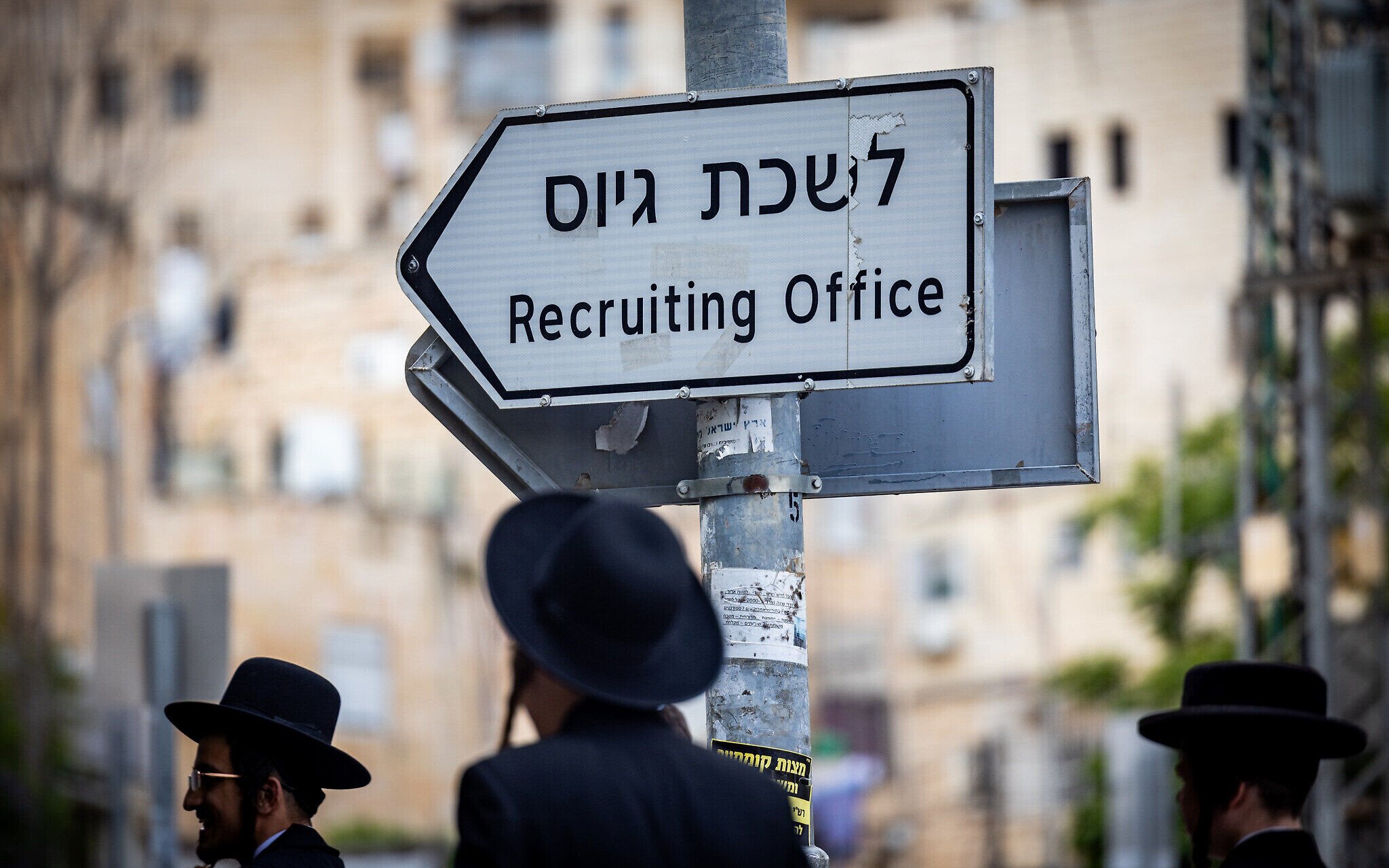
Ultra-Orthodox Jewish men near a sign reading ‘army recruitment office’ during a protest against the drafting of Haredim to the military, in Jerusalem, May 1, 2024. (Yonatan Sindel/Flash90)
Bismuth was appointed chairman of the committee in August after both of the coalition’s ultra-Orthodox parties left the government to protest its failure to advance the long-stalled conscription legislation — which has been derided as an “evasion bill” by critics.
After taking over the committee, Bismuth largely threw out the work of former chairman Yuli Edelstein and started over. He has said that he believes Israelis must “find the balance” between Torah study and military service and that Israel needs both soldiers and Torah students.
For the past year, the Haredi leadership has pushed to pass a law keeping its constituency out of the IDF, after the High Court ruled that the decades-long blanket exemptions from army duty traditionally afforded to the Haredi community were illegal.
Some 80,000 ultra-Orthodox men aged between 18 and 24 are currently believed to be eligible for military service, but have not enlisted. The Israel Defense Forces has said it urgently needs 12,000 recruits due to the strain on standing and reserve forces caused by the war against Hamas in Gaza and other military challenges.

Then-Shas MK Ariel Attias in the Knesset, May 13, 2013. (photo credit: Yonatan Sindel/FLASH90)
In July, the United Torah Judaism party left the coalition after being presented with a copy of a proposed enlistment bill prepared by Edelstein, which it argued had violated the terms of a supposed compromise reached in June. It was quickly followed by Shas, which, while quitting the government, has remained part of the coalition.
Speaking to reporters in the Knesset after its opening session Monday following a three-month recess, Netanyahu denied plans to call early elections, saying they will take place as scheduled.
“The intention is to pass… a draft law, and then to hold elections at their scheduled time,” Netanyahu said.
Elections are scheduled for October 2026.
Is The Times of Israel important to you?
If so, we have a request.
Every day, even during war, our journalists keep you abreast of the most important developments that merit your attention. Millions of people rely on ToI for fast, fair and free coverage of Israel and the Jewish world.
We care about Israel – and we know you do too. So today, we have an ask: show your appreciation for our work by joining The Times of Israel Community, an exclusive group for readers like you who appreciate and financially support our work.
Already a member? Sign in to stop seeing this
You appreciate our journalism

You clearly find our careful reporting valuable, in a time when facts are often distorted and news coverage often lacks context.
Your support is essential to continue our work. We want to continue delivering the professional journalism you value, even as the demands on our newsroom have grown dramatically since October 7.
So today, please consider joining our reader support group, The Times of Israel Community. For as little as $6 a month you’ll become our partners while enjoying The Times of Israel AD-FREE, as well as accessing exclusive content available only to Times of Israel Community members.
Thank you,
David Horovitz, Founding Editor of The Times of Israel