
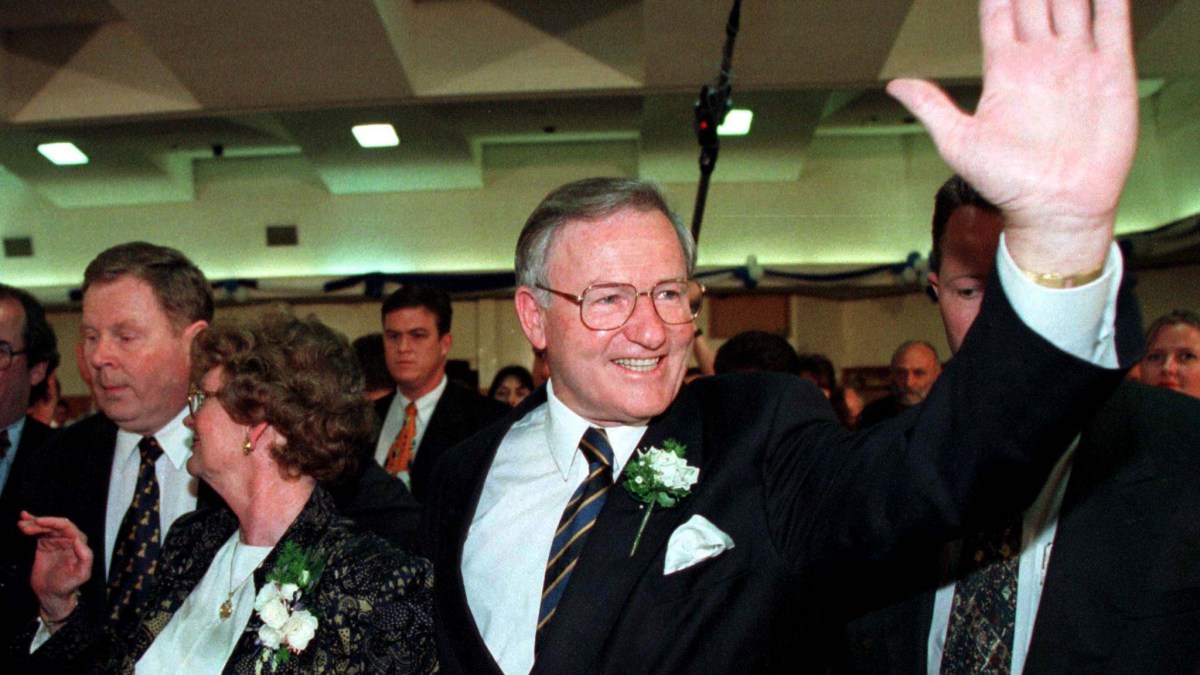
Jim Bolger earned the nickname “the Great Helmsman” during his seven years as New Zealand’s prime minister. It was less for his stewardship of his country’s economy, though he did much to revive it with his spending cuts and free-market policies; it was more for his historic role in promoting reconciliation between New Zealand’s white population and its indigenous Maori.
“I put that higher than managing the books,” he said. “Recognition that the early European settlers did not treat Maori fairly, I think was hugely important … They were here first, they were here very much before everybody else, and they have been part of our history from that time on.”
He attributed his commitment to the issue to his ancestry, his parents having emigrated from Ireland a few years before he was born. “I sort of instinctively knew what it was like to be treated as second-class citizens, and Maori were treated as second-class citizens,” he said.
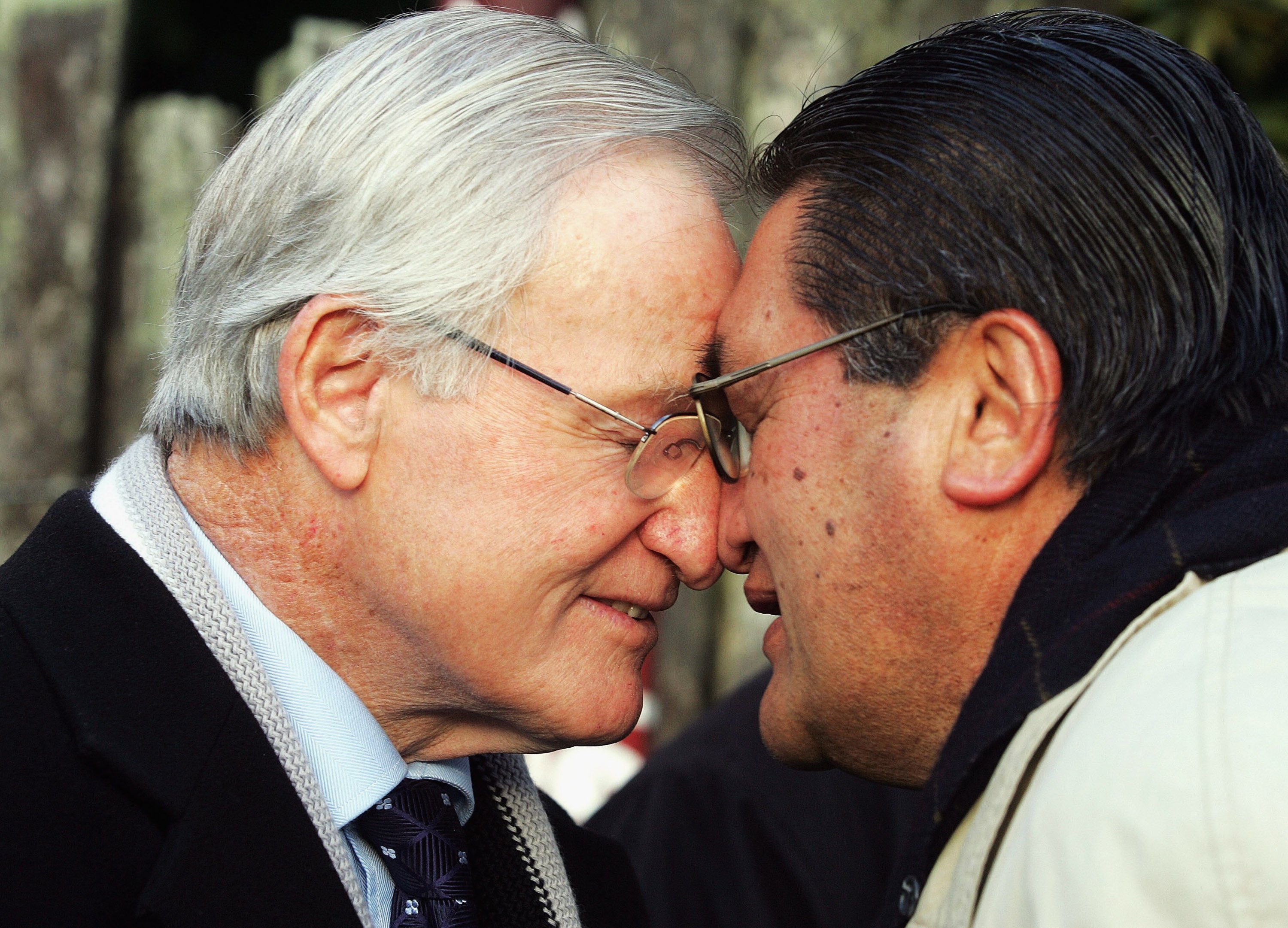
Despite Bolger’s generally Conservative outlook, he worked to settle the historic grievances of the Maori people over land and resources
PETER DRURY/POOL/GETTY IMAGES
His Irish ancestry might also have inspired his republicanism (not to mention his love of Bushmills whiskey), but he did not succeed in severing New Zealand’s constitutional ties to Britain or replacing the British monarch as its head of state. All he did manage to do on that score was refuse the knighthood that the monarch traditionally bestows on distinguished former prime ministers of New Zealand and other Commonwealth countries. New Zealand needed “to give up the colonial mentality”, he insisted.
James Brendan Bolger was born in 1935 in Opunake, a small community on the west coast of New Zealand’s North Island. His parents, Daniel and Cecilia, had emigrated from Co Wexford in Ireland five years earlier. One of five siblings, he left school at 15 to work on the family’s dairy farm until he had saved enough money to buy his own land a few miles up the coast at Rahuto in 1962. The following year he married Joan Riddell, with whom he would later have three daughters — Bernadette, Fiona and Rachael — and six sons: Dan, Paul, Brian, Stephen, Matt and Aidan.
Two years after marrying the couple bought a beef and sheep farm further north in Te Kuiti. He never went to university.
Bolger’s political involvement began when he became active in Federated Farmers, a farmers’ union. In 1972, he stood as a parliamentary candidate for the National Party in King Country and won with a majority of 1,200. He would represent that constituency for the next 25 years, winning re-election eight times with substantially increased majorities.
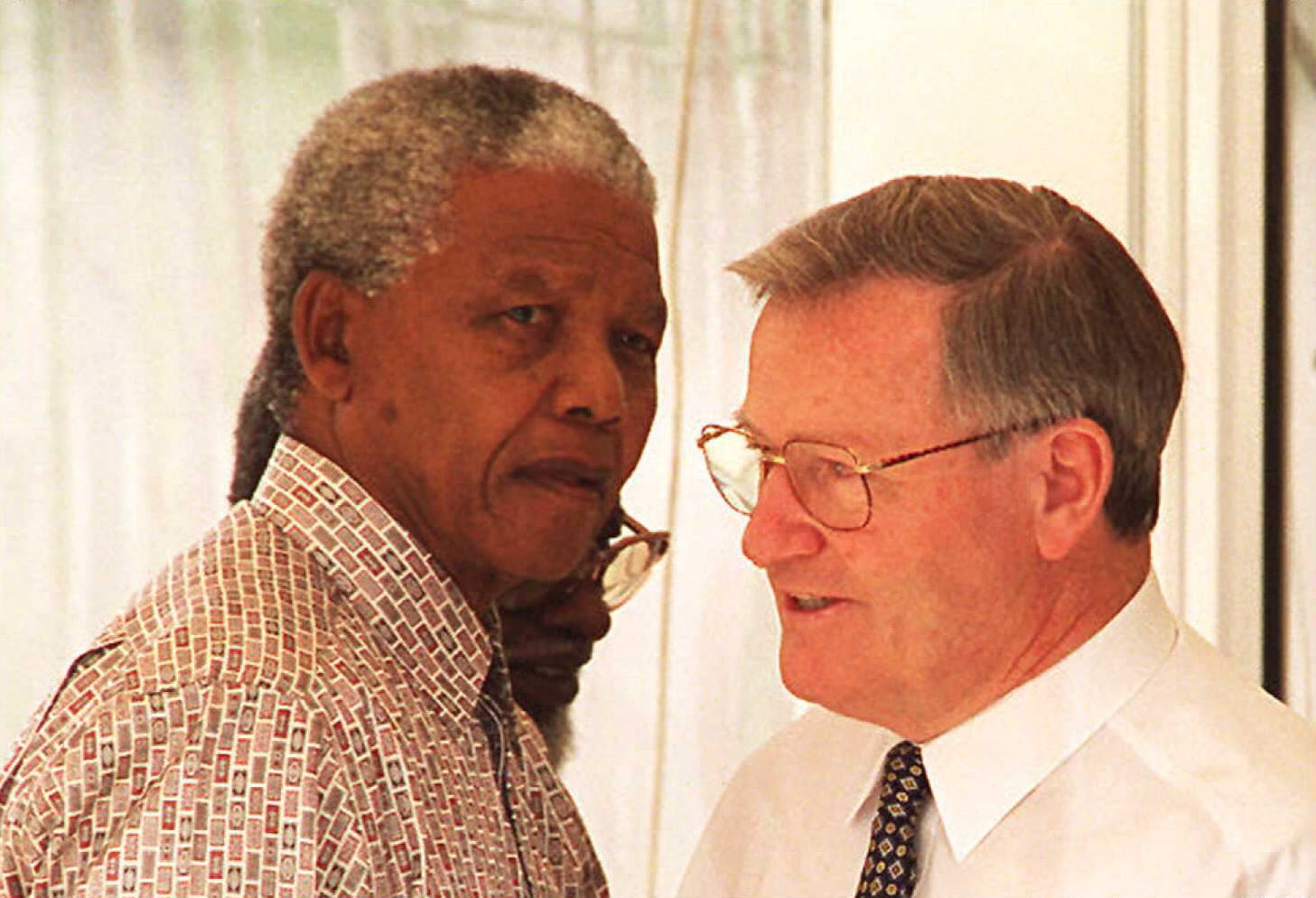
Bolger with Nelson Mandela in 1995
TORSTEN BLACKWOOD/AFP/AFP VIA GETTY IMAGES
Bolger began his rise through the ministerial ranks after the National Party under Robert Muldoon, who won the general election of 1975. He served as a junior agriculture minister, and as minister for Maori affairs, until Muldoon promoted him to the cabinet as fisheries minister in 1977. A year later he became minister of labour and immigration.
After the National Party lost the general election of 1984 both Bolger and Jim McLay, the party’s deputy leader, challenged Muldoon for the leadership. McLay won, but Bolger became his deputy. Two years after that Bolger challenged McLay for the leadership and won.
In the 1987 general election Bolger adopted a populist stance, promising to crack down on lawlessness and allow a referendum on reintroducing capital punishment. It did not work. David Lange, the incumbent Labour prime minister, dismissed him as “an itinerant masseur, massaging the politically erogenous zones” and was re-elected. But by the next election, in 1990, New Zealand was in economic difficulties and Bolger, aged 55, led the National Party to victory with the biggest majority in the country’s history. He won 68 of the 97 seats with the slogan “Decent Society”, and thus became New Zealand’s first Roman Catholic prime minister.
He enjoyed a baptism of fire, not a political honeymoon. Three days after he was sworn in his government had to bail out the Bank of New Zealand, requiring it to borrow an extra $740 million and wrecking its economic plans. “It’s hard from the outside to realise the impact of being told on the day you become prime minister that the country is broke,” he said.
In the government’s first budget, later dubbed “the Mother of all Budgets”, Ruth Richardson, the finance minister, tore up the National Party’s election promises by announcing severe cuts in health, welfare, pensions and other public sector spending, and retaining a hated superannuation tax. Bolger followed it with a programme of privatisation, and legislation to deregulate the labour market and curb the power of the trade unions.
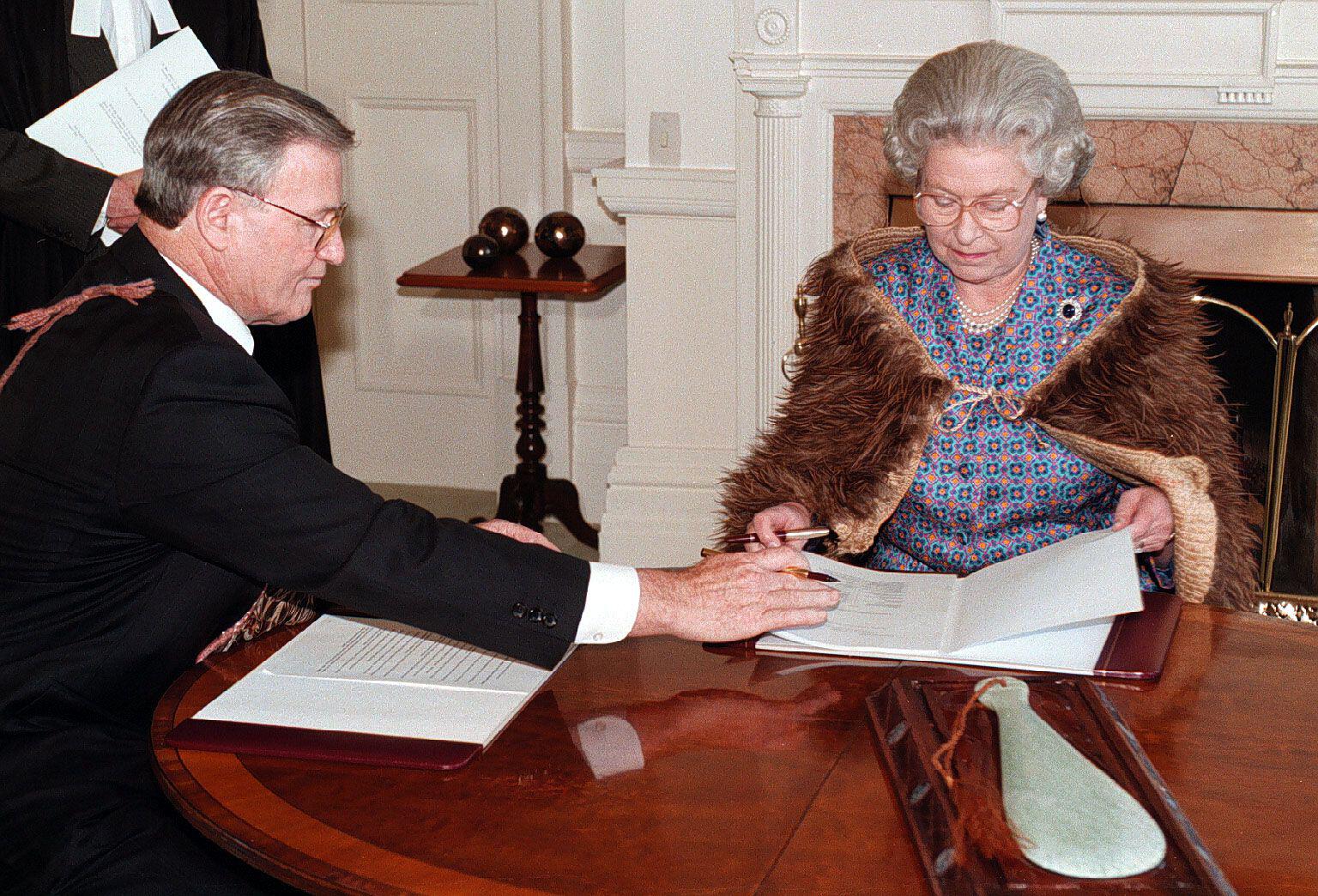
Queen Elizabeth II signs the Waikato Raupatu Claims Settlement Bill at Government House in Wellington
ALAMY
As costs and unemployment rose, Bulger’s popularity plummeted to single figures. His tough measures worked, however, and by 1993 the economy had recovered just enough for him to scrape back into power by the narrowest of margins against a divided opposition. “Bugger the pollsters,” he declared when the result was announced.
In his second term he replaced Richardson with Bill Birch, a relative moderate. He confronted France over its resumption of nuclear tests on Moruroa, an atoll in the South Pacific. He tried but failed to end the role of the judicial committee of Britain’s Privy Council as New Zealand’s highest court of appeal.
But most surprising, given Bolger’s generally Conservative outlook, was his quiet but determined work to settle the historic grievances of the Maori people over land and resources. He thought his country’s honour was at stake. “I cannot abide racism,” he said. “I cannot abide people judging others by the colour of their skin, their ethnicity or their culture … One of the great evils of the world is racism.”
Bolger also presided over the introduction of proportional representation instead of the British first-past-the-post electoral system, and that proved his undoing. In 1995 members of the National Party broke away to form a splinter party, United New Zealand (UNZ). At the 1996 general election Bolger’s party failed to win an outright majority and had to form New Zealand’s first coalition government with the right-wing populist party New Zealand First, led by Winston Peters. That prompted one of his own ministers, Jenny Shipley, to challenge his leadership while he was attending a Commonwealth summit in Scotland. Facing defeat, he resigned though he stayed on as a junior minister in Shipley’s government for a few months.
Bolger’s life in the public domain was not yet over. He served as New Zealand’s ambassador to the United States from 1998 to 2000. On his return he chaired various public and private bodies including KiwiRail, the company that he had privatised but a subsequent Labour government had renationalised.
He changed his stance on other issues, too. He helped to restore some trade union power as the head of a Labour government’s working group on fair pay, and lamented the impact of the sort of neo-liberal politics he had embraced in 1990.
“Do I believe the gap between those who have and those who don’t is too big? Yes,” he told Radio New Zealand in 2017. “This is why we’re getting so many revolutions around the world. The world has sat silent as they’ve pursued neo-liberal economic policies … and in fact they’ve failed. They’ve failed to produce economic growth and what growth there has been has gone to the top.” Despite that, he said: “I’ve had a wonderful life with a wonderful wife and family, and it’s all been good.”
James Bolger, prime minister of New Zealand, was born on May 31, 1935. He died on October 15, 2025, aged 90