
This Editor’s Note was sent out earlier Wednesday in ToI’s weekly update email to members of the Times of Israel Community. To receive these Editor’s Notes as they’re released, join the ToI Community here.
US President Donald Trump was here last week, endured an eternity of bombastic speeches in the Knesset before delivering his own spectacularly optimistic “dawn of a new Middle East” address, and then dashed to Egypt to gather much of the world’s leadership behind his plan for peace in Gaza.
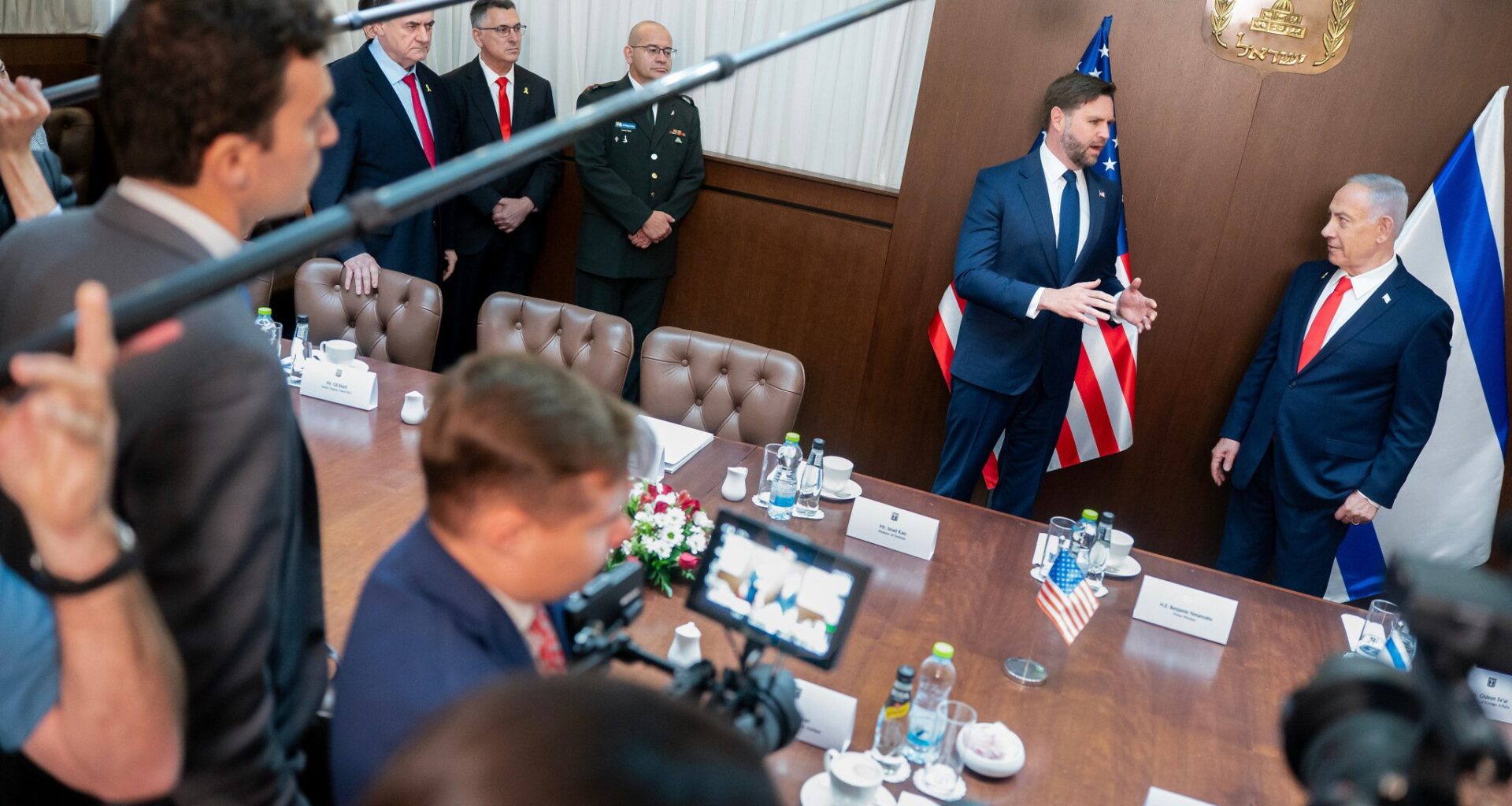
His vice president, JD Vance, is snarling traffic outside my office as I write — holding meetings with Israel’s prime minister, president, et al., having sped directly from the airport on Tuesday to the US Army Central Command’s brand new Civil-Military Coordination Center (CMCC) for Gaza, in southern Israel.
Trump’s special envoy Steve Witkoff was also here this week; so, too, his son-in-law and adviser Jared Kushner — both of them making their second visit of the month. His Secretary of State Marco Rubio will be returning for his second October trip on Thursday.
It’s safe to say that maintaining the Gaza ceasefire, securing the return of the remaining 13 deceased hostages, stabilizing Gaza, and setting it on the road to what he and his officials repeatedly call peace, is high on the US president’s list of foreign policy priorities, if not at the very top.
Get The Times of Israel’s Daily Edition
by email and never miss our top stories
By signing up, you agree to the terms
Formally opened on Tuesday by Vance in the cause of that Gaza stabilization mission, the CMCC has the air of a serious operation. It has taken over three floors of a tall cargo-handling building in Kiryat Gat and, when Vance, Witkoff, Kushner and CENTCOM commander Adm. Brad Cooper welcomed local and international press, it bustled with activity. There are separate floors for American and Israeli personnel, and one level shared by them both. Big screens have been set up, maps posted. Knots of US troops were engaged in conversation. There are Brits, Danes, Germans, Canadians and Jordanians too. Israel’s deputy chief of staff Tamir Yadai emerged from a meeting; other senior IDF Southern Command officers were also in evidence.
But it is, again, in Kiryat Gat, southern Israel. Not in Gaza.

US Vice President JD Vance speaks during a press conference following a military briefing at the Civilian Military Coordination Center in southern Israel on October 21, 2025. (Fadel SENNA / AFP)
A key priority for the center, Vance told reporters, is to set up an “International Stabilization Force” for the Strip, as envisioned in Trump’s 20-point Gaza peace plan. The task is still in its early stages, he acknowledged, and it won’t be easy. Indeed, he said, the parties are only now beginning “to conceptualize what that international security force would look like.”
And while Vance emphasized one thing the force will not involve — “there are not going to be American boots on the ground in Gaza” — he presented the issue of what it will involve as a still-open question: “How do you take the Gulf Arab States plus Israel, plus the Turks, plus Indonesia?” he asked. “How do you actually get those folks to work together in a way that actually produces long-term peace?”
Until just over a week ago, the chances of bringing long-term peace and stability to Gaza ranged between extremely low and zero. But then Trump managed to facilitate the return of all 20 living hostages from Gaza, somehow compelling Hamas to relinquish the most potent leverage it had in its undimmed goal to survive, revive and return to the mass killing of Jews and the destruction of Israel.
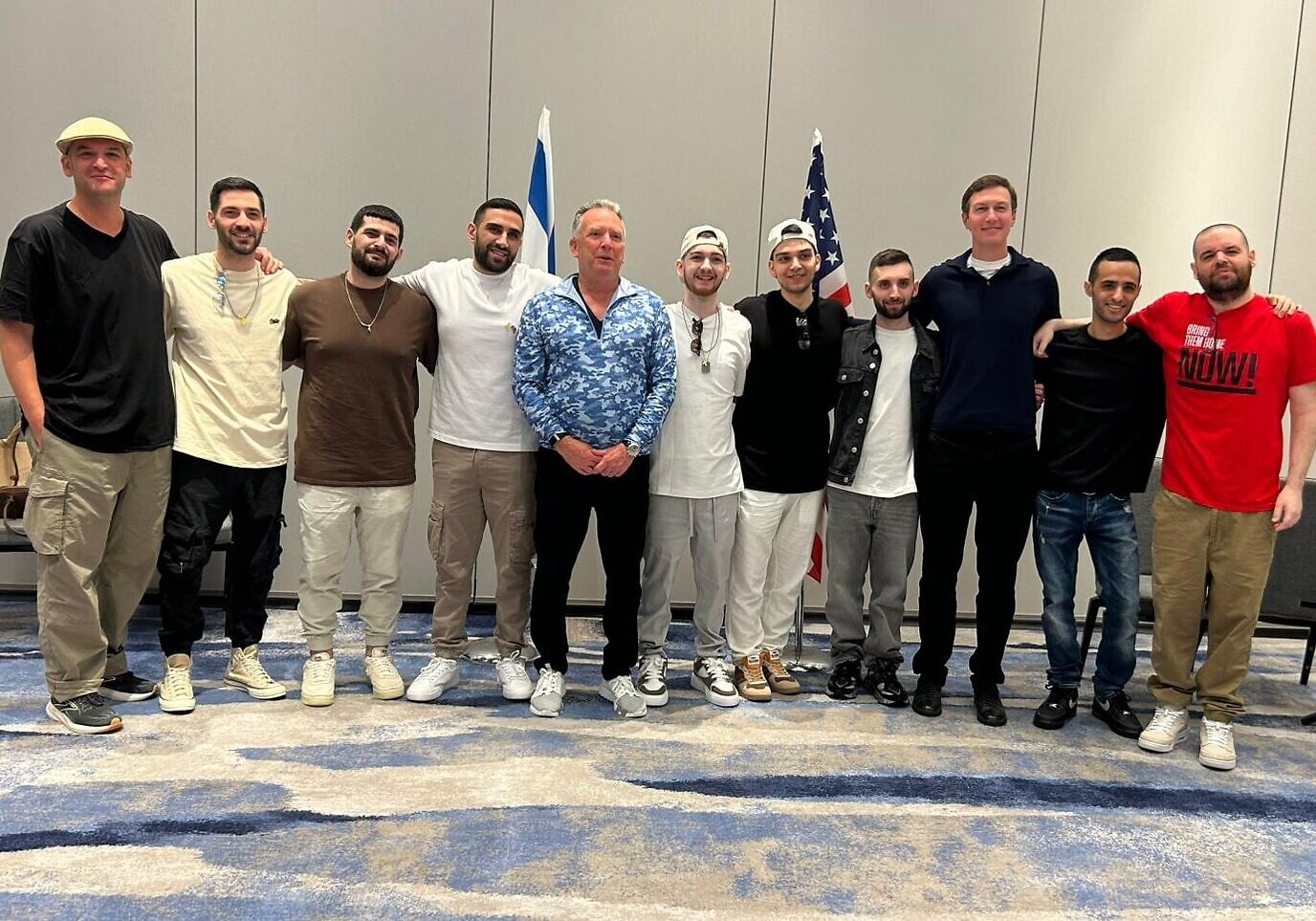
Released hostages meet with US special envoy Steve Witkoff and White House adviser Jared Kushner on October 21, 2025, in Tel Aviv (Hostage and Missing Families Forum)
A bleak overview of the current reality would have it that Hamas is unlikely to continue to conspire in its own demise, that Israel failed to destroy it during two years of war, and that no other country is going to risk its soldiers’ lives in the attempt.
Hamas, moreover, is already reasserting control in Gaza, filling the vacuum left by Israel’s retreat to the so-called Yellow Line. One or two well-publicized summary group executions, some deadly assaults on rival armed groups, kneecapping attacks on ostensible criminals, and its reign of terror has been reestablished.
Israeli military assessments, as of this week, are that Hamas has some 20,000 fighters (compared to 30,000 when it invaded two years ago, although many of today’s newer recruits are largely untrained), retains much of its Gaza tunnel network (though most of its attack, command and weapons-making tunnels are destroyed), and still has hundreds of rockets including some that can reach central Israel. It is no longer a drilled, 24-battalion army, but it is a long way from finished. And, allied with its potency in the West Bank, and its international terror tentacles, it does not look as though it is about to lay down its arms and slink away into oblivion. Indeed, its leaders are adamant that they will do no such thing.
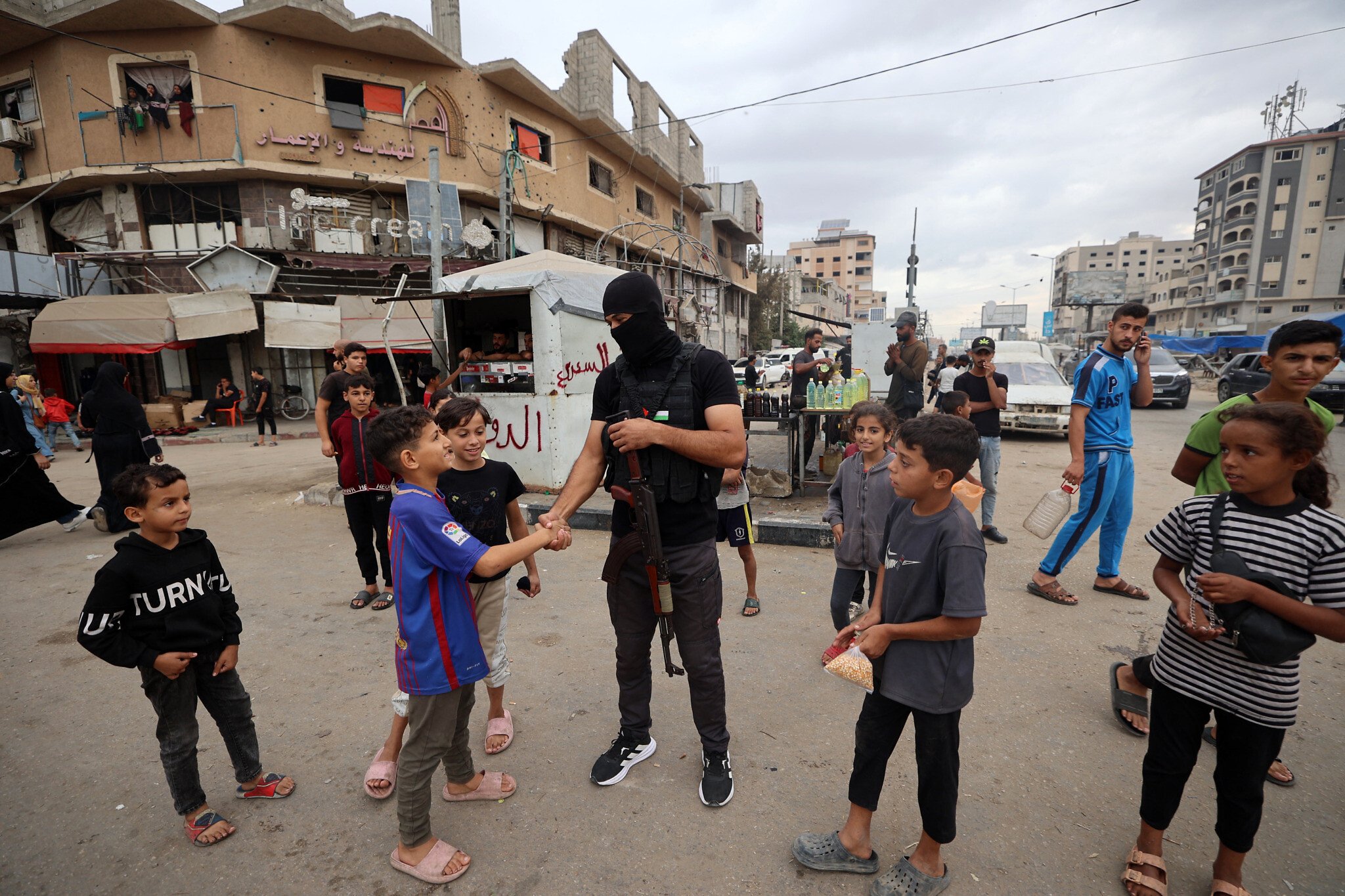
A member of the internal security forces loyal to Palestinian terror group Hamas greets young Gazans in the Nuseirat refugee camp in the central Gaza Strip, on October 12, 2025. (Eyad BABA / AFP)
Israel under Prime Minister Benjamin Netanyahu, for its part, is showing itself a willing partner in Trump’s 20-point plan, with its stated requirement for Hamas to disarm and for the Strip to be demilitarized. Netanyahu reasonably believes that the return of all the living hostages and, as of late Tuesday, of the majority of the dead, is boosting his political prospects, while he assiduously revises the October 7 massacre and its aftermath as the War of Redemption, with him as The Redeemer rather than The Father of the Debacle.
But having both refused to countenance a role for the Palestinian Authority in postwar Gaza and failed to present a viable alternative, and with much of his coalition seeking an occupation and resettlement firmly opposed by the US, he and Israel risk being marginalized as the destiny of Gaza unfolds. He stayed away from Trump’s global summit in Egypt last Monday; it was, officially, too close to the start of Simchat Torah. Well, maybe if he, opposition leader Yair Lapid and Knesset Speaker Amir Ohana had spoken for five minutes apiece rather than a combined 70, he could have got there in good time, and taken an essential seat for Israel at the US president’s planning session.
As things stand, it’s the Qataris, the Turks and the Egyptians who seem to be most actively engaged with what’s unfolding inside Gaza as the IDF pulls back, while the US and Israel could be watching from the screens at the CMCC in Kiryat Gat, doing their best to persuade Qatar and Turkey, two countries not seeking the extinction of Hamas, to nonetheless rein in the death cult terror group. Israel is increasingly worried that it is losing its freedom of action in Gaza, constrained by Trump’s insistence that the war is over, and wondering under what circumstances Trump would permit a resumption of the military campaign.
A more optimistic overview, however, is to regard September 29’s Trump 20-point plan as a Hamas surrender document that the US president is bent on implementing. After all, it states that Hamas can have no role of any kind in the governance of Gaza, and provides for “all military, terror, and offensive infrastructure, including tunnels and weapon production facilities” to be “destroyed and not rebuilt.”
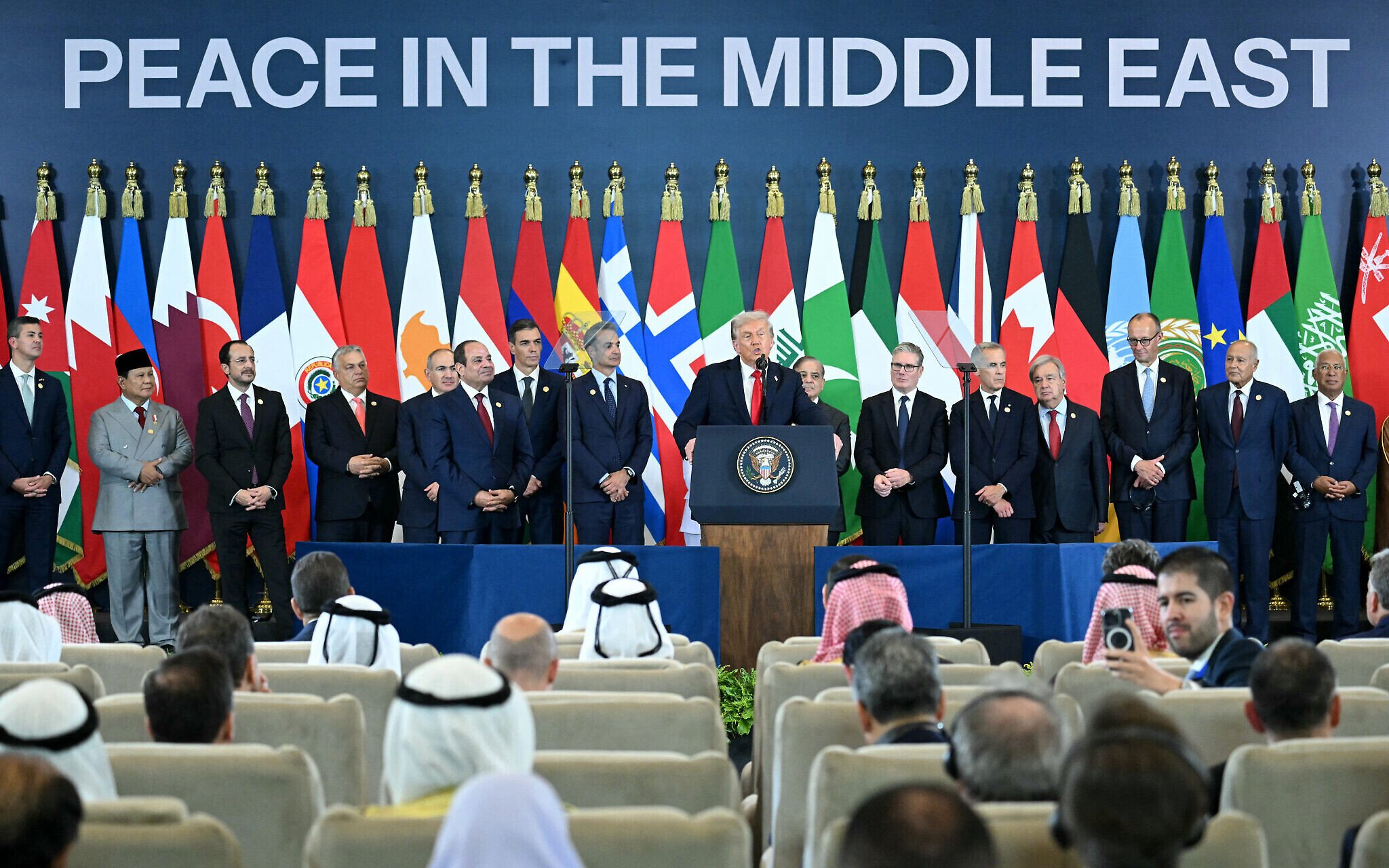
US President Donald Trump (C) speaks during the Sharm El-Sheikh Peace Summit in the Egyptian Red Sea resort town of Sharm el-Sheikh on October 13, 2025. (SAUL LOEB / AFP)
Hamas provided a caveat-filled conditional acceptance of the plan on October 3. The US president elected to ignore the caveats and conditions and pronounced instead that Hamas was “ready for a lasting PEACE.” Witkoff and Kushner were dispatched to Sharm el-Sheikh, and the one-page agreement that saw the living hostages go free was finalized on October 9.
In similar big-picture mode, Trump and his emissaries are now adamant that Hamas will disarm — either by choice or by force — that the Strip will be demilitarized, and that an amazing future awaits Gaza. “I feel confident that we’re going to be in a place where this peace lasts, where it’s durable,” said Vance on Tuesday. “If Hamas doesn’t cooperate, then as [Trump] has said, Hamas is going to be obliterated.”
I take issue with Vance’s broad characterization of the conflict as a case of “people who hate each other, who have been fighting against each other for a very long time.” The neglected crucial contextual point in that summation is that these two groups of people actually set out from utterly contrasting points of ambition: The unrepudiated Hamas charter of 1988 requires the obliteration of Israel. The Declaration of Independence of 1948 extends Israel’s “hand to all neighboring states and their peoples in an offer of peace and good neighborliness.” Israel left Gaza in 2005, hoping Gazans might choose coexistence. Hamas, buoyed by a parliamentary election win, took over two years later, built a terror-state, and invaded on October 7 to try to destroy ours.
But like almost all Israelis, I certainly endorse Vance and his president’s determined goal to enable that better future for Gaza and, by direct extension, for Israel and peoples far beyond.
In his remarks on Tuesday, Vance criticized what he called a “weird attitude” in American and Western media, whereby “every time something bad happens, every time that there’s an act of violence, there’s this inclination to say, ‘Oh, this is the end of the ceasefire. This is the end of the peace plan.’ It’s not the end.”
Kushner, speaking at the same event, elaborated that “a lot of people are getting a little hysterical about different incursions, one way or the other.” The fact is, he said, that “both sides are transitioning from two years of very intense warfare to, now, a peacetime posture.”
I’m not echoing that “weird attitude.” I’m not getting hysterical. I don’t quite see how the US is going to pull this off — not when facing a Hamas that, as I feel I keep having to write, is ideologically intractable… and when that ideology requires eliminating Israel.
But it would be foolish and self-defeating to bet against Trump — not with those 20 hostages back in Israel, a feat few in Israel believed was possible, and most of them already beginning the recovery process at home with their loved ones.

Released hostages Gal and Ziv Berman greet ecstatic crowds welcoming them to Kibbutz Beit Guvrin on October 19, 2025 (Tanya Zion-Waldoks/Israeli Pro-Democracy Protest Movement)
Said Vance on Wednesday morning, standing alongside Netanyahu, “These are days of destiny… We’re going to do great things here.”
Let’s hope. And let’s help.