
US President Donald Trump delivered a dramatic twist to international diplomacy this week, announcing on Wednesday that he had “canceled” an anticipated meeting with his Russian counterpart Vladimir Putin that was set to take place in Budapest.
The decision, coupled with firm denials of advanced weaponry to Ukraine and strategic praise from NATO Secretary General Mark Rutte, paints a complex picture of the administration’s shifting foreign policy approach to Russia’s ongoing war in Ukraine.
JOIN US ON TELEGRAM
Follow our coverage of the war on the @Kyivpost_official.
Cancellation and frustration
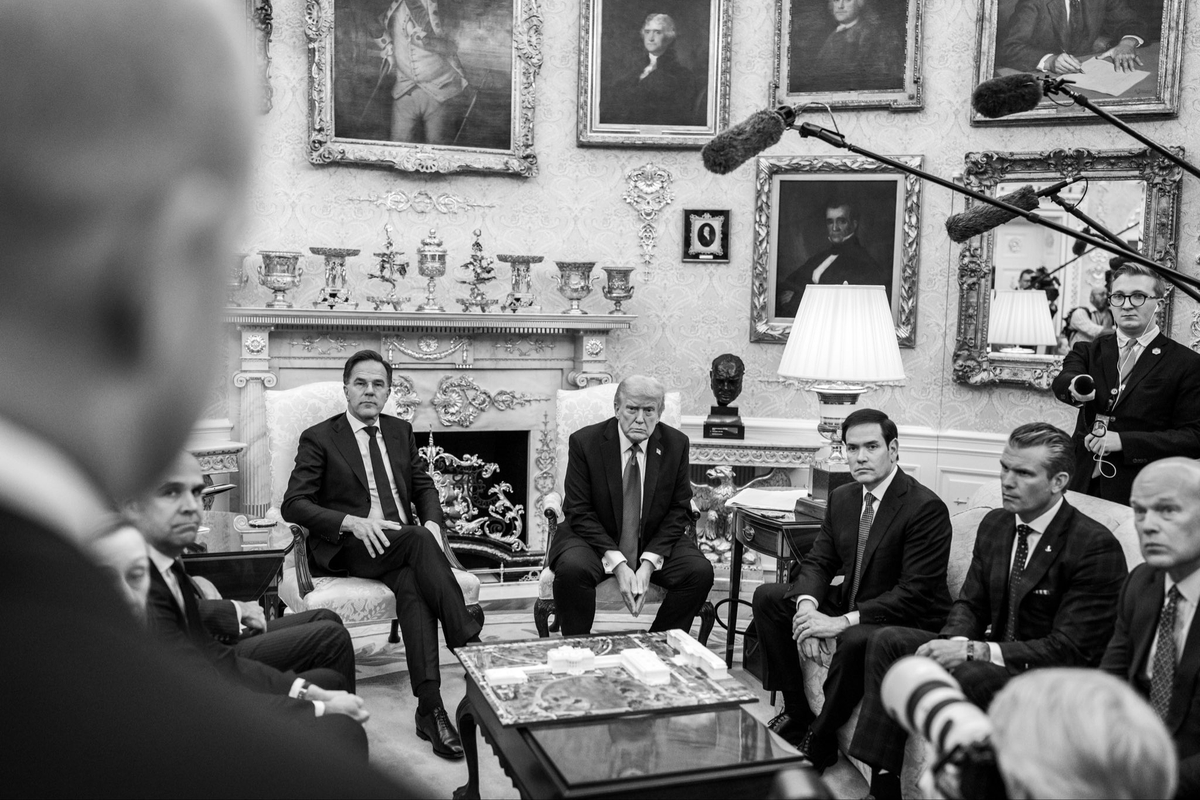
Speaking to reporters in the Oval Office, Trump revealed his decision to scrap the planned summit. The U-turn followed what was meant to be a preparatory call between Secretary of State Marco Rubio and his Russian counterpart, Sergey Lavrov. The White House had released a statement on Tuesday saying there were no immediate plans for the meeting.
“It just didn’t feel right to me,” Trump stated, explaining the sudden reversal. “”It didn’t feel like we were going to get to the place we have to get, so I canceled it. But we’ll do it in the future.”
The meeting, which Trump had recently described as “very productive” following a lengthy phone call with Putin, had been anticipated as a potential high-stakes attempt to negotiate an end to the ongoing conflict. The US President later admitted a deep-seated frustration with the slow pace of dialogue, even as he maintained personal rapport with Putin.
Other Topics of Interest
No Gripen Fighters for Ukraine Soon, Air Force Spokesman Says
Following a letter of intent with Stockholm, an Air Force spokesperson said the Gripen procurement is “extremely difficult,” and Kyiv shouldn’t expect the jets soon.
“The only thing I can say is, every time I speak with Vladimir [Putin], I have good conversations, and then they don’t go anywhere,” Trump confessed, adding, “They just don’t go anywhere.”
Despite the diplomatic deadlock, Trump insisted on his belief that a resolution is desired by both parties.
“I think they want peace, I think they both want peace,” he said. “It’s time to make a deal. A lot of people are dying.” He reiterated his long-held claim that had he been president earlier, the conflict “never would have started.”
Rutte’s diplomacy and the “stop where you are” plan
The geopolitical drama unfolded during a scheduled meeting between Trump and NATO chief Rutte, a leader who has earned a reputation as one of Europe’s most effective “White House whisperers.”
Rutte’s timing – arriving just after the collapse of the Budapest meeting – allowed him to capitalize on a moment when the administration might be feeling “less-than-kindly toward Russia.”
Rutte used the opportunity to heap praise on Trump, thanking him for his “tremendous success” on bringing peace to the Middle East and asserting that the alliance had been “renewed, reinvigorated” under his leadership. Crucially, the NATO chief positioned Trump as the essential bridge to Moscow.
“In February, he started to have a dialogue with President Putin. And I think he was the only one who really could open up that channel of communication,” Rutte stated, validating the US President’s attempts at direct talks.
On the subject of peace, Rutte confirmed there was no complex diplomatic proposal on the table, but rather a simple, immediate objective articulated by Trump following his meeting with President Volodymyr Zelensky last week.
“There is no peace plan on the table,” Rutte emphasized, clarifying the immediate goal. “If there is a peace plan, it is what the president said last Friday or Sunday, which is ‘Stop where you are, stop the fighting’.”
Tomahawk missile red line
A significant point of divergence, following President Zelensky’s meeting with Trump last week, centered on Ukraine’s request for long-range American Tomahawk cruise missiles.
Trump firmly shut down the idea, citing the weapons’ complexity and the extensive training required.
The US President pointed to the “tremendous learning curve” of the Tomahawks as the decisive factor. “The problem with the Tomahawk that a lot of people don’t know, it’ll take a minimum of six months, usually a year, to learn how to use them,” Trump explained. “They’re highly complex.”
He made it clear that the US would not be transferring the operational control or expertise for these advanced systems.
“The only way a Tomahawk is going to be shot is if we shot it, and we’re not going to do that,” Trump asserted, adding, “It takes a year of intense training to learn how to use it, and we know how to use it, and we’re not going to be teaching other people. It’s too far out into the future.”
The denial was a disappointment for Kyiv, as the missiles would allow Ukraine to strike deep inside Russia, targeting military outposts and energy facilities.
President Zelensky had previously said his meeting with Trump on Friday was “positive,” even without securing the Tomahawk commitment. However, Zelensky stated on Tuesday that Trump’s decision not to send the Tomahawks to Ukraine deflated Russia’s interest in engaging in diplomacy that could lead to an end of the war.
Rutte, for his part, skirted the issue, stating only that providing weaponry is a decision for “individual nations,” and that “NATO doesn’t take a position.”
Sustained Pressure
Rutte strongly welcomed Trump administration’s new sanctions targeting Russia’s two largest oil companies, arguing that “sustained pressure is needed” to compel a peace agreement.
“You can change Putin’s calculus. You can change his way, how he wants to end the war,” he later told reporters.
The NATO chief argued that the twin approach – direct dialogue attempts alongside severe economic pressure – is the key to forcing Moscow to accept the proposed “ceasefire, stop where you are” framework.