
At the current rate of repair, it will take 127 years to remediate all the remaining registered defective concrete block homes in Donegal.
Just 137 homes in Donegal have been completed since the grant scheme began in June 2020. This is an average of two per month.
With 3,386 homes registered for the scheme so far, the rate of progress is stark.
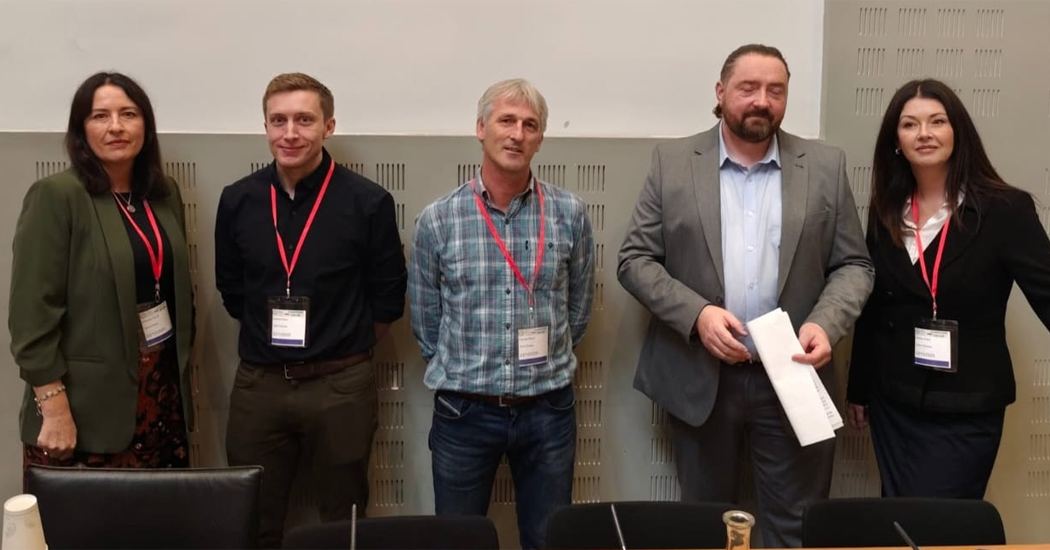
Dr Eileen Doherty, a lecturer at Ulster University, presented the outlook to Oireachtas members during a briefing at Leinster House yesterday. The presentations covered the latest science on the causes of crumbling homes, as well as research into the mental health toll on families living through the defective concrete crisis.
“What I was trying to hit home is, don’t believe the narrative that you hear. This scheme is far from fixed,” Dr Doherty told Donegal Daily.
As of today, there are 580 homes under construction in Donegal.
While completions are expected to increase, at the current rate, it would take more than 1,500 months to get through all the properties.
Presenting stakeholder feedback, Dr Doherty laid bare the flaws of the current grant scheme to a room of around 40 people. Among the attendees were Donegal Fianna Fáil deputies Charlie McConalogue and Pat the Cope Gallagher, along with TDs from other affected counties.
“There were a lot of people in the room who think that the scheme was fixed,” said Dr Doherty, one of the original founders of the Mica Action Group.
“The government keeps saying it worked closely with families and stakeholders to come up with a good scheme and that they are giving us 100% redress.
“They didn’t give us a voice in the 90/10 scheme, and they had the facade of giving us a voice in the working group of the enhanced scheme, but that was not true either.”
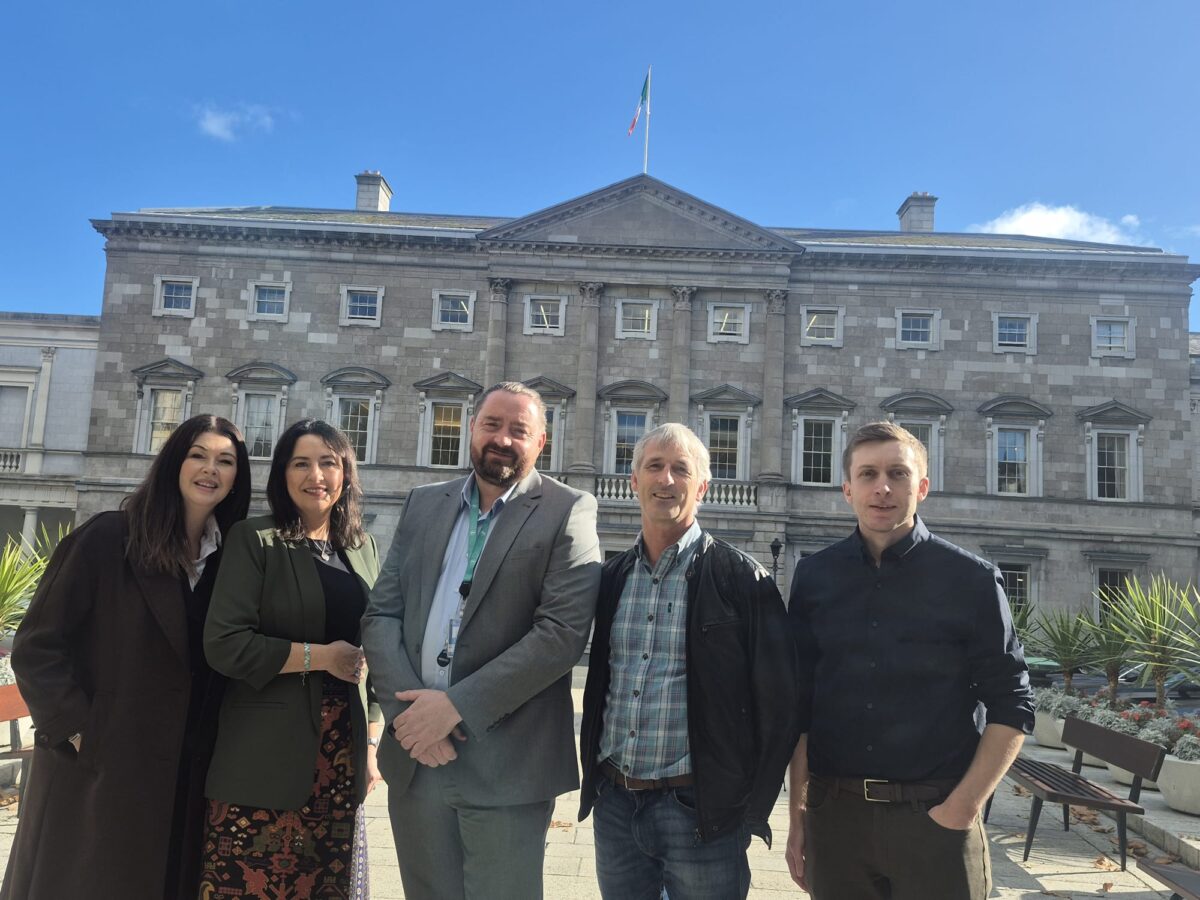
Eileen Doherty, Karen Kirby, Deputy Charles Ward, Paul Dunlop and Oisin Keenan at Leinster House on Wednesday
Dr Doherty said the core issue is that the scheme was designed within Government Buildings by civil servants who “do not understand the issue and have never sought to understand the issue.”
“As a consequence, we now find ourselves in this mess, and we need to fix the mess,” she said.
Professor Paul Dunlop shared geological findings with policymakers, reiterating that the damage to Donegal homes stems from Internal Sulfate Attack caused by excessive levels of pyrrhotite, not from mica freeze-thaw, as previously claimed.
Prof Dunlop also stressed the importance of getting the geological science correct in the review of the IS 465 standard used in the Defective Concrete Block Grant Scheme. His research, funded by the Department of Housing, Local Government and Heritage and the Geological Survey Ireland (GSI) reframes the understanding of the deterioration of homes and has vital implications for diagnosis and remediation efforts, as well as aggregate testing.
Research on the mental health crisis among affected families was shared by PhD researcher Oisin Keenan and Prof Karen Kirby.
More than a third of their survey pool of 393 adults living in defective concrete homes reported experiencing suicidal ideation or thoughts.
Rates of depression, anxiety and trauma-related disorders were all significantly higher than in the general Irish population.
The researchers warned that the crisis is intergenerational, recommending that people be processed through the scheme more quickly to address “the true source of the toxic levels of distress and trauma symptoms.”
Dr Doherty said: “You can provide counselling, but the only way to fix this is to get a scheme that works. Until they do that, we have a crisis on our hands that has been going on for decades.”
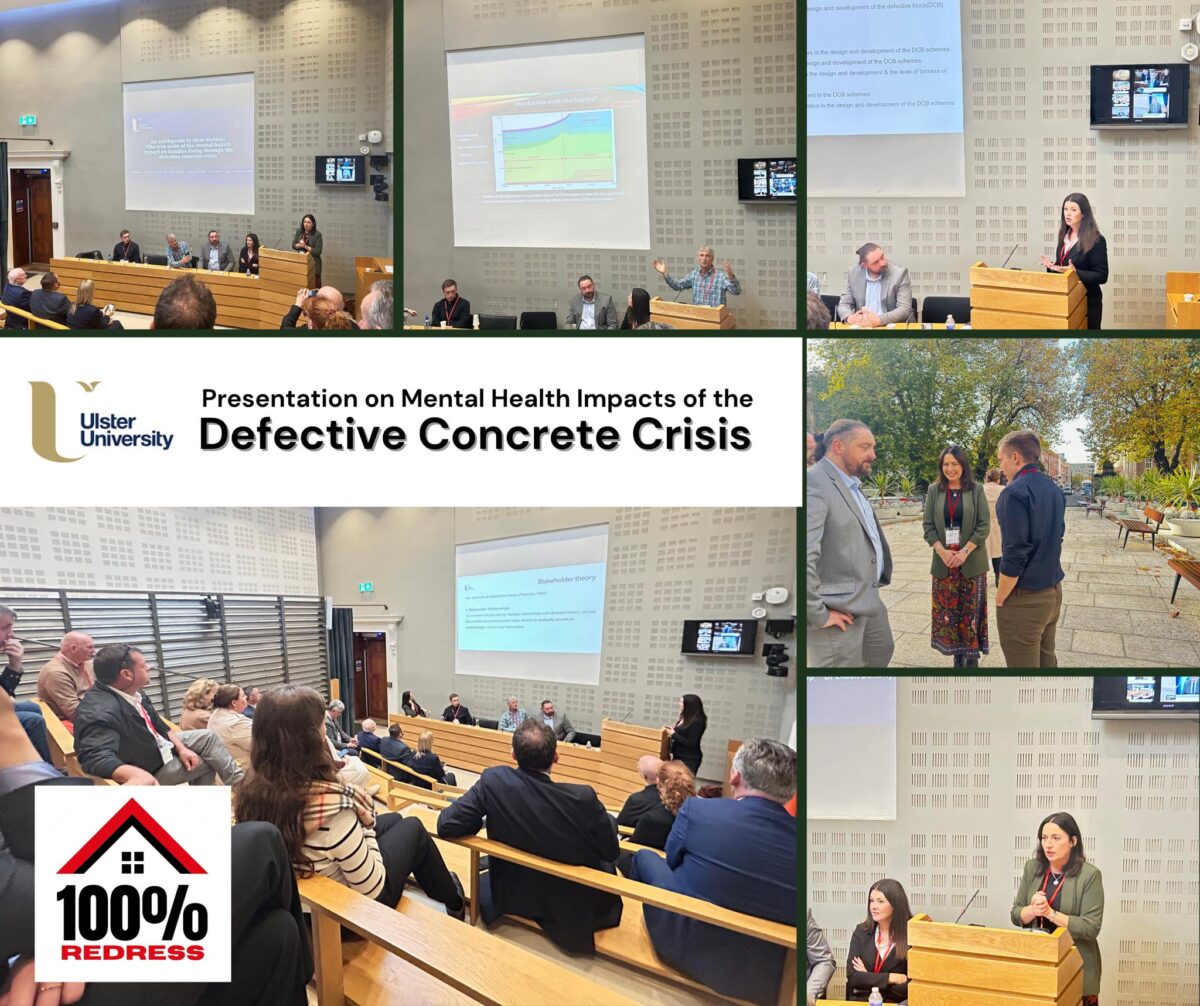
Presentations by Ulster University researchers at Leinster House on Wednesday, 22nd October
The academics were invited to Leinster House by 100% Redress Party TD Charles Ward, who led a landmark Dáil debate last week calling for reform of the grant scheme. Deputy Ward’s motion was voted down by the government.
“I would be keen to know what they are going to do next,” said Dr Doherty.
“We have spent years shouting from the sidelines. Now we have real rigorous research to show that this is not just our subjective opinion, this is fact and science that cannot be ignored.”
Speaking after the presentations, Deputy Ward that the work of the researchers is “vital to protecting families — especially our children — whose health and wellbeing are already suffering.”
“This is only one step in a wider process. We are not stopping,” added Deputy Ward.
Repair rate of defective homes in Donegal would take 127 years to clear was last modified: October 23rd, 2025 by Staff Writer