
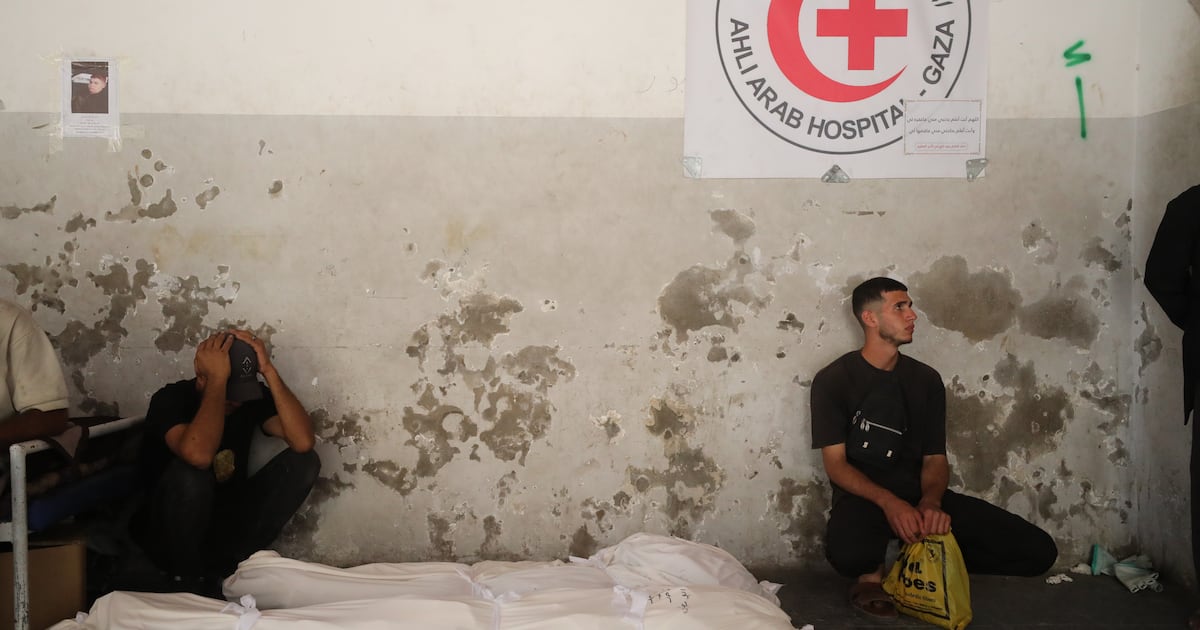
The UN’s health agency has called for more access routes into Gaza and urged that thousands of people in great need of medical care be allowed to leave the Palestinian territory.
More than 68,000 Gazans have been killed and 170,000 wounded since Israel began military operations in the enclave following the October 7, 2023 Hamas attacks, in which 1,200 people were killed and around 250 taken hostage.
A ceasefire, brokered by American, Qatari, Egyptian and Turkish mediators, was reached this month. While it is largely holding, it has been strained by a flare-up of violence in Gaza, disputes over the exchange of dead Israelis and Palestinians, and mutual distrust between Israel and Hamas.
The World Health Organisation (WHO) has supported the medical evacuation of nearly 7,800 patients from the Gaza Strip since the war began – and estimates that about 15,000 people currently require treatment abroad.
“Opening up all the crossings is critical and even more so to get diverse food, shelter and all shelter-related items with the winter approaching,” the WHO’s representative in the Palestinian territories Rik Peeperkorn said on Friday, in a briefing to reporters from Geneva.
Only the Karam Abu Salem and Kissufim crossings in the southern half of the strip are currently open. Rafah, a vital passenger crossing bordering Egypt, remains closed. Now that the ceasefire is in place, aid should be allowed to flow in freely, but the World Food Programme has said that this is not yet happening.
“The most important one would be the reopening of the West Bank, including East Jerusalem referral hospitals,” Mr Peeperkorn said. Reopening this route would be a “game changer”, he added.
He said limiting direct access to the north of the strip, where the UN declared a famine in August, makes it difficult to deliver life-saving supplies to health facilities at the scale required.
Gaza only has a total of about 2,100 inpatient beds for a population of around 2.2 million, he said, emphasising the need to expand hospital capacity. Several major health facilities, including Kamal Adwan, Al Awda, Indonesian and Gaza European hospitals, are beyond the “yellow line” where Israeli forces are positioned and have shot Palestinians attempting to cross the ill-marked boundary.
This makes the facilities “inaccessible for people and non-functional”, Mr Peeperkorn said. With more than 170,000 people injured over the last two years, many critical patients need access to treatment abroad, including 4,000 children who need medical evacuation, he added.
On Thursday, the WHO carried out the first medical evacuation since the ceasefire, of 41 patients and 145 companions, to various countries. The aim is to increase these to 50 patients per day plus companions.
As part of the ceasefire agreement, a Civil-Military Co-ordination Centre (CMCC) opened by US Central Command (Centcom) in southern Israel on October 17 hosted meetings between the UN and Israeli authorities.
Mr Peeperkorn said he was “hopeful” and the mechanism set to be put in place for aid entry should not only ensure assistance is brought in rapidly but also help in bringing in “massive supplies for recovery and reconstruction”.
He said work is being done towards shortening delays for aid heading into Gaza – an issue that has been reported as a deterrent against bringing in large amounts.
UN officials had previously told The National that the list of approved items keeps changing and vital supplies such as tents and medical kits are often turned away from the border under the pretext of being “dual-use”.
At least nine in 10 Palestinians in Gaza have been repeatedly displaced over the past two years, and 80 per cent of Gaza had been destroyed – leaving a majority of people homeless and in need of shelter.
“We made a consolidated list of essential medicines and medical supplies … priority items which are used in every hospital around the world,” said Mr Peeperkorn. He is hoping for a “completely different approach” towards the so-called dual-use issue.
“We need CAT scans in, we need spare parts in, we need MRIs in, we need X-rays in, we need ultrasounds in,” he said. All of these items had previously been delayed or blocked from entry, the WHO official added, but he hoped this would change in the future.
“We all know that this will be a long and winding road, with a lot of setbacks and obstructions, but we can only be hopeful that this ceasefire will hold, that we go to peace and we get to a proper political solution,” said Mr Peeperkorn.
WHAT IS A BLACK HOLE?
1. Black holes are objects whose gravity is so strong not even light can escape their pull
2. They can be created when massive stars collapse under their own weight
3. Large black holes can also be formed when smaller ones collide and merge
4. The biggest black holes lurk at the centre of many galaxies, including our own
5. Astronomers believe that when the universe was very young, black holes affected how galaxies formed
Explainer: Tanween Design Programme
Non-profit arts studio Tashkeel launched this annual initiative with the intention of supporting budding designers in the UAE. This year, three talents were chosen from hundreds of applicants to be a part of the sixth creative development programme. These are architect Abdulla Al Mulla, interior designer Lana El Samman and graphic designer Yara Habib.
The trio have been guided by experts from the industry over the course of nine months, as they developed their own products that merge their unique styles with traditional elements of Emirati design. This includes laboratory sessions, experimental and collaborative practice, investigation of new business models and evaluation.
It is led by British contemporary design project specialist Helen Voce and mentor Kevin Badni, and offers participants access to experts from across the world, including the likes of UK designer Gareth Neal and multidisciplinary designer and entrepreneur, Sheikh Salem Al Qassimi.
The final pieces are being revealed in a worldwide limited-edition release on the first day of Downtown Designs at Dubai Design Week 2019. Tashkeel will be at stand E31 at the exhibition.
Lisa Ball-Lechgar, deputy director of Tashkeel, said: “The diversity and calibre of the applicants this year … is reflective of the dynamic change that the UAE art and design industry is witnessing, with young creators resolute in making their bold design ideas a reality.”
Electric scooters: some rules to remember
Riders must be 14-years-old or over
Wear a protective helmet
Park the electric scooter in designated parking lots (if any)
Do not leave electric scooter in locations that obstruct traffic or pedestrians
Solo riders only, no passengers allowed
Do not drive outside designated lanes