

The Ministerial Committee for Legislation was expected to give its approval Sunday to a pair of bills that would enable lawmakers to halt Prime Minister Benjamin Netanyahu’s ongoing criminal trial, and make it harder for his leading opponent to run in the next election.
Approval by the committee would lend official government support to the bills, both of which are likely to face significant pushback due to concerns over their potential damage to the rule of law and the democratic process.
The first piece of legislation, which consists of just one operative sentence, would enable lawmakers to delay the trial of a prime minister or cabinet minister at any time after an indictment and before a final ruling.
It allows the Knesset House Committee to “stay the legal proceedings against the prime minister or a government minister” following an indictment “if it deems it necessary,” without specifying what, if any, criteria would be used to judge such a necessity.
According to Hebrew media reports, the legislation sponsored by Otzma Yehudit MK Limor Son Har-Melech enjoys the support of Justice Minister Yariv Levin and will gain the ministerial panel’s approval. Levin has also recently stated that he would support legislation that would enable the defense minister to reduce or limit the number of hearings in Netanyahu’s trial.
Get The Times of Israel’s Daily Edition
by email and never miss our top stories
By signing up, you agree to the terms
Allowing the Knesset to freeze legal proceedings against senior officials would create a two-tiered justice system, warned Blue and White party chairman Benny Gantz.

Prime Minister Benjamin Netanyahu in the District Court in Tel Aviv, to testify in the ongoing corruption trial against him, on October 15, 2025. (Reuven Kastro/POOL)
“Giving a political body a license to stop a trial is the path to a country with one law for the ‘masters’ and another for the ‘subjects,’” Gantz said in a video message. “What do you think — that our citizens don’t understand what you’re doing? You don’t want to fix the judicial system; you want to tame it for your own needs. That will not happen.”
The Attorney General’s Office also savaged Har-Melech’s proposal on Sunday afternoon, calling it “unconstitutional” and asserting that it would severely harm the principle of equality before the law, and the independence of the legal and law enforcement systems.
“The bill allows political considerations to gain a foothold in the criminal process, while seriously harming the integrity of the criminal process, the principle of equality before the law, the independence of the judicial system and the law enforcement system, and the principle of separation of powers,” two of Attorney General Gali Baharav-Miara’s deputies wrote in a legal position paper on the bill.
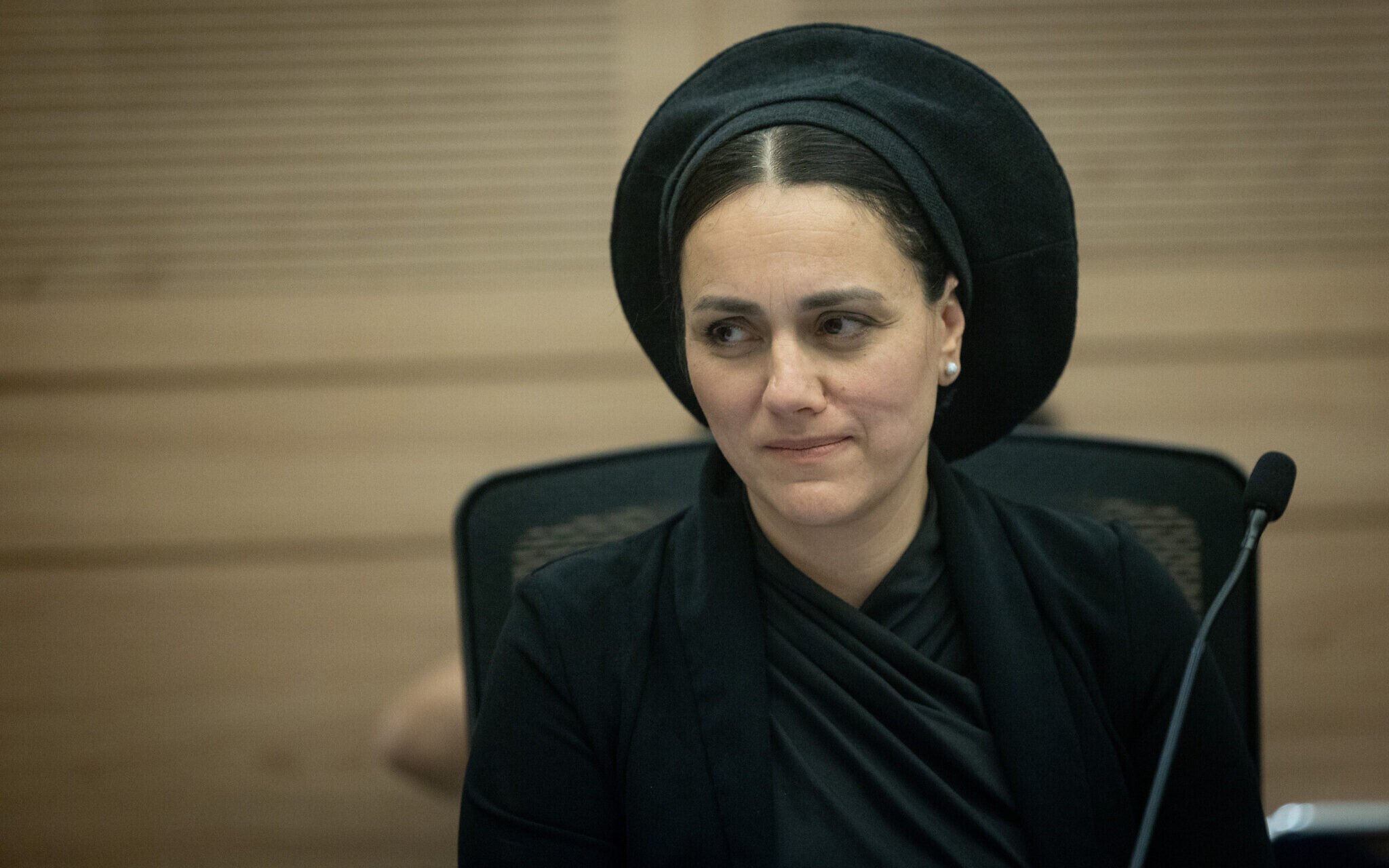
MK Limor Son Har-Melech attends a Knesset Foreign Affairs and Defense Committee meeting, July 18, 2024. (Chaim Goldberg/Flash90)
Since the legislation is a private member’s bill and not a government bill, the opposition of the Attorney General’s Office will not prevent it from being advanced.
The deputies further asserted that it appears the bill was drafted to help the prime minister “evade justice,” with his personal needs in mind.
“In view of the profound and fundamental violation of the principles of a democratic regime, as well as the direct impact of the bill on the personal interests of the prime minister, the proposal is unconstitutional, must be opposed, and must not be advanced,” the position paper stated.
In response, Otzma Yehudit chairman National Security Minister Itamar Ben Gvir accused the Attorney General’s Office of politicizing the justice system.

National Security Minister Itamar Ben Gvir is seen at the entrance to the Temple Mount, before entering, in Jerusalem’s Old City. October 08, 2025. (Chaim Goldberg/FLASH90)
“The irony knows no bounds: The attorney general, who has completely politicized the law enforcement system, who fabricates cases against elected officials time and again and routinely cripples the work of the government, states that the bill submitted by MK Son-Har Melech is a political proposal, when it is a proposal intended to protect elected officials from political persecution,” the far-right minister charged in a statement, calling on his colleagues on the ministerial committee to “not be intimidated by yet another attempt by the attorney general to thwart the government’s work.”
Limiting competition
The Ministerial Committee for Legislation is also slated to deliberate a second bill, which raises the bar for the government’s most formidable political opponent.
The legislation, sponsored by Likud MK Avichai Boaron, would require any new party established by a chairman whose previous party dissolved within the past seven years to assume responsibility for that party’s outstanding debts.
It is thought to target former prime minister Naftali Bennett, whose new party , currently known as Bennett 2026, is seen as the primary contender against Netanyahu in the next election.
Bennett, who led the now-defunct right-wing Yamina party, has been out of office since the 2022 collapse of his diverse governing coalition, which in 2021 ousted Netanyahu from the premiership after 12 consecutive years following a period of political turmoil that saw four national elections in three years.
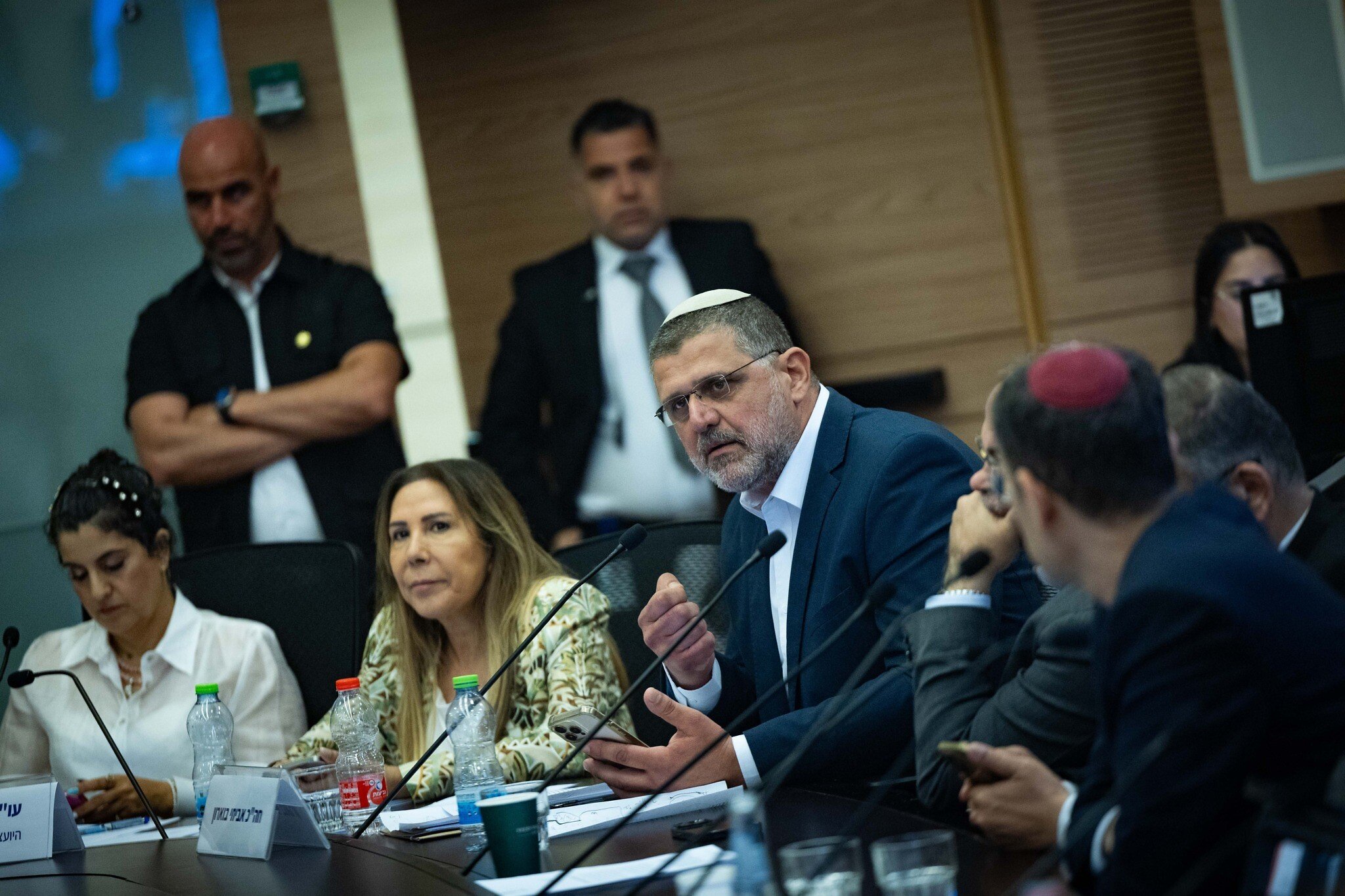
Likud MK Avichai Boaron attends a meeting of the Knesset House Committee, June 30, 2025. (Yonatan Sindel/Flash90)
According to the Kan public broadcaster, Yamina has NIS 17 million ($5 million) in debts while his former Jewish Home party owes NIS 3 million ($913,000).
Bennett slammed the bill in a tweet, writing that “only a failed regime that is preoccupied with personal and political survival would be afraid to confront me. Therefore, it is trying to pass an anti-democratic and personal law designed to stop me from running.”
“The law is unconstitutional and will be invalidated immediately,” he wrote.
Boaron retorted: “First, pay off your financial debts to the public. After that, you can start a new campaign. There’s absolutely no reason in the world that while you owe NIS 17 million to the public and to suppliers, you should be launching another multimillion campaign — at the public’s expense.”

Former prime minister Naftali Bennett visits at the Western Wall in Jerusalem’s Old City, May 26, 2025. (Yonatan Sindel/Flash90)
Bennet, who reentered politics earlier this year with the registration of his new party, has become a key member of the so-called change bloc working to unseat Netanyahu.
Recent polling has shown that if an election were held today, Bennett 2026 would be the second-largest party in the next Knesset after Likud — with many Israelis supporting him to lead the anti-Netanyahu bloc.
‘A banana republic’
Political parties running up large debts, especially Netanyahu’s Likud, are a significant issue in Israel, “and it is legitimate to think about ways to solve this problem,” but “it’s very, very clear that what they are offering is only designed to block Bennett,” Amir Fuchs, a senior researcher at the Israel Democracy Institute, told The Times of Israel on Sunday.
“So the thing is that even if you decide to solve a problem, then it is illegitimate, and in a way even unconstitutional, to do it right before the election,” he said, arguing that any solution also needs to take into account the large parties currently in the Knesset and that any bill that effectively targets Bennett would “infringe on the right to vote and the right to be elected.”

Dr. Amir Fuchs, senior researcher at the Israel Democracy Institute’s Center for Democratic Values and Institutions (Courtesy Israel Democracy Institute)
Regarding Har-Melech’s bill to halt Netanyahu’s trial, Fuchs asserted that it violates the “rule of law because it’s retroactive and personal” and goes against the principle of “equality before the law.”
“If you make the Knesset the decision maker in criminal cases, you break all division of powers,” he argued.
“It’s ridiculous. It shows Israel as a banana republic, where the trial is just a façade, and the coalition can just stop cases against ministers and against the prime minister. That’s the indicator of dictatorship, but I really don’t think that this will pass.”
Jeremy Sharon contributed to this report.