
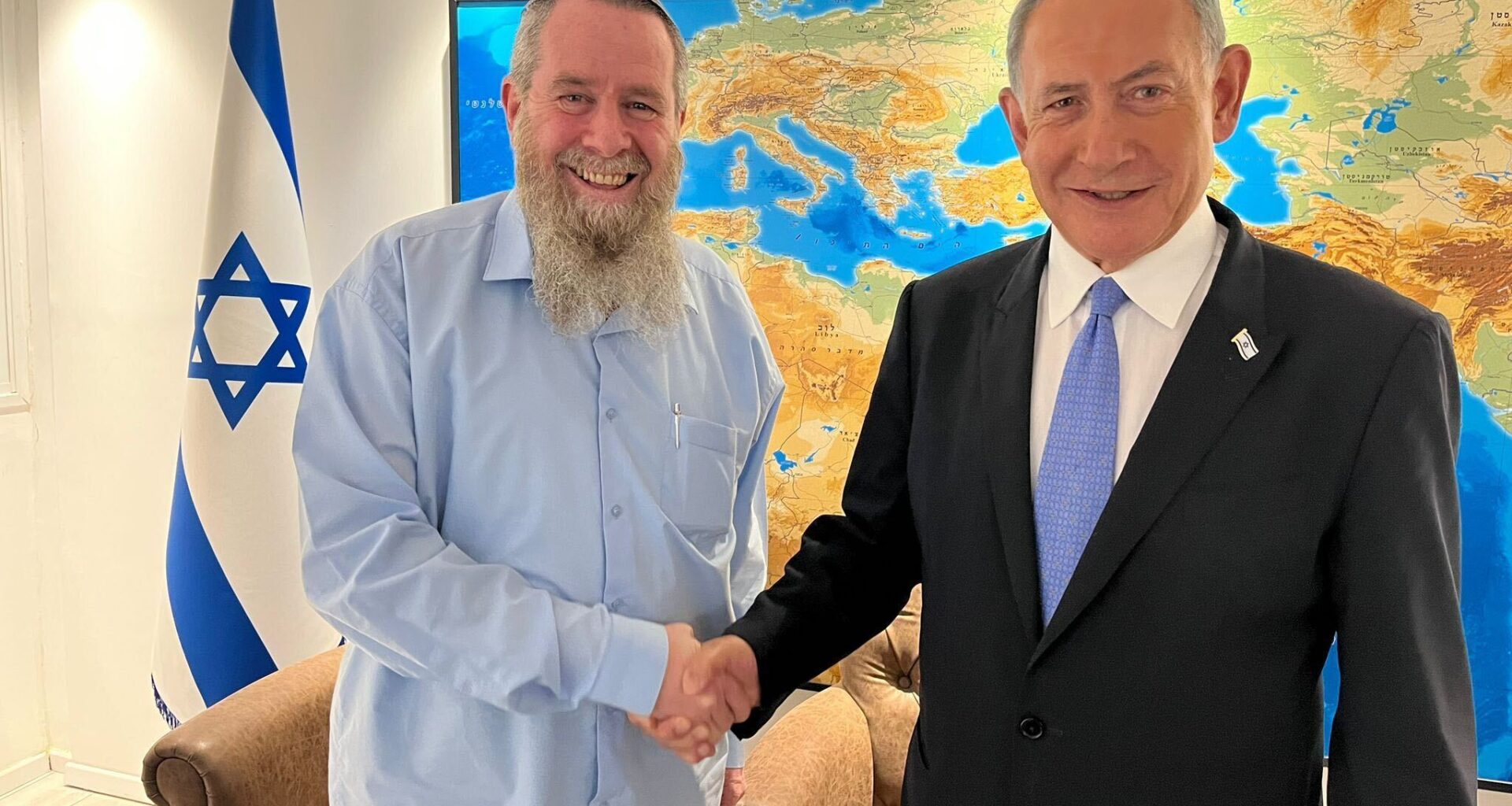
Last Wednesday afternoon, despite Prime Minister Benjamin Netanyahu’s vocal opposition, multiple lawmakers from coalition and opposition parties voted, in different constellations, to advance two bills to apply sovereignty to the West Bank.
The legislation, passed in preliminary readings, would need three more approvals in the Knesset plenum to become law — a highly unlikely prospect. But even the initial passage of the bills prompted harsh criticism from the Trump administration, with Vice President JD Vance, who was in Israel at the time, calling the votes a “very stupid political stunt,” and Trump himself moved to declare firmly that Israel would not be annexing anything in the disputed territory.
The bills’ approval in their preliminary readings highlighted Netanyahu’s dissipating control over his fractious right-wing coalition, a development that is especially significant as Israel counts down to its next parliamentary election, scheduled not later than a year from now.
The prime minister worked hard to prevent their passage. His coalition’s ministerial committee had refused to support another such bill three days earlier. He knew the legislation risked annoying the Trump administration, especially with Vance visiting. But he was outmaneuvered by a mix of far-right coalition parties, disgruntled ultra-Orthodox MKs, various opposition parties and even one of his own Likud MKs.
The first of the two bills, a measure to apply Israeli sovereignty to all West Bank settlements sponsored by former coalition member and ex-deputy minister Avi Maoz (Noam), advanced with the support of the coalition’s far-right Otzma Yehudit and Religious Zionism parties, as well as the opposition Yisrael Beytenu party and the Agudat Yisrael faction of the ultra-Orthodox United Torah Judaism. The decisive vote, however, was cast by Yuli Edelstein from Netanyahu’s own Likud, who ignored his party’s boycott of that evening’s plenum session.
Get The Times of Israel’s Daily Edition
by email and never miss our top stories
By signing up, you agree to the terms
The second bill, a narrower call to annex the West Bank city of Ma’ale Adumim, was supported by Yisrael Beytenu, together with fellow opposition parties Blue and White and Yesh Atid, and former coalition minister Yitzhak Goldknopf of the ultra-Orthodox United Torah Judaism party.
Who backed the broad annexation bill, and why
The readiness of Otzma Yehudit and Religious Zionism to support the far-reaching legislation to annex all settlements stemmed in part from their ideological support of the settlement enterprise and full West Bank annexation.
It also reflected a desire to put pressure on Netanyahu regarding the current ceasefire in Gaza, brokered by Trump, which they oppose, while also appealing to their bases ahead of the election.
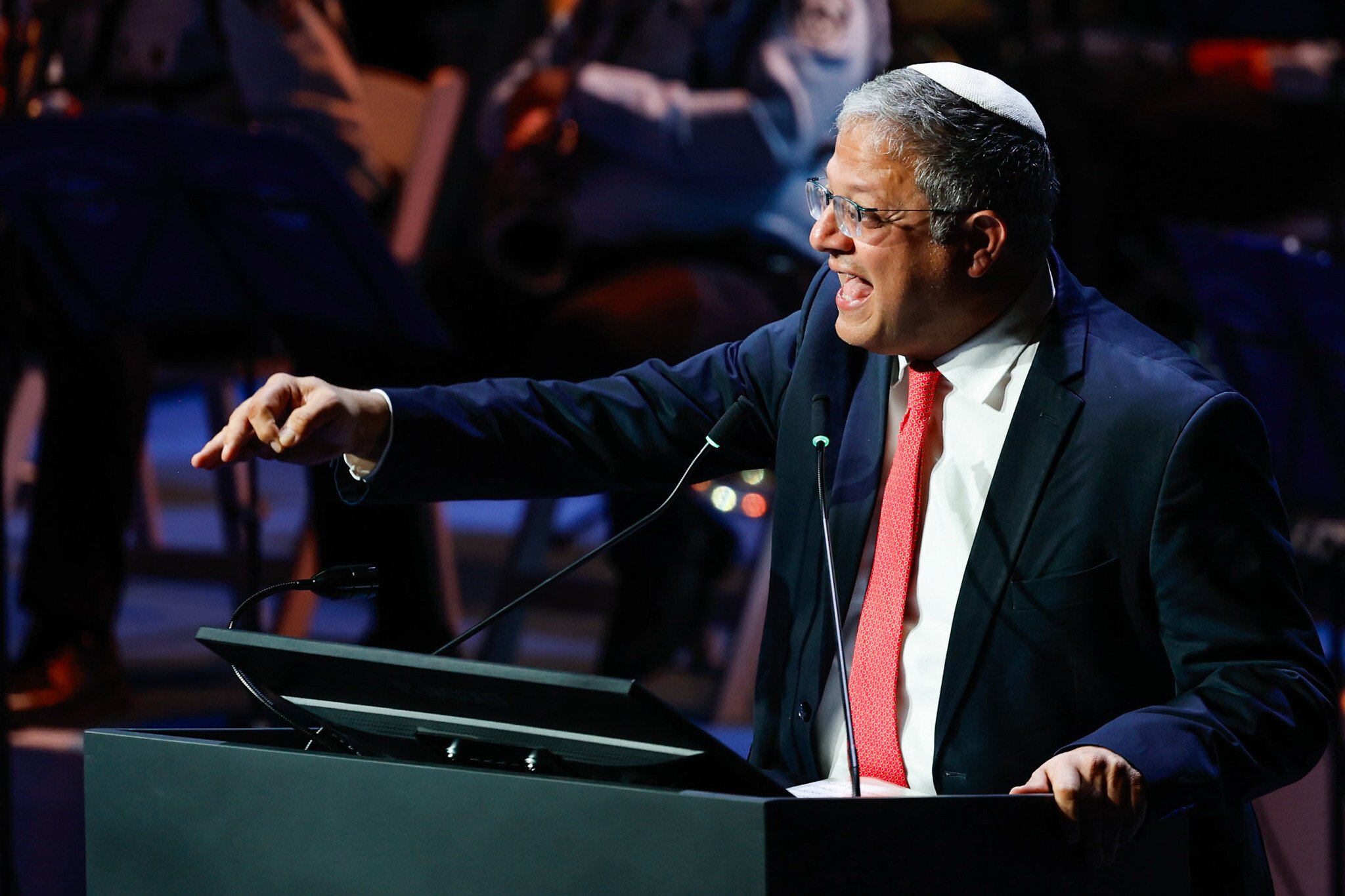
National Security Minister Itamar Ben Gvir speaks during a ceremony at the National Police Academy in Beit Shemesh, September 15, 2025. (Oren Ben Hakoon/Flash90)
Last Sunday, the Ministerial Committee for Legislation declined to provide government support for an annexation bill proposed by Otzma Yehudit MK Limor Son Har-Melech. A day later, party chairman and National Security Minister Itamar Ben Gvir threatened to stop voting with the coalition in the coming weeks unless it backs legislation imposing a death penalty on terrorists.
Ben Gvir, who voted against the ceasefire in Gaza when it came before the cabinet on October 9, has also threatened to bolt the coalition unless the prime minister commits to dismantling Hamas.
Supporting last week’s annexation vote served both as a warning to Netanyahu not to take his party’s backing for granted while also signaling to Otzma Yehudit voters that their MKs remain loyal to their ideological commitments.
A spokesman for the party told The Times of Israel that it “votes according to ideology and according to the voters,” while faction MK Yitzhak Kroizer said that Otzma Yehudit “sees the application of sovereignty over Judea and Samaria not as a political move but as a value-driven, Zionist, and historical step that expresses our natural and divine right to the land.”
“This is not an attempt to ‘apply political pressure,’ but a clear statement: sovereignty is not an election slogan; it is fundamental. The public expects courage, action and not delays from its leaders,” Kroizer said.

Finance Minister Bezalel Smotrich gestures toward a map of the West Bank during a press conference at the Finance Ministry in Jerusalem, September 3, 2025. (Yonatan Sindel/Flash90)
As for Religious Zionism’s support for the Maoz bill, it too was motivated by its pro-annexation, pro-settlement ideology. But the party, led by Finance Minister Bezalel Smotrich, also desperately needs to boost its support to ensure it maintains its place in the Knesset come election day. Religious Zionism is one of several parties hovering around the 3.25 percent electoral threshold, multiple polls have repeatedly shown in recent months.
In a lengthy social media post over the weekend, Smotrich, who last month called to annex most of the West Bank, urged supporters of annexation to adopt the tactics of the movement to free the hostages in Gaza, including weekly rallies, annexation pins and roadside banners.
Speaking with The Times of Israel last week, Motti Babchik, a senior adviser to Goldknopf, said that the ultra-Orthodox Agudat Yisrael faction supported Maoz’s bill to highlight the hypocrisy of the Netanyahu government, of which it was a member until recently, many of whose ministers have recently called for annexation.

Motti Babchik seen in the Knesset on March 3, 2020 (Yonatan Sindel/Flash90)
UTJ is also furious at Netanyahu for failing to pass a bill enshrining the exemption of yeshiva students from military service. And the Agudat Yisrael faction in particular is said to be concerned over some of its younger voters switching their allegiance to Otzma Yehudit.
Fellow ultra-Orthodox party Shas, which recently withdrew from all coalition roles it holds in the Knesset while remaining a part of the coalition, stayed away from the plenum last week rather than voting against the bill — itself a signal of discontent with Netanyahu.
‘The opposition dictated the agenda’
The more limited annexation bill, aimed at applying sovereignty to the settlement of Ma’ale Adumim near Jerusalem, sponsored by Yisrael Beytenu’s Liberman, passed by a far wider margin, 32-9.
Both Opposition Leader Yair Lapid and Blue and White party chairman Benny Gantz voted in favor of Liberman’s bill, which received support only from opposition, rather than coalition, parties. Many Blue and White and Yesh Atid MKs voted in favor, as did members of Liberman’s Yisrael Beytenu.
According to Yesh Atid MK Vladimir Beliak, Ma’ale Adumim is part of the national consensus and will remain part of Israel under any eventual peace plan. Therefore, he said, voting in favor of annexation of the settlement-city “fully aligns with our platform, so there was no issue there. And if along the way it also helps shake up the coalition — all the better.”

MK Vladimir Beliak at a meeting of the Knesset Constitution, Law and Justice Committee, November 25, 2024. (Yonatan Sindel/Flash90)
Dismissing the possibility of the vote causing diplomatic issues down the line, Beliak said that there was “no chance [that the legislation] will advance,” adding that American anger was directed at the coalition, which had failed to block the bill’s advance.
“So it only shows that the coalition is disintegrating,” he added.
Speaking with The Times of Israel on condition of anonymity soon after the vote, an opposition source boasted that “the opposition dictated the agenda today, caused cracks in the coalition, showed how weak the prime minister is, and made it clear to everyone that there is a minority government in Israel. And that’s the job of an opposition.”
Lapid echoed this sentiment over the weekend, telling Channel 12 that the opposition had sent the Americans the message that “Netanyahu has lost control of the Knesset and has lost control of the government.”
“I didn’t embarrass the Americans. I embarrassed Benjamin Netanyahu,” asserted Lapid. “He has no control, and therefore we have to go to elections,” he added.
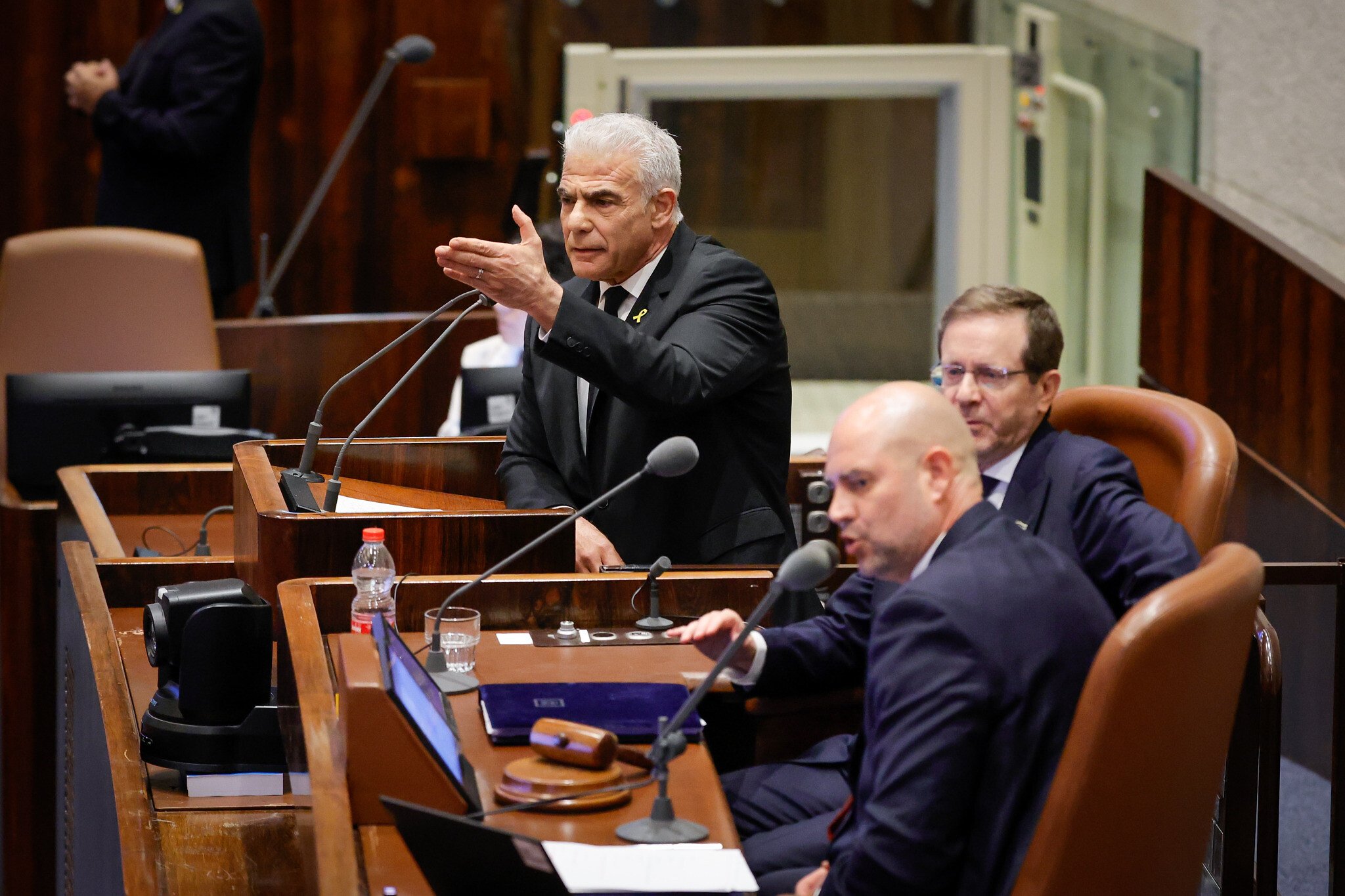
Opposition Leader Yair Lapid addresses the Knesset, October 20, 2025. (Noam Moskowitz, Office of the Knesset Spokesperson)
Parliamentary deadlock
When Maoz quit the coalition in the summer, he deprived Netanyahu’s coalition of its Knesset majority, leaving it with only 60 out of 120. This, together with Ben Gvir’s unreliability and an ongoing Haredi legislative boycott over the stalled legislation of its desired IDF service exemption, has made it hard for the coalition to advance its agenda.
This inability to advance coalition bills became obvious last Wednesday morning, when all private member bills sponsored by coalition lawmakers were removed from the Knesset agenda. It became a major headache for Netanyahu when, hours later, he failed to prevent the initial approval of two annexation bills he had tried hard, in vain, to stop.
Ariela Karmel contributed to this report.