

The Ministerial Committee for Legislation on Sunday evening approved a bill aimed at hampering former prime minister Naftali Bennett from running in the next election. Bennett is widely viewed as the strongest potential challenger to Prime Minister Benjamin Netanyahu.
While the committee approved the motion, it held off on another controversial piece of legislation that would allow lawmakers to halt Netanyahu’s ongoing criminal trial.
The legislation aimed at Bennett, sponsored by Likud MK Avichai Boaron, would require any new party established by a chairman whose previous party dissolved within the past seven years to assume responsibility for paying off that party’s outstanding debts before being able to use campaign funds raised for his new party to finance its electoral campaign.
According to the bill’s explanatory notes, it would only apply to debts “that the State Comptroller found were created due to improper conduct.”
The bill does not stop Bennett from running, but it prevents him from using campaign money for the new party until the old party’s debts are paid off.
Get The Times of Israel’s Daily Edition
by email and never miss our top stories
By signing up, you agree to the terms
Ahead of Sunday evening’s committee vote, Bennett slammed the bill in a post on X, writing that “only a failed regime that is preoccupied with personal and political survival would be afraid to confront me. Therefore, it is trying to pass an anti-democratic and personal law designed to stop me from running.”
“The law is unconstitutional and will be invalidated immediately,” he wrote.
Approval by the committee means the government officially supports a bill and will back it in the Knesset, where it would need to pass an initial vote and three additional readings before becoming law.
Bennett, who led the now-defunct right-wing Yamina party, has been out of office since the 2022 collapse of his diverse governing coalition, which in 2021 ousted Netanyahu from the premiership following a period of political turmoil that saw four national elections in three years.
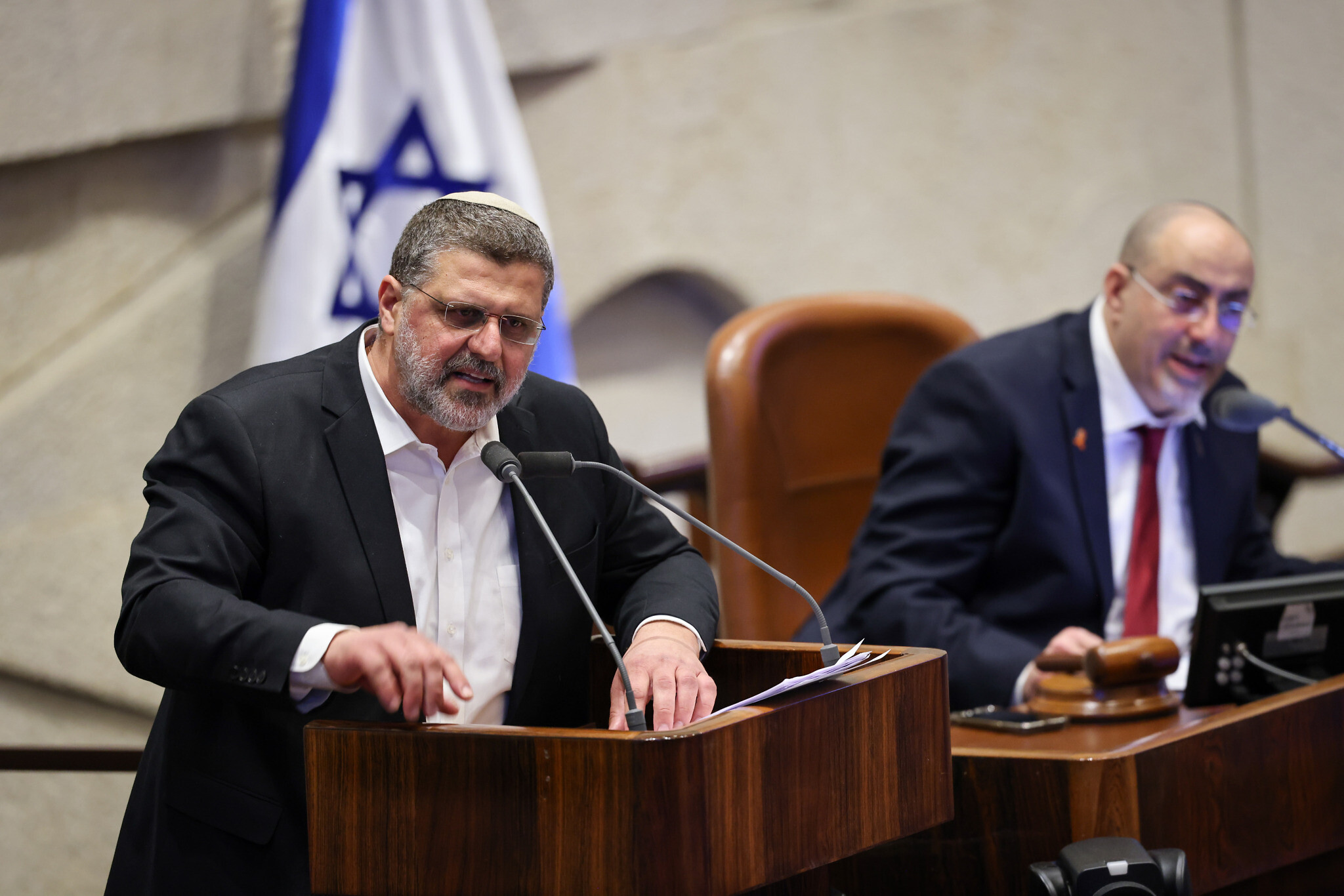
Likud MK Avichai Boaron speaks in the Knesset plenum, December 11, 2024. (Noam Moskowitz, Office of the Knesset Spokesperson)
According to the Kan public broadcaster, Yamina has NIS 17 million ($5 million) in debts, while another former Bennett party, Jewish Home, owes NIS 3 million ($913,000).
Bennett, who reentered politics earlier this year with the registration of his new party, has become a key member of the so-called change bloc working to unseat Netanyahu.
Recent polling has shown that if an election were held today, Bennett 2026 would be the second-largest party in the next Knesset after Likud — with many Israelis supporting Bennett to lead the anti-Netanyahu bloc.
Recent polls generally show the Netanyahu bloc failing to muster enough support to form a new government and the anti-Netanyahu bloc closer to a governing majority, with two mainly Arab parties holding the balance.
Responding to the committee’s approval of the anti-Bennett bill, Blue and White chairman Benny Gantz insisted that while “it is right to amend the… law in a way that prevents a party leader from running under a different name, leaving millions in debts at the public’s expense, as in the case of Naftali Bennett and as others have done before him… it is not right to enact such a law retroactively and in a personal manner.”

National Unity Party MK Benny Gantz leads a faction meeting at the Knesset, June 30, 2025. (Chaim Goldberg/Flash90)
The bill was also opposed by the Attorney General’s Office, which released a legal opinion insisting that it “contradicts fundamental principles
of electoral law in Israel and violates the right to vote and be elected.”
Boaron’s legislation “retroactively changes the ‘rules of the game’, while raising serious concerns” about its “personal nature,” the opinion stated, adding that it created a “significant barrier” to entry for new parties.
Boaron responded to Bennett’s allegations, saying: “First, pay off your financial debts to the public. After that, you can start a new campaign. There’s absolutely no reason in the world that while you owe NIS 17 million to the public and to suppliers, you should be launching another multimillion campaign — at the public’s expense.”
Halting Netanyahu’s trial
While the Ministerial Committee for Legislation approved Boaron’s bill, it delayed approving a bill that would enable lawmakers to halt Netanyahu’s ongoing criminal trial, pushing off a decision by another week — despite media reports that it enjoyed the support of Justice Minister Yariv Levin.

National Security Minister Itamar Ben Gvir, left, and MK Limor Son Har-Melech arrive for a court hearing at the Supreme Court in Jerusalem, on the petition of Adalah Human Rights Organization and MK Ahmad Tibi asking to allow the visit of Palestinian prisoners in Israeli jails, on September 11, 2024. (Yonatan Sindel/Flash90)
Netanyahu has been on trial in three corruption cases since 2020. He denies any wrongdoing.
That bill, sponsored by Otzma Yehudit MK Limor Son Har-Melech, which consists of just one operative sentence, would enable lawmakers to delay the trial of a prime minister or cabinet minister at any time after an indictment and before a final ruling.
It allows the Knesset House Committee to “stay the legal proceedings against the prime minister or a government minister” following an indictment, if it deems it necessary, without specifying what, if any, criteria would be used to judge such a necessity.
According to the Kan public broadcaster, the committee’s vote on the bill was postponed due to Netanyahu’s insistence that it not apply to him personally.
In a post on X, far-right Otzma Yehudit chairman and National Security Minister Itamar Ben Gvir disagreed with Netanyahu’s reported opposition to the measure.
“I really appreciate the prime minister’s opposition to the law, but this is not a personal matter in his favor; it is a matter of national responsibility: to hinder the Prime Minister from functioning during days of historic security and political challenges, and to tie him up in a trial over cigars and champagnes four days a week, is a harm to the State of Israel, not just to the Prime Minister,” he wrote, promising to “continue to promote it.”
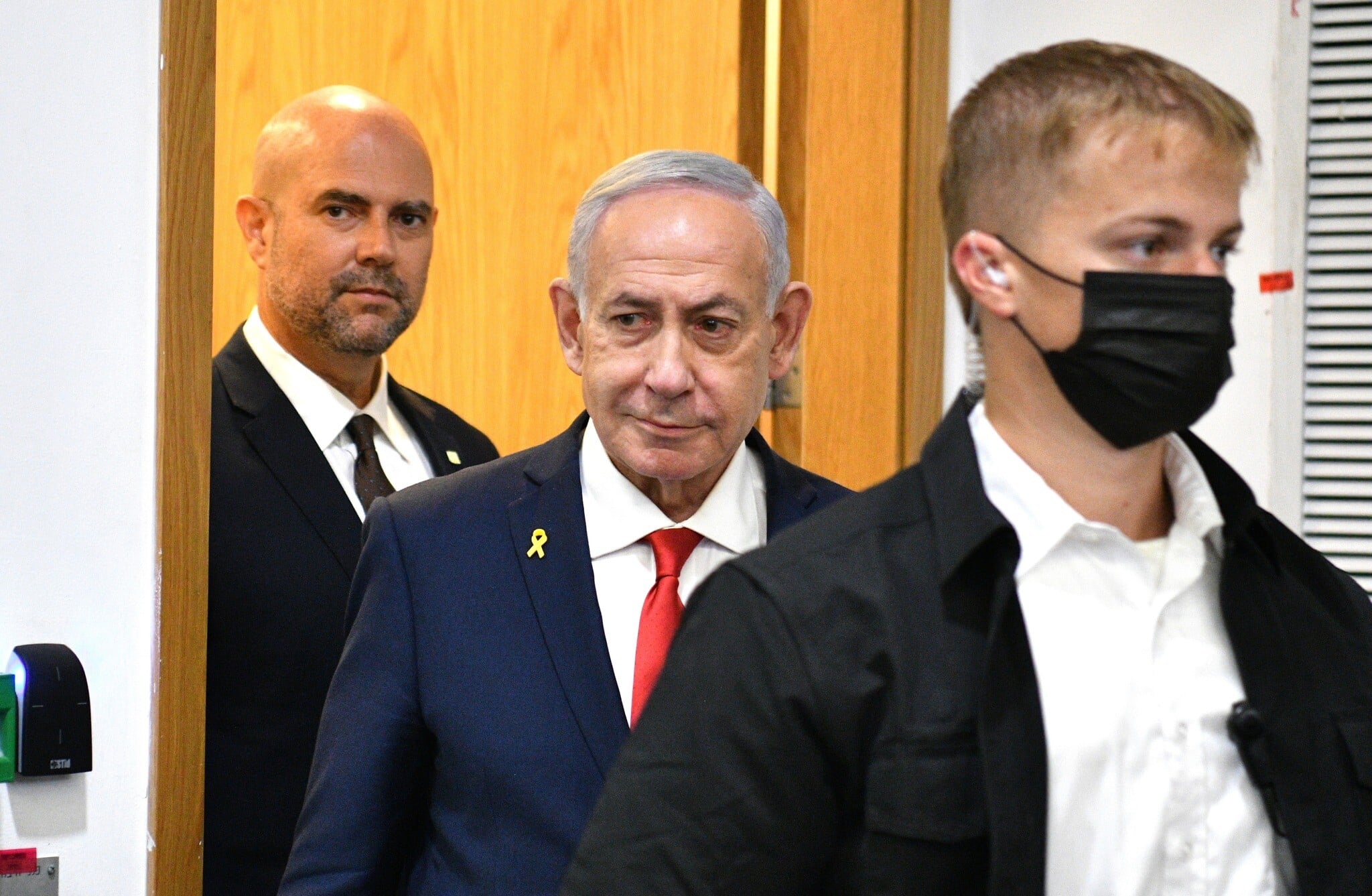
Prime Minister Benjamin Netanyahu (C) arrives at the District Court in Tel Aviv to testify in the ongoing criminal trial against him, on October 15, 2025. (Reuven Kastro/ POOL)
The Attorney General’s Office savaged Har-Melech’s proposal on Sunday afternoon, calling it “unconstitutional” and asserting that it would severely harm the principle of equality before the law, and the independence of the legal and law enforcement systems.
“The bill allows political considerations to gain a foothold in the criminal process, while seriously harming the integrity of the criminal process, the principle of equality before the law, the independence of the judicial system and the law enforcement system, and the principle of separation of powers,” two of Attorney General Gali Baharav-Miara’s deputies wrote in a legal position paper on the bill.
Since the legislation is a private member’s bill and not a government bill, the opposition of the Attorney General’s Office did not prevent it from being advanced.
You appreciate our journalism

You clearly find our careful reporting valuable, in a time when facts are often distorted and news coverage often lacks context.
Your support is essential to continue our work. We want to continue delivering the professional journalism you value, even as the demands on our newsroom have grown dramatically since October 7.
So today, please consider joining our reader support group, The Times of Israel Community. For as little as $6 a month you’ll become our partners while enjoying The Times of Israel AD-FREE, as well as accessing exclusive content available only to Times of Israel Community members.
Thank you,
David Horovitz, Founding Editor of The Times of Israel