
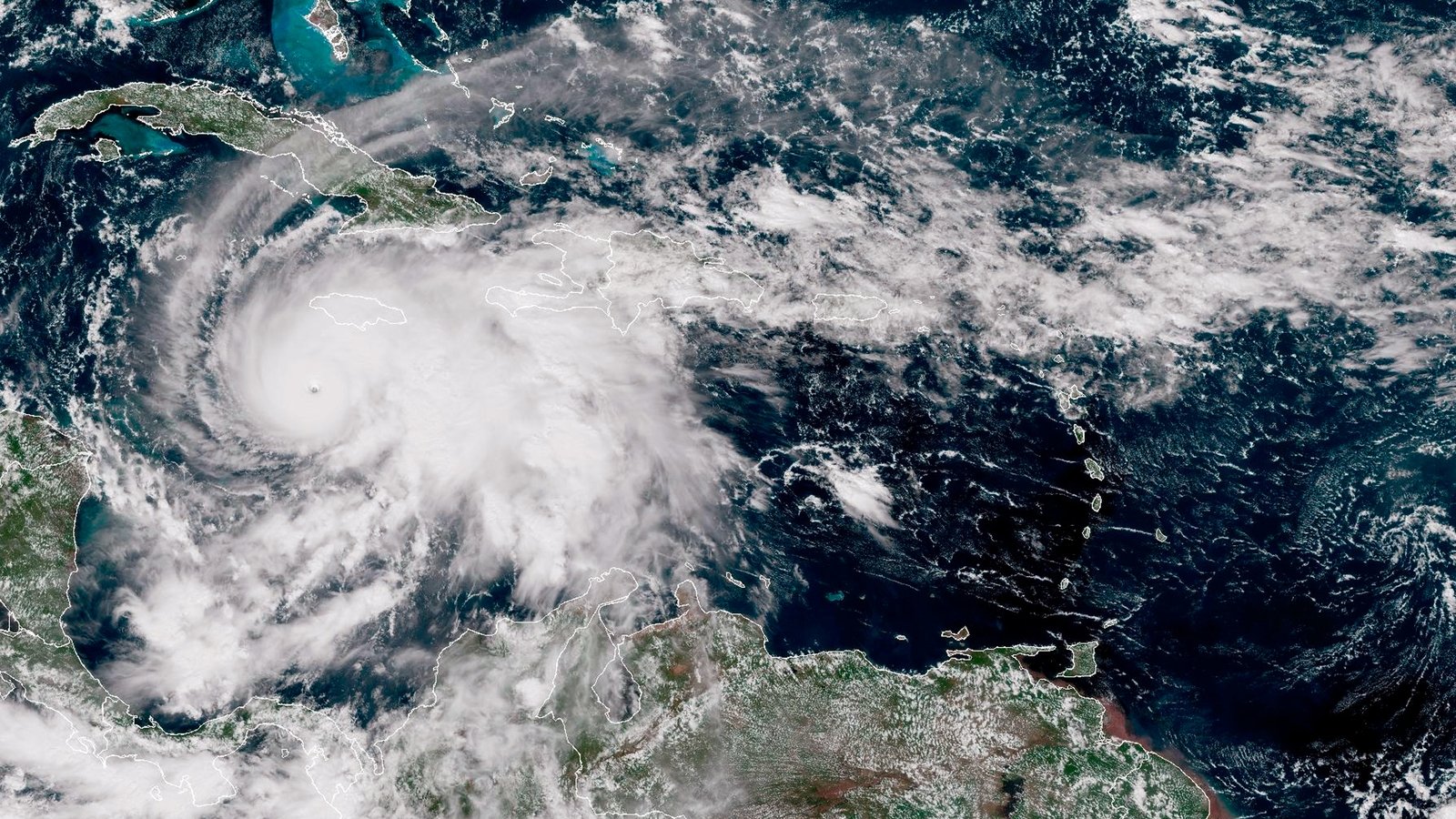
Jamaican officials have urged the public to get to higher ground and shelters ahead of Hurricane Melissa’s expected landfall, with the prime minister warning it could bring massive devastation.
The Category 5 storm – which could be the island’s most violent on record – is charting a painstakingly slow path through the Caribbean, and has already been blamed for three deaths in Jamaica, three deaths in Haiti and one in the Dominican Republic.
The US National Hurricane Center (NHC) reported that Melissa was still 240km from Kingston late yesterday, and was reaching maximum wind speeds of 280km/h.
The storm was expected to make landfall early tomorrow and slice diagonally across the island, entering near St Elizabeth parish in the south and exiting around St Ann parish in the north, forecasters said.
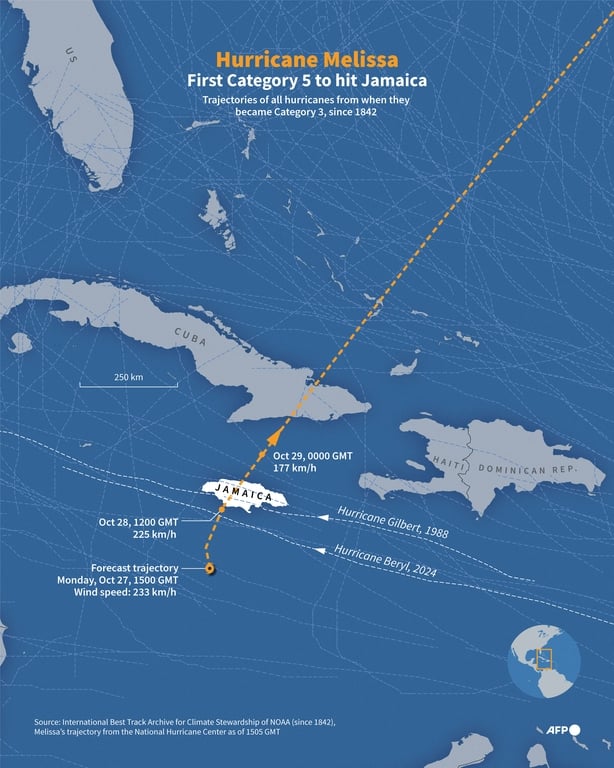
Hurricane Melissa’s path through the Caribbean
Its heavy rains combined with intense winds could wreak devastation on par with historic hurricanes, including 2017’s Maria or 2005’s Katrina, which left indelible impacts on Puerto Rico and the US city of New Orleans.
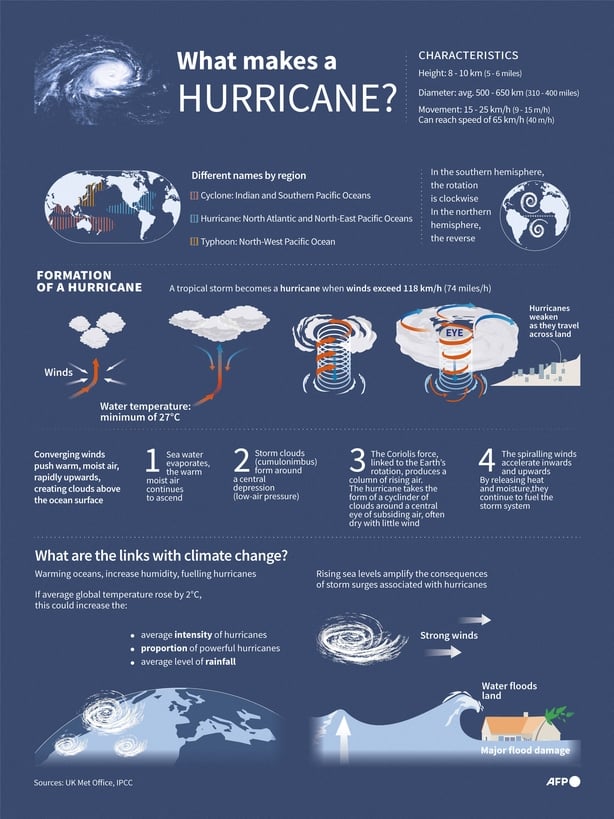
Scientists say human-driven climate change is causing such massive storms to become increasingly common in the region.
Local government minister Desmond McKenzie said yesterday evening that of the island’s 880-odd shelters standing by, only 133 were hosting locals.
They “should be seeing people now”, Mr McKenzie said, adding: “I want to urge persons in these parishes to get to high ground as quickly as possible.”
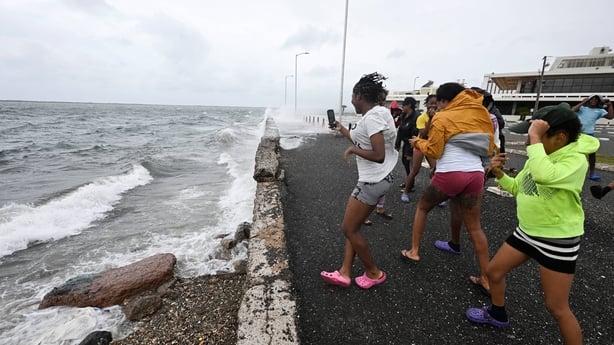
Teenagers gather near the waterfront in Kingston yesterday
Jamaican Prime Minister Andrew Holness said the island’s western end faced the worst destruction.
“I don’t believe there is any infrastructure within this region that could withstand a Category 5 storm, so there could be significant dislocation,” he told CNN.
But despite pleas to evacuate, many Jamaican residents were staying put.
Watch: ‘Hurricane hunters’ fly through eye of Melissa
“I am not moving. I don’t believe I can run from death,” Roy Brown told AFP in Kingston’s seaside area of Port Royal.
The plumber and tiler said he was reluctant to flee because of his past experiences with the poor conditions of government hurricane shelters.
Fisherwoman Jennifer Ramdial agreed, adding: “I just don’t want to leave.”
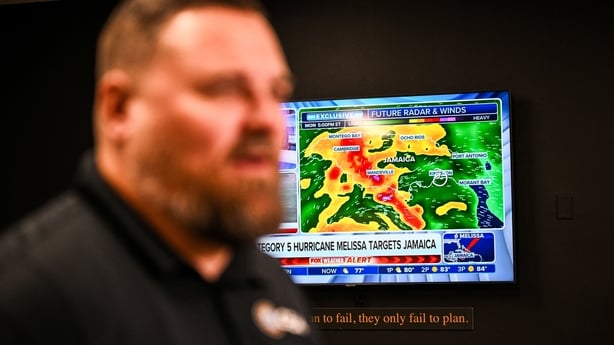
Hurricane Melissa updates are see on a news channel
Mr Holness told a press briefing that the evacuation was about “the national good of saving lives.”
“You have been warned. It’s now up to you to use that information to make the right decision,” he said.
Part of Melissa’s punch stems from its slow pace: it is lumbering along slower than most people walk, at just four kilometres per hour.
That means areas in its path could endure punishing conditions for far longer than during most hurricanes.
The NHC warned of “catastrophic” flash flooding, landslides and destructive winds that could cause lengthy power and communications outages, along with “extensive infrastructural damage.”
Up to 40 inches of rainfall are forecast, with flash flooding and landslides expected in Jamaica as well as Haiti, the Dominican Republic and Cuba.
A storm surge is likely along Jamaica’s southern coast, with waters potentially rising 13 feet (4 meters), along with “destructive waves.”
In the Flagaman farming community of St Elizabeth, residents hunkered down in a store.
Owner Enrico Coke said he opened his place for fear that his neighbours had nowhere to go: “I’m concerned about farmers, the fishermen will be suffering after this.”
“We’ll need help as soon as possible, especially water for the people.”
After pummeling Jamaica, Melissa is forecast to cross over eastern Cuba tomorrow night.
The storm has already left tragic consequences.
Watch: ‘Hurricane hunters’ fly through the eye of Melissa
Yesterday, officials in Jamaica said three people had died while preparing for the storm, cutting tree branches and working on ladders.
In the Dominican Republic, a 79-year-old man was found dead after being swept away in a stream, officials said. A 13-year-old boy was missing.
Haiti’s civil protection agency said three people died in storm conditions over the weekend. Meteorologist Kerry Emanuel said global warming was causing more storms to rapidly intensify as Melissa did, raising the potential for enormous rains.
“Water kills a lot more people than wind,” he told AFP.
The last major hurricane to impact Jamaica was Beryl in July 2024 – an abnormally strong storm for the time of year.
“Human-caused climate change is making all of the worst aspects of Hurricane Melissa even worse,” said climate scientist Daniel Gilford.