
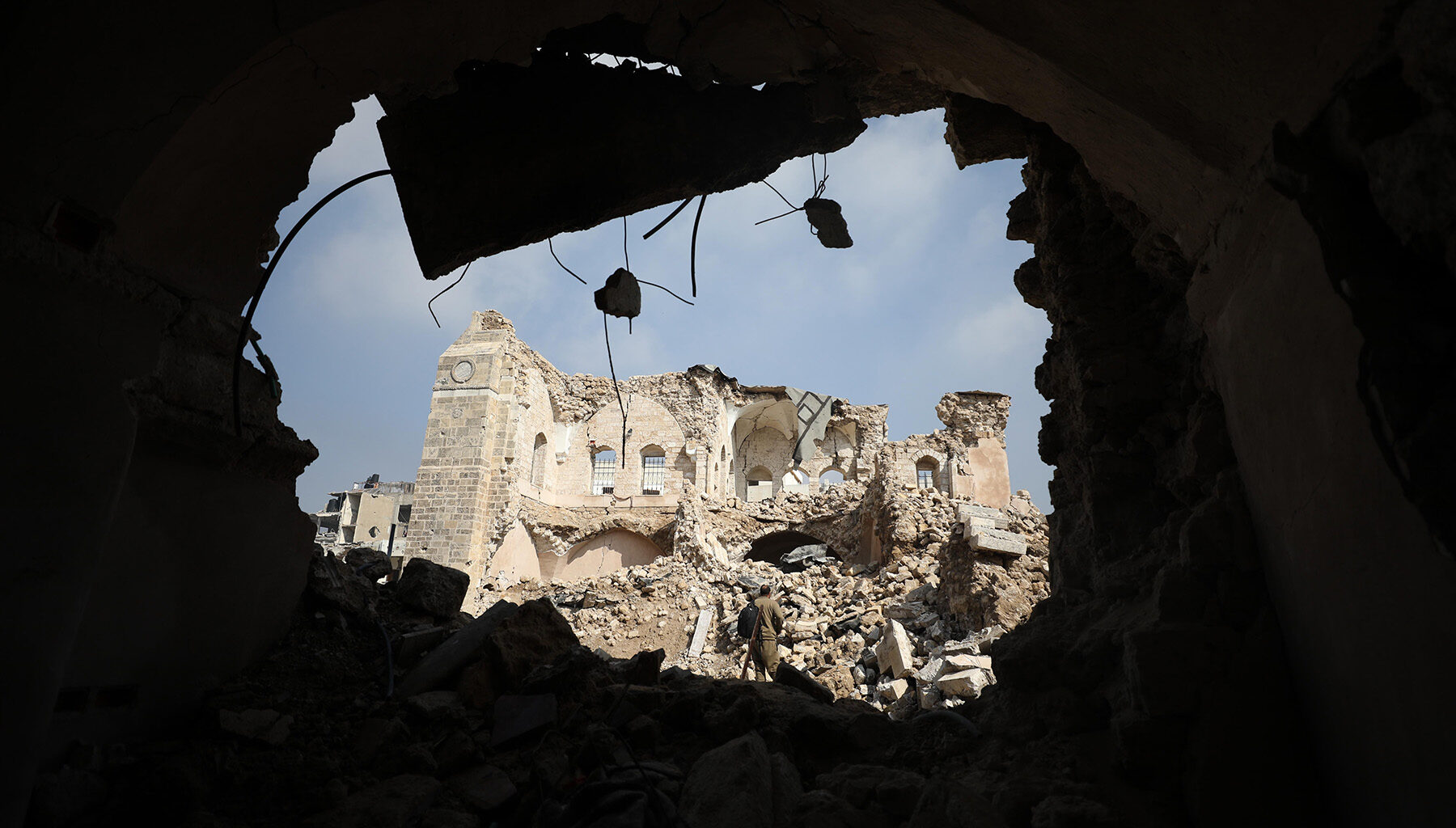
As a military stronghold, it hosted some of the greatest ancient battles. More recently, both Napoleon and Alexander were injured in Gaza, the latter losing ten thousand men in conquering it. It took British commander Edmund Allenby three days to capture the city at the end of World War I.
But the city has also been a crucial commercial and political hub, hosting a regional medical center alongside famed mosques, churches, libraries and markets. Trade has historically been vibrant, especially for incense, spice, wine, olive oil and precious stones as early as 500 BCE. So important was Gaza in Roman times that it had its own calendar. It was also the locale of famous stories, such as Sampson and David and Goliath.
In the late fifth and early sixth centuries AD, Gaza City’s fairs and theaters were famous throughout Palestine, packed with people hoping to listen to noted scholars, poets and philosophers. Gaza City was also famed for its school of rhetoric (speaking and writing), which was at the time the basis of all higher education.
For the current citizens of Gaza—particularly those who were born, raised and established lives in Gaza City—the horror of this demise must be incalculable and inexpressible. For those of us outsiders who have had the privilege of knowing and loving Palestine and its people, this erasure brings tears of sympathy and shame for our governments’ heartless facilitation of this catastrophe and genocide.
Israel’s vicious two-year assault on the Gaza Strip must be permanently stopped for the sake of the lives of the people that remain and for the integrity of Palestine and humanity itself. That includes efforts to preserve and restore Gaza’s impressive history and countless stories, which constitute an integral part of the Palestinian identity.
The hope is that Trump’s shaky ceasefire—in place for two weeks now—can help achieve just that. Nevertheless, the Israeli military continues to kill Palestinians in Gaza, including residents of Gaza City who have dared return there to see if any part of their homes remain. Too many find nothing at all. The plan provides no clarity on when, how and by whom reconstruction of Gaza will take place, if it does at all.
To preserve history, protecting what remains, including the venerable Gaza City and the broader Strip, is essential. World leaders must recognize the importance of restoring—and thus, retaining—Gaza City and the Gaza’s historical and cultural underpinnings, viewing them as essential to any future Palestinian state.
Hopefully, that day will come, when the great City of Gaza is rebuilt—by Palestinians.